
By Susan St John*
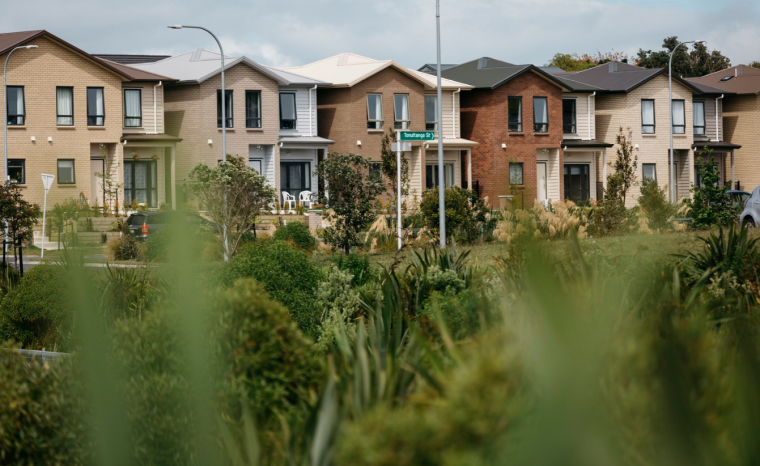
Good policy requires first that there is a clear understanding of the problem to be solved. As 2020 draws to an end, the problem is SURELY unmissable. A housing elephant is rampaging across New Zealand society creating intergenerational havoc, making already well-off people enormously wealthy and leaving a growing number of families desperately poor, ill-housed, over-mortgaged and increasingly homeless.
Please let’s just deal with that problem and not worry for now that some people make money out of holding art or shares. Real resources not paper money is at stake here.
The bricks and mortar and labour are totally misdirected, flowing to expensive owner-occupied housing, and hogging the resources needed for building basic houses. Rental housing is increasingly traded as a speculative commodity at the expense of secure housing for all as a fundamental human right.
A Capital Gains Tax would be a limited response as it would only apply to gains made on houses bought and sold in the future. In any case the government has taken CGT off the table along with any chance of a comprehensive net wealth tax or land tax. But doing nothing is JUST not an option. Extending the bright line test is like trying to close the stable door once the horse has bolted. Loan-to-value-ratios (LVRs) likewise could be changed to force new investors to hold more of their own money as equity in their houses but is also only tinkering.alue.
Should the government reintroduce stamp duty on housing transactions?
I was astonished to find that on $1,000,000 house stamp duty in Australia is as high as $40,000 in some states. However when we look at Australia we find that it doesn't work very well there at all. It is highly inequitable as it imposes a tax only on those people who sell the properties while people who stay put escape. It provides an incentive for people to renovate or extend rather than trade upwards and move. It doesn’t appear to be the answer to New Zealand’s housing crisis.
But we will have to do something.
The latest research from Auckland University is very interesting (Betting on capital gains: housing speculation in Auckland, Department of Property). Authors Michael Rehm and Yang Yang base their analysis on the premise that legally, the responsibility to pay a tax on the capital gains on the sale of a property derives from the intention one had in buying the property in the first place. They found the vast majority of landlords consistently make losses on their investment properties indicating that their intention is to make tax-free capital gains. They are not serious landlords and their houses often poorly tenanted or empty.
Clearly there is something amiss when tax consultants routinely advise on how to minimise taxable profits with fully deductible nominal interest and expenses that in practice add to the property’s value. Rehm and Yang argue that anyone who is making less than having money in the bank is, by definition, a speculator and should be taxed in full on the gains they make on sale. But fair as this idea sounds, like stamp duty, there are avenues for avoidance and it only touches those landlords who actually sell.
But of course ALL landlords should be making AT LEAST as much from renting as they would if their money had been put on deposit at the bank. Disallowing nominal interest to be deducible would be a partial solution, but may create pressures for rent rises while not affecting the overinvestment in luxury owner-occupied homes nor encourage the desired reallocation of scarce building resources. The current problems require a more comprehensive approach.
Perhaps the only way forward is the brave step of extending the income tax base with the risk free rate method (RFRM) – discussed in the Tax Working Group’s minority report.
In brief, in the RFRM the individual’s aggregate holdings of all housing less registered first mortgages (net equity) is treated as if it had been invested at the bank generating a taxable income. A per person exemption of net equity of say $1 million in the family home could apply so that the RFRM would not affect ordinary home-ownership.
Genuine landlords in the serious business of renting may even be better off under the RFRM. They would be saved the accountants’ cost of complicated rental returns and disputes over what to deduct. This encouragement is fair enough as they are in the business of doing something useful. Rents may even fall. Other landlords whose properties lie vacant or who are deducting huge costs against their rentals will not be able to return tax losses and would be taxed fully on their net equity imputed income. If they sell there will be more supply for first home owners and that may begin to make home ownership a little more affordable.
Of course there will be problems around the edge but these don’t appear insurmountable. But please let's go into the new year with a plan!
*Susan St John is an Associate Professor at the University of Auckland Business School.
We welcome your comments below. If you are not already registered, please register to comment
Remember we welcome robust, respectful and insightful debate. We don't welcome abusive or defamatory comments and will de-register those repeatedly making such comments. Our current comment policy is here.