

Here's my Top 10 links from around the Internet at 10:00 am today in association with NZ Mint.
Bernard is back tomorrow with his version.
As always, we welcome your additions in the comments below or via email to bernard.hickey@interest.co.nz.
See all previous Top 10s here.

1. 'Shadow banking system still a threat'
US Fed chairman Ben Bernanke said on Saturday (Friday Chicago time) that the shadow banking system still posed a threat to financial stability.
He pointed out funding markets might still not be able to cope with a major default.
In a wide-ranging speech explaining the Fed’s role in monitoring the health of the banking system, Bernanke also laid out how the central bank was looking at asset markets closely for signs of excessive risk taking. Reading this and given his public profile, it is amazing to me that he and his team have the time and resouces to do all the stuff he listed in the detail he revealed.
With respect to the triparty repo platform, progress has been made in reducing the amount of intraday credit extended by the clearing banks in the course of the daily settlement process, and, as additional enhancements are made, the extension of such credit should be largely eliminated by the end of 2014. However, important risks remain in the short-term wholesale funding markets.
One of the key risks is how the system would respond to the failure of a broker-dealer or other major borrower. The Dodd-Frank Act has provided important additional tools to deal with this vulnerability, notably the provisions that facilitate an orderly resolution of a broker-dealer or a broker-dealer holding company whose imminent failure poses a systemic risk.
But, as highlighted in the FSOC's most recent annual report, more work is needed to better prepare investors and other market participants to deal with the potential consequences of a default by a large participant in the repo market.
2. De-linking
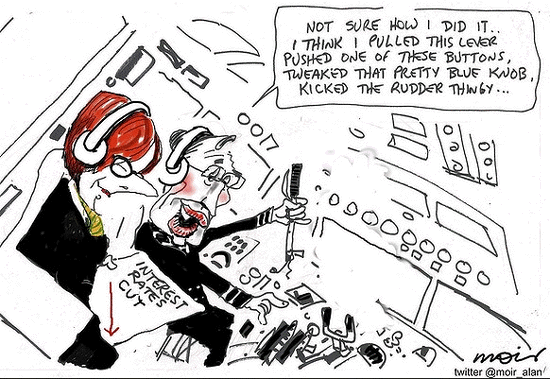
The RBA recently cut its benchmark rate by 25 bps, but ANZ then announced a 27 bps cut. And Cameron Cline is out publicaly saying that out of cycle trading bank mortgage rate cuts in Austrlia are coming. This is an entirely different tune. We had gotten used to Aussie banks cutting less, not passing on RBA cuts in full. It seems the reasons are in the stats: as we note below (#7) risk spreads for NZ sovereign debt has narrowed sharply. Same for Aussie (although it is not as low as NZ).
Well, CDS spreads for Aussie investment grade debt (mainly bank debt) has narrowed even more that for our goverments. Low bond rates are being embellished by lower risk spreads. There is room now for bigger reductions. How long before we see that here? Home loan customers will like it, but TD 'investors' may start thinking something quite different. Here's what the AFR said:
National Australia Bank chief executive Cameron Clyne says he may cut mortgage rates out of step with the central bank as loan funding costs stabilise and competition intensifies in Australia’s $1.3 trillion home loan market.
Asked if NAB would move rates down out of cycle, Mr Clyne told Channel Nine’s Financial Review Sunday: “Oh absolutely, I think that’s a possibility”.
“I can’t predict when because it’s going to depend on funding conditions. But I think it’s important we continue to really talk about the fact that what drives bank funding costs is not the RBA.”
------------------------------------------------------------------------------------------------------------------------------------------
Keep it safe. Keep it in a New Zealand Mint safety deposit box. Details here »
------------------------------------------------------------------------------------------------------------------------------------------
3. West losing influence
The WTO race that Tim Groser was in was won by a Brazilian, and there are expected to be long-term consequences. The WTO Doha round foundered on EU and US intransigence over agriculture, but now the BRICS may be making an end run around the West. Liam Halligan explains:
Having bought into the WTO’s multilateral system, many increasingly powerful emerging markets are furious at what they see - rightly, in many cases - as continued Western intransigence. There are now alarming signs such nations are going their own way, cutting bilateral trade deals between themselves that specifically exclude the West.
The bottom line is that, as Westerners, “we” have more to lose than “they” do. That’s because “they” are fast-growing, “they” have fiscal strength, “they” will soon account for the lion’s share of the global economy. Over the coming decade, such realities will become increasingly apparent.
Brazil is in an extremely strong position. Trade accounts for just 25pc of its economy, and it has practically the entire “non-Western” world in its corner. Western leaders should now bite the bullet and make whatever sector-specific sacrifices are needed to complete the Doha round. The reality is that, from our perspective, the terms can only get worse.
4. Today's raw market data ...
A quick new week update:
| as at 11:10am |
Today 9:00 am |
Friday |
Four weeks ago |
One year ago |
| NZ$1 = US$ | 0.8302 | 0.8409 | 0.8578 | 0.7799 |
| NZ$1 = AU$ | 0.8290 | 0.8329 | 0.8160 | 0.7790 |
| TWI | 77.57 | 78.19 | 78.72 | 70.24 |
| Gold, US$/oz | 1,427 | 1,465 | 1,395 | 1,559 |
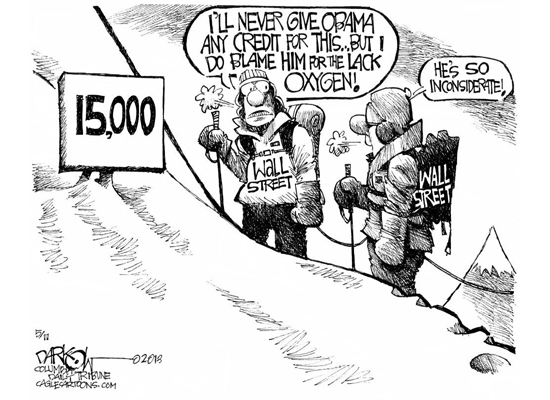
| Dow | 15,102 | 15,109 | 14,565 | 12,687 |
| Copper, US$/tonne | 7,391 | 7,311 | 7,121 | 7,980 |
| Volatility Index | 12.59 | 13.13 | 17.27 | 21.87 |
------------------------------------------------------------------------------------------------------------------------------------------
New Zealand Mint. Experts in gold & silver bullion, commemorative coins and jewellery. Details here »
------------------------------------------------------------------------------------------------------------------------------------------
5. LVR of 30%
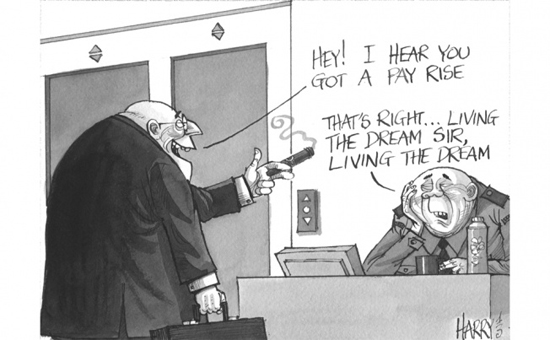
A stunning contrast between what the RBNZ is contemplating with their tightened up macro-prudential tools, and how the Chinese handle unwelcome investor demand for housing. Reporters in Beijing who mystery shopped for a loan on a 'second home' found they were required to put down a deposit of 70% ! And then pay interest 10% higher than the carded rate.
Loan conditions are much easier when you are buying a first or own home. The LVR can be as high as 93% (assuming I am reading the translated version of this story correctly).
6. A step too far
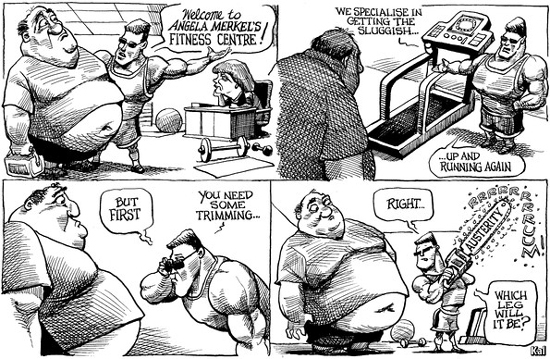
Some people think the Bundesbank is still unable to come to terms with its diminished role, hence the court challenge over the ECB's bond-buying program. Here is Melvyn Krauss' opinion:
Germans need to re-think whether Bundesbank President Jens Weidmann’s move to lodge a legal challenge against the European Central Bank’s bond-buying program was such a good idea. They don’t have a lot of time.
Germany’s constitutional court in Karlsruhe is scheduled to decide the case next month. If it says the ECB’s outright-monetary-transactions program is illegal, then markets will dump the euro, and bond markets in the euro area’s peripheral economies will swoon. The last thing Europe needs as it seeks to emerge from a recession is a return to last year’s unstable financial markets.
Chancellor Angela Merkel, no doubt, has a Plan B available for such an outcome, like going to parliament to amend the constitution, so the ECB program can resume. If she doesn’t, she should. Even so, the market volatility that would follow until the ECB was able to restore its bond-purchase guarantee would be devastating.
Most analysts believe the court will rule in favor of the ECB program, at least in a modified form. Even if that proves to be the case, however, the court hearings could easily develop a circus-like atmosphere that creates uncertainty and undermines confidence in the common currency. The hearings might also affect September’s federal elections in Germany, given that Merkel supported the ECB’s program from the outset.
And all this risk for what? So that the anti-euro lawyers and officials in top management at the Bundesbank can take their revenge on a currency union that they opposed from the very beginning.
Germany’s central bank clearly went too far this time.
------------------------------------------------------------------------------------------------------------------------------------------
Available now. Our brand new 1 oz Taku gold bullion coin. Details here »
------------------------------------------------------------------------------------------------------------------------------------------
7. International judgement
New Zealand's sovereign credit default swap spreads have fallen to their lowest levels since the GFC. On Friday they were recorded at 38.59 bps. That's low compared to Australia which is still at about 40 bps. Switzerland is at 37, the USA at 32, Holland at 59. The UK is at 45. But we are still a long way from oil-rich Norway; their latest CDS spreads are just 18.74.
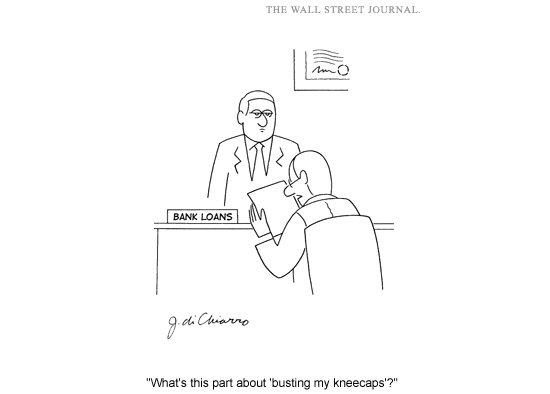
New Zealand's 'credit' may well improve from here soon if the Budget announcement on Thursday signal a return to surplus that observers deem credible and sustainable. At a time when credit is cheap, our government can borrow at the slimmest margins. The hoary old chestnut applies - if you can show you may not actually need it, bankers will fall over themselves to lend you money.
8. Creative agriculture
The climate news is 'frightening'. An observatory in Hawaii has reported that carbon dioxide has exceeded 400 ppm for the first time ever. Over eons it has oscilated between 180 and 280 ppm. 400 ppm is suddenly very high. Alarm is being reported everywhere.

But at the same time, the world is awash in agricultural output. This year and next it looks like both grains and animal production will be at all-time records. Price aren't rising; there is no shortage. In fact, widespread hunger is now so rare, when it appears in relatively small pockets, it is big news. Not only have we no tolerance for it any more, it is unusual - even in Africa. Living standards are rising. We can feed ourselves despite a gigantic world population. So much food is being produced, it is depressing prices. How come?
Maybe the two phenomia are related. Plants need two things to thrive. CO2 and water and we have them worldwide, even if their distribution is changing. We have also applied science to food production, raising productivity. Maybe the climate scrientists need to talk to the food scientists - we seem to be in the middle of massive adaption.
The US Department of Agriculture, in its first forecasts for 2013-14, showed what awaits the world supply and demand balance for grains and oilseeds.
And it certainly made better reading for crop consumers than sellers.
World stocks of soybeans are to jump to an all-time high, and global corn inventories reach their highest in 13 years.
In wheat, the global harvest will top 700m tonnes for the first time, with cotton managing its own superlatives too, seeing world inventories on course to end 2013-14 at a record 92.7m bales.
9. Job losses gains
The March HLFS Q1 data revealed that employment was up and unemployment down.
| Actual numbers, not seasonally adjusted | Mar-2013 | Dec-2012 | Mar-2012 |
| extra people employed | 34,700 | ( 3,000) | ( 6,100) |
| extra peope unemployed | ( 4,700) | ( 9,500) | 20,500 |
| extra people wanting more work | ( 4,800) | ( 3,400) | ( 2,400) |
| Participation rate | 68.2% | 67.5% | 69.0% |
| Unemployment rate | 6.5% | 6.8% | 7.1% |
These numbers did not bear out the concerns that job losses were growing. Having said that, it is right to note that many analysts have doubts about the HLFS survey. Those doubts are over the short term volatility rather than the longer term trends the survey reveals. Analysts thought the Dec-12 numbers were unexplainably low given other features of our economy. It is likely that the Q1 2013 data 'catches up' those concerns.
We are keeping a tally of reported job losses and we are asking readers for help keeping track of them. Let us know when you hear of some, even small ones.

10. Today's quote
"Your net worth to the world is usually determined by what remains after your bad habits are subtracted from your good ones." - Benjamin Franklin
We welcome your comments below. If you are not already registered, please register to comment
Remember we welcome robust, respectful and insightful debate. We don't welcome abusive or defamatory comments and will de-register those repeatedly making such comments. Our current comment policy is here.