
By David Hargreaves
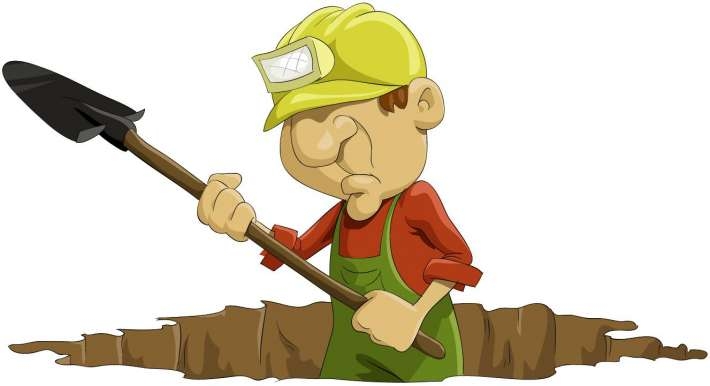
So, it is John Key - husband, father, global foreign exchange expert, prime minister and now moonlighting as a ditch-digger.
I'm not sure how emboldened members of the National Party caucus feel when it comes to offering their leader advice - but if there are some suitably brave souls they might be suggesting that the PM would be well advised to stick to the day job.
As far as that whole ditch-digging thing goes, the basic concept of putting the shovel away once the hole you're standing in becomes cavernous appears to have escaped Key in the past two days.
The Prime Minister's willingness to bury himself in the finer details of housing affordability demonstrates two things in my view: First, he sees housing as a real issue that could hurt National in this election. Second, he doesn't trust other ministers in his team to be able to deal with the issue.
Problem is, the PM ain't making a great show of it so far either and it will be interesting to see what the various opinion polls covering this week in politics reveal.
I can't readily recall Key making a bigger hash of an interview than the one he gave to Radio New Zealand's Guyon Espiner yesterday.
The PM made the cardinal mistake of repeating in an answer a word that had been put to him in a question. To whit Key said there was no "crisis" in housing.
It's public relations training 101 that under no circumstances are inflammatory words repeated by an interview subject in their answers. It's the old: "I don't beat my wife" thing, in which the answer becomes divorced from the original question.
So, in this instance the headline is: PM denies crisis, which, human nature being what it is, immediately has people asking: "If the Prime Minister's going out and saying this is not a crisis, does that mean this is a crisis?"
I'm not sure what possessed Key to do that interview, but would suspect that his finely tuned political antennae has well and truly divined (undoubtedly with the assistance of ceaseless party public polling) that housing is a real problem area in the court of public opinion.
This would be why National has steadfastly tried to avoid the subject and is prepared to put the party leader up himself if any fires need dampening down.
The trouble is, I suspect this is one argument the PM can't win. And all his subsequent efforts to justify his position are likely to make things worse.
It's true that for a long time this country has had relatively expensive housing. But the PM's efforts to draw fire from his party by criticising what happened under Labour aren't likely to convince anybody.
The now too-often repeated mantra that houses went up 96% under Labour but have gone up 'just' 28% under National manages to somehow be both meaningless and misleading.
Anybody who spends any time dealing with percentages knows that they are totally irrelevant unless you relate them to something. So, it's 96% of what? And 28% of what? And what about some sort of apples-for-apples time comparision - given that National's been in power for just on five-and-a-half years and Labour was in for nine years?
To give some perspective, the Real Estate Institute figures to which these percentages obliquely refer show that in November 1999 (the month Labour was elected) the median house price in New Zealand was $172,000. In November 2008 (the month National was elected) the price was $337,500.
Therefore in the nine-year term of the last Labour Government house prices increased by $165,500 - or 96.2%.
As of April, National had been in for five years and five months, give or take a day or two.
In that time the median house price had risen from the aforementioned $337,500 to $432,250. This is an increase of $94,850, or 28%.
To put it another way, house prices went up at a rate of $18,388 a year under Labour. Under National that's running at about $17,500.
If the percentages are put away, it can be seen that in dollars and cents rises, National's only just doing a bit better.
But that's a bit misleading too.
Go back just two years to April 2012 and the median price was $365,000 because the market was still recovering from the impact of the Global Financial Crisis (now that was a 'CRISIS'). So in the past 24 months the national median price has risen by $67,250, or 18.4% - and at a rate of increase of $33,625 a year. It's the latter sorts of figures the public are reacting to.
Auckland prices
It's also worth breaking out figures for Auckland. It's the largest city. About a third of New Zealanders live there. And it is identified as having had a heated market in the past year or two.
Believe it or not, Auckland actually slightly lagged (in percentage terms) many parts of the country for house price increases during the bull market of the mid-2000s.
In the time of the last Labour Government, the median house price in Auckland went from $237,250 (those were the days!) to $425,000. The percentage increase was 79.1%, though the dollars and cents increase was a more imposing $187,750.
Under National, the Auckland median has risen to $611,000, for a 43.8% increase - or in dollars and cents, $186,000, IE nearly as much as under Labour in three-and-a-half years less time.
Looking again at the two-year timeframe, the Auckland median's risen from $490,000 to that $611,000, which is a 24.7% increase - in just two years - worth a whopping $121,000.
'Nothing to see here'
Is it any wonder people are concerned and that the efforts of the Government to give this issue the whole: "Move on, nothing to see here," treatment appear to be struggling.
I wouldn't call what is happening a crisis because I don't personally view owning a house as central to my psyche. But you would have to say that for a lot of Kiwis it is. And the idea that the concept of owning one's own home is now becoming a mirage is genuinely upsetting for a lot of people.
The upshot is that this issue is not going to go away.
I predict that the Prime Minister personally is likely to beat a quiet retreat from the issue after this week.
But that doesn't mean the Government will let Labour get away with setting the election agenda through housing issues.
Wiggle room
The loosening of the purse strings in last week's Budget has given the Government some wiggle room.
I think it's almost a given that there will be some housing-friendly measures thrown at particularly the first-home buyers in the run up to the election.
The Government could have done this in the Budget, but that would have given the Opposition more time to react.
By making the changes as late as possible in the run-up to the election - and maybe the PM will be happy to re-emerge to announce them - National will give the Opposition too little time to react and will give itself the chance of hosing down this particular forest fire of public opinion.
We welcome your comments below. If you are not already registered, please register to comment
Remember we welcome robust, respectful and insightful debate. We don't welcome abusive or defamatory comments and will de-register those repeatedly making such comments. Our current comment policy is here.