

By Bernard Hickey
Just imagine what an election debate in 2029 might look like.
Aside from Richie McCaw as All Black coach and Auckland's average house price nearing the NZ$2 million mark, not much would appear different.
The Baby Boomer generation would be heading into their late 70s and 80s and early 90s, but they would still be a major force in the shops, the cafes and the polling booths because they would have lived much longer than their parents and be much richer and healthier. They would still be receiving New Zealand Superannuation at a rate equal to 67% of the average weekly wage and many would also be receiving hefty earnings from their KiwiSaver accounts and their multiple rental properties. Some would still be earning big salaries from the jobs they haven't retired from.
But the Boomers would be starting to dwindle in numbers, certainly relative to the younger cohorts behind them. They would have been overwhelmed in numerical terms by the Millennials and Generations X and Y in the previous elections in 2026 and 2023.
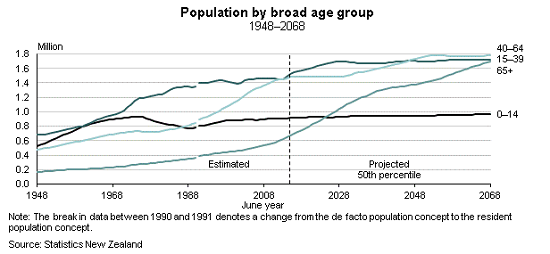
However, it would only be in 2029 that the enormity of what happened to the nation's finances in the previous 30 years would have begin to dawn on the majority of voters in their 30s, 40s and 50s. Only 49% of those aged 18-29 voted in 2014. By 2029 that proportion would be much, much higher for those voters as they near their 40s and 50s. By then, the demographics of New Zealand's population structure will have become political destiny.
When they look back over those decades of political decisions leading up to 2029, what would they see?
They would have seen a raft of policies stretching from the 1980s onward that repeatedly blocked the building of new houses and the building of public infrastructure, particularly public transport. They would have seen the dismantling of free tertiary education by a generation that benefited from it. They would have seen the results of a New Zealand Superannuation setup that loaded the costs on the workers of 2015 to 2030, not on the retirees of 2015 to 2030 when they were workers from 2000 to 2015.
That's because contributions to the New Zealand Superannuation Fund were turned off in 2009 and not turned back on until 2023. That decision cost the fund NZ$18.2 billion in missing savings by 2015 and would have cost over NZ$121 billion by 2029.
New Zealand Superannuation spending would have risen from NZ$9.9 billion or 4.1% of GDP in 2015 to NZ$23.4 billion or 5.3% of GDP by 2029, with Treasury forecasts of it rising to NZ$100 billion or 7% of GDP by 2060.
That cost would be on top of a surge in health costs as the population aged and got fatter, thanks to a lack of preventative investment and taxes to encourage healthy eating.
By 2029, the taxpaying voters in their 30s, 40s and 50s would be facing massive pressures on public finances, potentially forcing tax increases and cuts in social spending without changes to the pension and health settings. So what would those voters want to do about it?
It would be too late to extend the retirement age by then, but there would be massive pressure to means test New Zealand Superannuation and health spending for the aged. The unfair link of NZ Super to average wage inflation, rather than price inflation, would be revisited. There would also be pressure to widen the suite of taxes to capital and land to hoover up some of the wealth held mostly in property by those retirees. The inevitable results of climate change would be clear for all to see.
That 2029 election would be a moment where one generation took over from another, similar to what New Zealand saw from 1984 until the early 2000s when the Baby Boomer generation of David Lange and Helen Clark and John Key took over from the the post-war generations of Keith Holyoake and Robert Muldoon.
The backlash to a long period of economic controls, heavy state investment and social conservatism through the 1940s, 1950s and 1960s shook New Zealand to its core and changed. A generation who stopped investing so much in public infrastructure and housing, and instead chose to consume the future and load up their future costs onto their children, would be leaving power.
The generations having to pay those costs through their taxes would assume (or take) power. What might the backlash of 2029 look like?
------
A version of this article first appeared in the Herald on Sunday. It is here with permission.
We welcome your comments below. If you are not already registered, please register to comment
Remember we welcome robust, respectful and insightful debate. We don't welcome abusive or defamatory comments and will de-register those repeatedly making such comments. Our current comment policy is here.