

This week's Top 10 comes from interest.co.nz's new political reporter Jason Walls.
As always, we welcome your additions in the comment stream below or via email to david.chaston@interest.co.nz.
And if you're interested in contributing the occasional Top 10 yourself, contact gareth.vaughan@interest.co.nz.
See all previous Top 10s here.
2017 will be a hard year to top in terms of political news in New Zealand.
Leadership changes, by-elections, coalition arrangements, shifting polls and general elections all made for a cracking political year.
With such a dramatic 12 months, one would be forgiven for thinking 2018 would be hard pressed to live up to the drama of the year before.
Be that as it may, the stage is set for another exciting year.
Interest.co.nz’s political reporter Jason Walls takes a look at the top 10 potential political stories, in reverse order, which may unfold this year.
10: Will business confidence continue to fall, or has it found the bottom?

It has not been a good start to the year for businesses, with figures from ANZ showing small business confidence is at an almost decade low.
The fall is down to a few factors, such as a softer housing market, tightening credit, lower dairy prices and a change in Government. The latter has been jumped on by National finance spokesman Steven Joyce, who has been challenging Finance Minister Grant Robertson on the numbers at any chance he gets.
9: Changes at the Reserve Bank.
It’s shaping up to be a big year for New Zealand’s central bank. The combination of a new Governor, former New Zealand Superfund chief executive Adrian Orr, and changes to the RBNZ Act will mean the Reserve Bank will be in the spotlight.
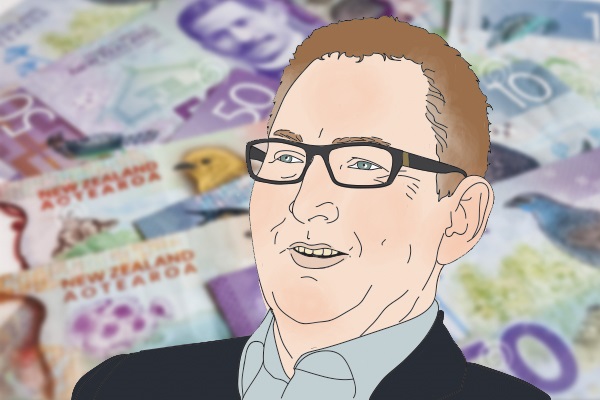
Orr has been welcomed by the market and is seen as a sensible pick for the job – Westpac chief economist Dominic Stephens called the appointment a “balanced choice.” He will bring a lot of energy to the job – Interest.co.nz readers can look forward to some entertaining press conferences during his tenure.
For market watchers, changes to the RBNZ Act – which will include adding employment to its mandate and implementing an official OCR decision making board – will be of great importance and will be watched very closely.
8: The looming shadow of the Trump White House.
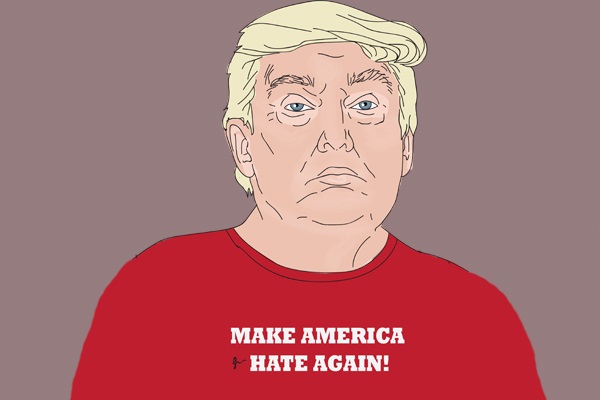
Donald Trump, the most newsworthy man on the planet, will no doubt continue to generate headlines in New Zealand this year. Regardless of local relevance, the Trump White House has become a common thread of political reporting in New Zealand, with both the Prime Minister and Opposition leader often forced to comment on his policies, behaviour or Tweets.
Expect this to continue into 2018 as the Russian election interference probe continues, and the former reality TV star continues to make waves with his … unconventional style of leadership.
7: How will the Greens fare?
Although the Greens are not technically in Government, their confidence and supply agreement with the Coalition puts them well and truly on-side with Ardern and Peters when it comes to presenting a united front.
But this does not mean they agree on everything – and this has been refreshing. In the lead up to the election, Labour and the Greens were so similar in many respects it was often hard to tell them apart. NZ First and Labour both opposed the TPP while in opposition, but have committed to supporting it – albeit with areas around the ISDS clause changed – now they’re in Government.
The Greens are still against the trade deal and have committed to voting against it in the House, when the time comes. This will work well with their base and having the room to disagree with the Coalition Government from time-to-time will help when it comes to standing out on the left.
6: Who will be the Greens new co-leader?
Over the next several weeks, much of the nation’s political attention will be squarely focused on who will be the next Green Party co-leader.
The Green’s constitution says the party must have one male and one female co-leader. The female co-leader spot has been vacant since Metiria Turei stood down in August.
With the chaos of the general election out of the way, the stage is set for the race. Marama Davidson is very likely to announce her candidacy for the role, as are Julie Anne Genter and Eugenie Sage. Both Sage and Genter are ministers, which gives them a slight edge. But Davidson is still a hot contender and is number two on the party’s list.
5: Prime Minister Winston Peters.
Although Peters’ tenure in the top job with be just a short six weeks – while Prime Minister Jacinda Ardern is on maternity leave later this year – it is likely to be the most action-packed period on the political calendar.
The NZ First leader is known for his unique political style and no holds barred approach to handling questions from the press. There will be no shortages of eye-catching political stories – especially stemming from the PM’s weekly post cabinet press conference.

4: Support for NZ First.
Speaking of Winston – it’s been a quiet few months for the dethroned King in the North. It’s no secret that Peters garners much of his support through his quick-witted sound bites and his aforementioned no holds barred approach to the media.
But since becoming deputy Prime Minister, the NZ First leader has shied away from the spotlight. Aside from championing a new multi-million-dollar horse racing track and a few trips overseas, Peters has not been capturing headlines in his signature style.
This showed in Wednesday’s poll, with his party’s support almost halving to 3.8% – under the all important 5% MMP threshold.
3: Will Bill English retain the helm of the National Party?
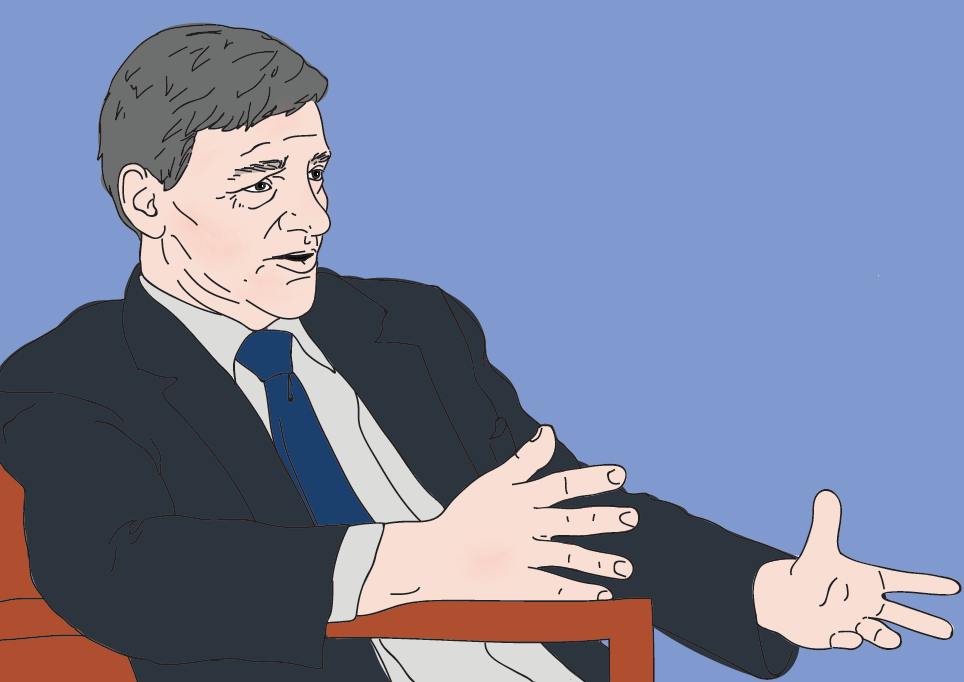
The rumours that veteran politician and former Prime Minister Bill English is preparing to step down as National leader were in full swing this week. Just hours before his ‘State of the Nation’ speech on Wednesday, news he was gearing up to step down as leader dominated the news cycle.
Despite the speculation, questions about National’s leadership have been swirling since the party lost power in October. It seems unlikely English will be publicly rolled – a knives out leadership war would be a bad look for a party that continues to poll highly.
English labelled the speculation “gossip” and said the only decider on whether he would remain in Parliament was his own performance.
And according to the latest Newshub Reid Research poll, released on Wednesday, National is still in a good position, with 44.5% support.
If he does leave the job, expect a clean succession. A scenario where English makes clear who his pick for the top job would be is likely; much as his predecessor John Key did with him.
2: If English does go, who would take over?
My pick for the front runner would be Tauranga MP Simon Bridges. He has taken to his role of Shadow Leader of the House like a duck to water and has proved himself an effective opposition MP, causing the Government headache after headache.
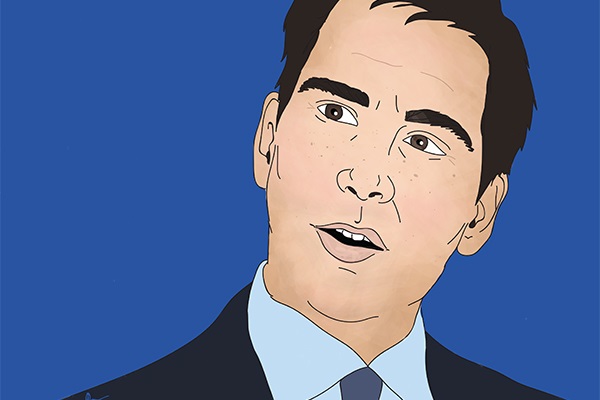
Other likely candidates include Judith Collins who, like Bridges, is right at home on the opposition benches and is a well-known name within the National Party ranks. Selywn MP Amy Adams would also be on this list, along with Auckland Central MP Nikki Kaye. Paula Bennett, despite being deputy leader, is not looking as likely to take over as her peers.
1: How much further has the ‘Jacinda effect’ got to run?
Wednesday’s Reid Research poll was good news for Labour with the party sitting on 42.3% – up 5.4% on election night. This is the highest level of support it has had in a decade. It’s leader, Jacinda Ardern, is also enjoying strong support at almost 40% in the preferred Prime Minister rankings.
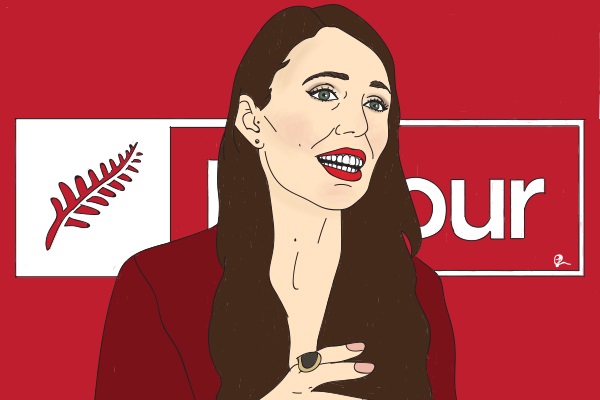
Labour is still in the honeymoon phase and a bump in the polls was not unexpected. But as the year progresses, how much both those figures change will be watched closely. How much will Ardern’s pregnancy impact Labour’s support? What will the economy do? What will happen while Peters is in charge? All of this will be reflected in Labour’s poll numbers as the year progresses.
33 Comments
Have noticed one or two news stories in the media that have commented on Trump in a more positive light. Surely this is MSM heresy? Could 2018 be the year where readers/viewers get a political range of views instead of an echo chamber?
You are so right!
Perhaps the MSM are in the final stage of grief "Acceptance".
I for one am excited from what I've seen from this writer so far. It will be good to see some more balanced reporting on Trump and Republican politics even if he domestic commentary is just PR for National.
The ''Jacinda effect''' is likely to run for as long as she is in Government.
Having a baby will trump any crappy policy or problems with her MPs.
Womans magazines are rubbing their hands in anticipation of a photograph of the little one attending its first day of school.
Aren't some of us shallow.
Agree totally.
We have our equivalent of a "royal baby" and just like royalty, whenever there is a baby or wedding the royals soar in popularity no mater their performance.
Whether or not Jacinda and the Labour coalition Government do well, the reality is that the baby is going to endear her to a significant number of voters and numbers is the reality of democracy.
Maybe a wedding for Jacinda in two years time?
One could take a cynical view.
2020 Election = Baby No 2.
2023 Election = Engagement
2026 Election = Marriage
2029 Election = Divorce
2032 Election = New love.
Could sew shut the political landscape for a very long time.
But as the recent Greens bill has shown. They will be in "power" but wont wield enough power to pass a law.
it will be the same as the john key effect,
what did he achieve that was huge and a game changer for the good of NZ, very little.
but people loved him and when i would ask his apostles why they would point to self made rich man WTF.
so for jacinda it feels the same to me,
i just hope that they do move policy ahead and dont go down the same route of just do only what is needed to win election again and bugger getting stuff done that needs doing.
How similar are numbers 8 and 5?
Winston is so much like Donald and that is not only in appearance.
I agree with you printer8. Winston is a Centralist politician and I see many of Trump's policies as being Centralist. News spiel to NZ from the Washington Post is not news but biased nonsense most of the time. Be nice if the author of this post had noted the reason Winston has had "a few trips out of New Zealand" as his job - representing the Government as Foreign Minister.
The greens will keep wasting opportunities, i.e. as just seen, they are more focused on cannabis reform than medicinal cannabis reform. Couldn't just ask for medical marijuana to be available via GP, nope had to go for the grow your own 6 foot plant on a window sill to let everyone know you have cannabis. Duh. Annoys me that they can do so much but don't want to, would rather blame everyone else for their own failures.
I say legalise the stuff, we have alcohol legal, we have opiates under prescription surely marijuana is no worse than either of those 2 things. Human beings, along with many animals have sought, since forever, mind altering substances, might be time for us to accept that. I reckon legal dope could aid in the fight against "P" and other synthetic compounds, which are destroying a whole strata of our society and are seeing huge amounts of money go out of the country to a black market.
Criminalisation of cannabis also causes everyone who thinks it is harmless to sort of criminalise the police in response. It seriously undermines their respect for the police as an institution and causes them to see the police as an authoritarian and repressive force without legitimate authority. That is the dangerous path that destroys a civilised society.
A pretty significant chunk of the police are all for decriminalisation or legalisation.
It's definitely beyond stoopid to have a substance with a proven therapeutic record and minimal side effects to be off the table for medicinal use.
i would call the greens sitting outside cabinet with a voice and change to vote a very smart strategy, look at how all the small parties have fared that have been patsies to the major party, most are gone, and NZF could be next.
i see this as WP last time, and if he was clever he would have allowed the greens to change the threshold to 3% as suggested by the review to keep NZF in parliament after he is gone. But i suspect ego has got in the way and the way he sees it he is NZF so once he is gone so be it
Looks like a duck ... swims like a duck ... waddles like a duck ?
.... Simon Bridges !
Lame duck ...
I don't think Bridges is viable. National needs someone who conveys ethical integrity more than the likes of Collins or Bridges.
They'll need someone more in touch with the issues and needs of younger Kiwis too, now that the current Labour PM is able to connect with this demographic more readily than the previous cohort of landed Boomers.
I know looks shouldn't really count but Bridges looks too much like a spiv for me
... that comment is water off a ducks back ...
Or ... is it water under the bridge ... if he is a duck ... lame or a spiv duck ... either or ... he's burned his bridges ...
"Bridges for Northland", could be their new slogan. Oh, I forgot, they tried that. "Bribery with Bridges"? Oh, no, too obvious. Darn.
He seems a nice enough young chap, but PM? Really?
They need to purge the entire party and start over with decent human beings.
Didn't Mao and Stalin and that other fella who must not be named take a similar view? They are just people, bumbling along like the rest of us, for the most part.
Speaking of whom - This has got to be one of my favorite interviews of all time. John Campbell vs Simon Bridges on deep water oil drilling. https://www.youtube.com/watch?v=eD2JKoKGrjA
Imagine the catastrophe had the deep water drilling gone ahead off Kaikoura before the earthquake in November 2016? Old shouty boy would look like more of a ...., than he did during the interview. All I can say is “thank Goodness National are gone!”
Cue ex-expat to shout me down and yell how amazing National were in government... and what a doomster I am for daring to question the points on Simon Bridges fingers...
Who’s shouting? If the Lefties weren’t here I wouldn’t bother visiting and posting. Political comment in my family and with my close friends is actively discouraged. We instinctively know who votes for who, but it’s not worth the potential schism in interpersonal relationships to discuss. You lot are the only insight I have into what makes lefties tick. Nothing so far has surprised me.
Ex Expat,
Define leftie. I would describe myself as a Social Democrat,a term with which many in Europe are comfortable,but not used here.I was self-employed for most of my business life,I am a long-time stock market investor,so why am I not a National Party voter? I worry about the rising level of wealth inequality-bad for society-I worry about environmental issues including the effects of climate change and on these issues,National is failing. However,i am certainly not anti business. If we want a good quality public services,then we have to earn the money to pay for them and we need a healthy corporate sector to help fund them. I have never believed that any one political party has all the answers and I could well vote differently next time round. Am I a leftie?
The 'leftie' thing was just a massive logic fail. Because somebody acknowledges the shortcomings and failures of the previous government, that somehow makes them left-wingers? No, ex expat, that does not logically follow. Like assuming that because somebody isn't a Blues supporter, then they must therefore be a Hurricanes fan, or if somebody doesn't like beer that means that they must love red wine. Just isn't a valid conclusion.
Blue meanie, you still owe me a beer over a lost bet where you bet National would win the election with an outright majority
While I agree with you on good riddance to National do you really think environmentally Labour are any better than National? I would suggest significantly no. Labour rank and file and many seniors (ie MPs) still think in terms of a "just environmental policy" ie if humans need it they get it and bugger the environment.
PS Simon Bridges is an idiot, if this is the best we can come up with as a "senior" MP god help us.
i think when national go down the route of picking a new leader there will be turmoil. PB will be kicked aside as many blame her for losing the election with a terrible attempt to knobble WP, which came back to bite in negotiations.
there are many that have waited a long time and if dont get the top job will work away on the inside to be next on the rank.
when you look at the top ten national MP's, some have been there so long and have bad history and lack appeal that they will need to go further down to get fresh and new, personally they need to go all the way down to a chris bishop and nikki kay team to have areal chance of a future
top ten
PB watch your back , DC worst speaker ever , SJ still looking for a hole , GB christchurch mess anyone , SB no bridges up north like promised because they lost byelection (petty) ,
AA possible , dr JC health is a mess , CF no appeal, MW immigration scams galore under his watch ,
we will see the same as what labour went through with a change of leader a couple of times until a true successor comes forth most of the long term front bench will be like the labour ex ministers and ego will get in the way of them moving aside so the party can renew itself.
how long did it take labour to rid it self of PG. AK, DC, CC, RB, PH
some had the sense to quit after 2008 but many hung in there for two or three more elections before they could be moved.
Nick smith comes to mind, he should have been moved on long ago and does more damage than good but must know where the bodies lie to stay at the top so long
Collins has too many inadequately covered-up scandals and corruption allegations to risk having them investigated properly, and probably only appeals to men of a certain age who would like her to spank them.
Maggie Barry reasonably likeable but lightweight.
Nick Smith has made himself a figure of fun and synonymous with failure.
Could end up with vicious knife-fight to the death between Nikki Kaye and Simon Bridges.
And at the end of that knife fight who better to stitch them up than Dr Death! Still simply unbelievable that that particular character could self promote and think to challenge Big Bill. Just goes to show how far-removed from reality the National lot of MPs in general were.
I'm sensing a change in the current politically. The Americans are slowly coming around to accepting and understanding Trump and his mission. This year will see his popularity strengthen.
We welcome your comments below. If you are not already registered, please register to comment
Remember we welcome robust, respectful and insightful debate. We don't welcome abusive or defamatory comments and will de-register those repeatedly making such comments. Our current comment policy is here.