
Reserve Bank (RBNZ) chief economist Paul Conway’s speech this week suggested that New Zealand was stuck in an inflationary wage-price spiral and only a recession can break the mania.
The central banker told the KangaNews-ANZ Capital Markets Forum that inflation had become widespread as businesses passed on higher costs and workers sought wage increases.
And he warned that returning inflation to target would be more difficult if the two groups were unwilling to recognise the pandemic, the war, and the storms had made everyone worse off.
What Conway barely acknowledged was the Reserve Bank’s role in creating inflation, which may have been triggered by these events but was escalated by a torrent of cheap money.
His explanation for inflation was that the pandemic, and Russia’s invasion of Ukraine two years later, reduced the ability of the global economy to produce goods and services.
Supply chains were clogged up, people were home sick, non-essential services were periodically put on pause, and a raft of workers chose to retire early.
All this meant there were less things available to buy and it was harder to deliver items around the world. This was when we saw empty supermarket shelves and had online purchases arriving weeks later than expected.
Meanwhile, the Treasury was forecasting double digit unemployment and the government pumped money into households to stave off a second Great Depression.
The Wage Subsidy Scheme kept most workers employed, the Official Cash Rate was cut to near-zero, and the central bank bought government bonds to increase the money supply.
Production in the global economy had contracted dramatically and yet the average person on the street felt better off than before. Personal savings and asset values soared during lockdown — for some it felt like a cash prize at the end of a race and euphoria set in.
It was a glorious era of takeaway treats, regional holidays, home renovations, and wardrobe resets for the majority of the middle-class.
Conway described it like this: “While lockdowns were tough going — especially for people living in Auckland — economic life for New Zealanders was surprisingly normal for many months during the global pandemic.”
But fiscal and monetary policy settings were anything but normal. Policymakers threw the kitchen sink at the economy and were dreaming up ways to toss the dishwasher as well.
Plans were made for negative interest rates and direct cash payments, although neither were ever implemented.
All this fiscal and monetary stimulus papered over the economic reality of what had happened and created an unsustainable financial bubble — which is only now deflating.
New Zealand’s current account deficit, which has blown out to its largest reading since the quarterly data started back in 1987, shows the country has been living well beyond its means.
Conway’s speech on Thursday was intended to be a reality check: the pandemic, the war, and the storms have not magically made us richer and our assets more valuable.
Rather, they have lessened our purchasing power and the sooner we accept that the better.
Widespread, persistent
In 2021, inflation was driven by significant price increases across a few specific products, but the following year it was mostly due to small increases across a broad range of things.
Conway said some of this was because businesses passed on higher input costs and workers tried to maintain spending power by seeking higher pay.
“These second-round effects create ongoing inflation, even after the original stimulus – a relative price shock for specific products like petrol or plasterboard – has died away”.
Inflation also spreads through an economy as some businesses increase their prices simply because they see other businesses doing so.
Customers are much more likely to accept price increases when there is inflation in the economy and profit-maximising firms can take advantage of that.
Healthy corporate profits over the past couple of years suggest that some businesses are doing more than just passing on increased costs to consumers; some are expanding margins.
The Reserve Bank wants consumers to baulk at price increases, refuse to buy the product, seek out a cheaper alternative; and not accept high prices as fait accompli.
It will keep lifting interest rates until demand for goods and services falls, businesses are forced to eat into their profit margins, and price-stability returns to the economy.
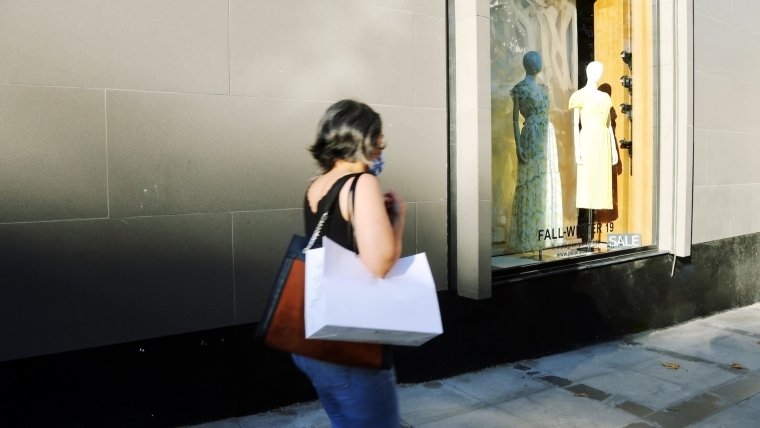
This will not be a painless process. Low-income households won’t turn on the heater even when it gets cold this winter, middle-income people might cut their budgets and wear last-season’s fashion, while high-income earners could miss an overseas holiday.
Businesses who want these groups to part with their limited cash will need to offer the best deal they can; not simply shrug and blame prices on inflation. Everyone will be a bit worse off.
Conway said monetary policy cannot do anything about the loss of real income stemming from global events and natural disasters, but it can stop inflation from self-sustaining.
“In short, monetary policy shifts demand in the economy through time… Higher interest rates push economic activity into the future whereas lower interest rates pull activity into the present.”
The Reserve Bank’s loose policy during the first two years of the pandemic pulled large amounts of economic activity into that period, disguising the real costs of what happened.
Thursday’s speech suggested the central bank didn’t want to make the same mistake twice and was willing to keep increasing interest rates, even as the economy slows.
Satish Ranchhod, a senior economist at Westpac NZ, said some thought RBNZ might moderate its forward guidance given the recent weaker economic data.
“For instance, the RBNZ might highlight that future rate decisions would be dependent on the evolution of economic conditions. Instead, the tone of today’s speech suggests that the RBNZ is likely to continue talking tough on inflation and inflation expectations”.
We welcome your comments below. If you are not already registered, please register to comment
Remember we welcome robust, respectful and insightful debate. We don't welcome abusive or defamatory comments and will de-register those repeatedly making such comments. Our current comment policy is here.