
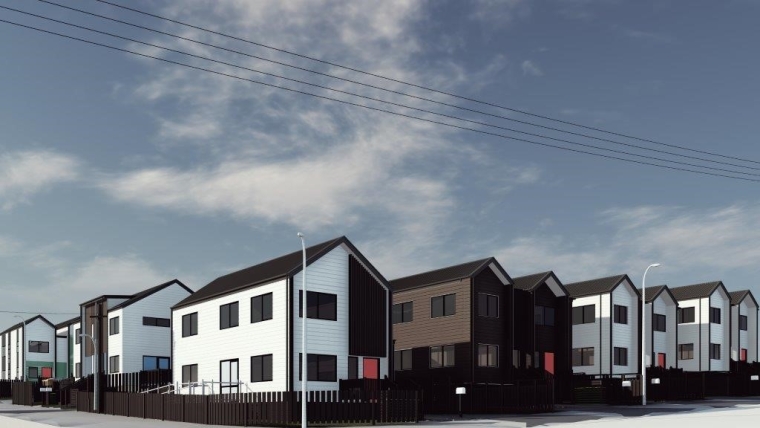
One of the most significant policies announced in the Budget was that the Government would provide funding for an additional 6000 state or community houses and another 2000 transitional homes (emergency accommodation provided on a short term basis).
The size of that commitment should not be underestimated.
The Government's own figures show that between June 2018 and the end of March this year the Government had built 2726 state houses, funded or part-funded the construction of 470 community houses, and that another 2393 state houses and 266 community houses were under construction.
So the Budget announcement will more or less double those numbers.
However whether the plans result in a corresponding increase in total housing stock over and above what may have already been planned is another matter.
Much will depend on how delivery of the new housing is achieved and the Budget announcement was short on detail in that regard, but it won't necessarily mean the Government will have to start the development of 8000 new homes from scratch to achieve its goals.
One of the hallmarks of this Government's housing policies is that it forms partnerships with private developers on new projects, which can see part of a development earmarked for state rental housing, part of it set aside for KiwiBuild homes and part of it for homes sold on the open market.
However the current economic turmoil engulfing the world is likely making the private developers in those projects nervous, perhaps to the point where they will be considering putting their involvement on hold.
Rather than having those projects put on ice, the Government could increase the number of state rental properties planned for such projects and get those underway as quickly as possible, underpinning the construction sector at the time when that support is most needed.
Its private sector partners could then return to the project a couple of years down the track when the economy has settled, allowing the developer to complete the project with homes to be sold on the open market when it is capable of absorbing them.
Another option would be for the Government to take over private developments that were at risk of failing because of the economic downturn and repurpose them for state or transitional housing.
That could be achieved by the Government purchasing the developments outright, or effectively underwriting them by leasing them for use as state or transitional housing once they were completed.
If such strategies are used they might not see the total supply of new housing increased over and above what was already planned, but it could change the mix of new housing stock, with more of the total supply of new homes being delivered as state and transitional housing rather than private housing.
That would mean the increased government spending would see more housing delivered to the bottom of the market where it is most needed, and it would also provide continuity of work for the construction industry in its hour of need.
So there are plenty of ways the increased spending on housing could be sliced and diced but however it is done, the construction industry will be one of the main beneficiaries.
The comment stream on this story is now closed.
You can receive all of our property articles automatically by subscribing to our free email Property Newsletter. This will deliver all of our property-related articles, including auction results and interest rate updates, directly to your in-box 3-5 times a week. We don't share your details with third parties and you can unsubscribe at any time. To subscribe just click on this link, scroll down to "Property email newsletter" and enter your email address.
We welcome your comments below. If you are not already registered, please register to comment
Remember we welcome robust, respectful and insightful debate. We don't welcome abusive or defamatory comments and will de-register those repeatedly making such comments. Our current comment policy is here.