
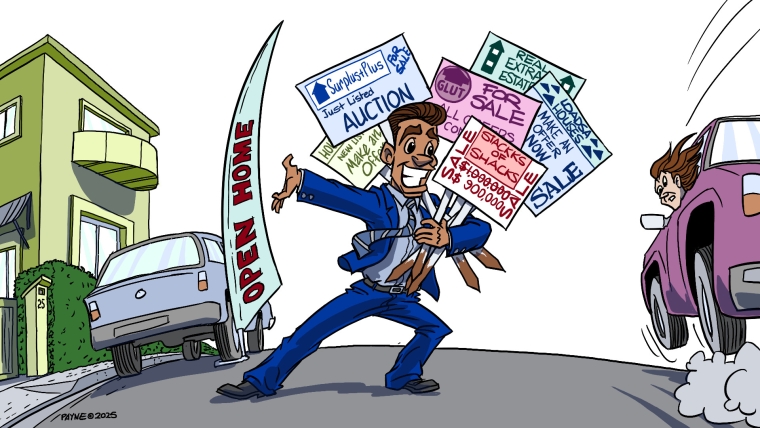
Average national residential property values rose in the December quarter, with Christchurch leading the way among major cities, but a glut of homes for sale means buyers start 2026 with the upper hand, Quotable Value (QV) says.
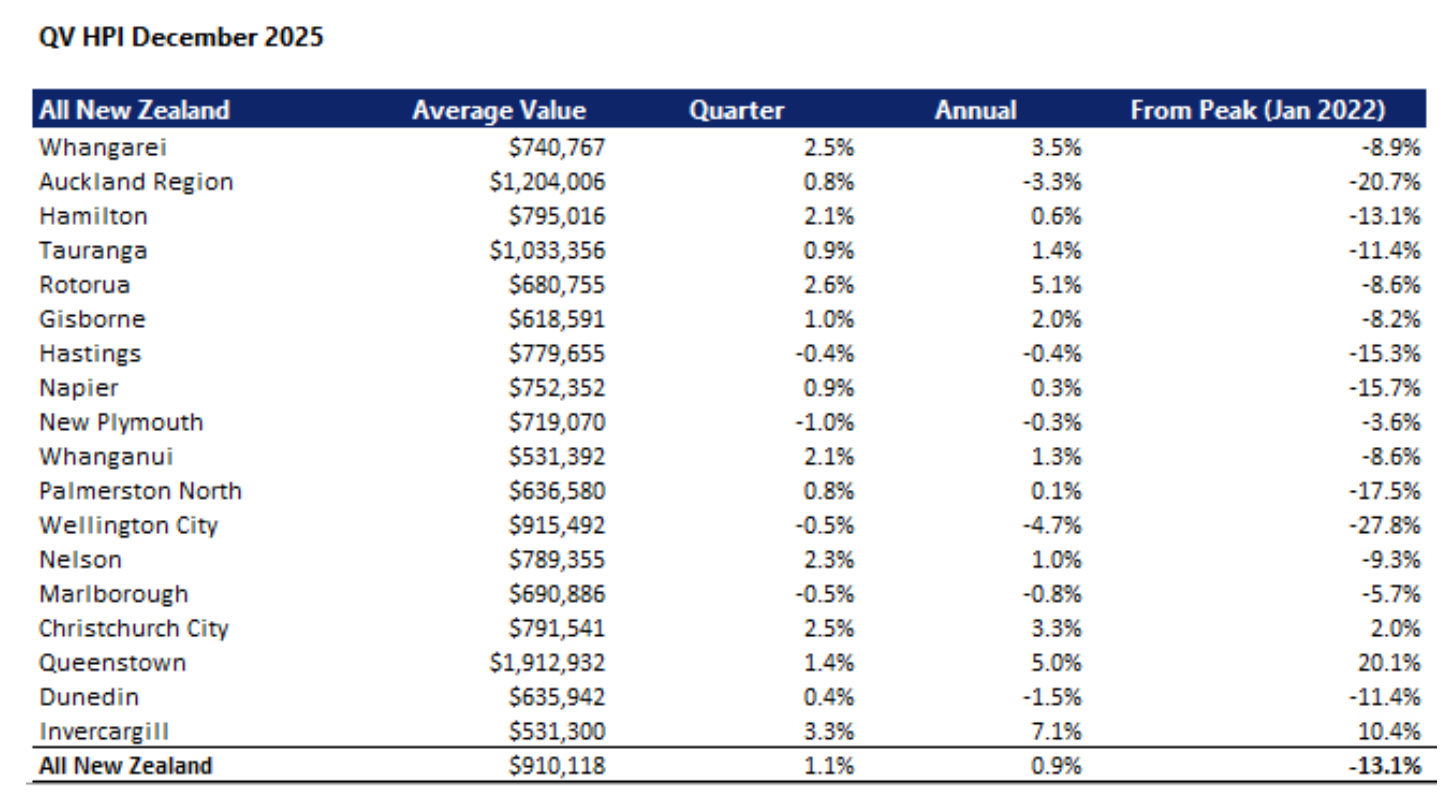
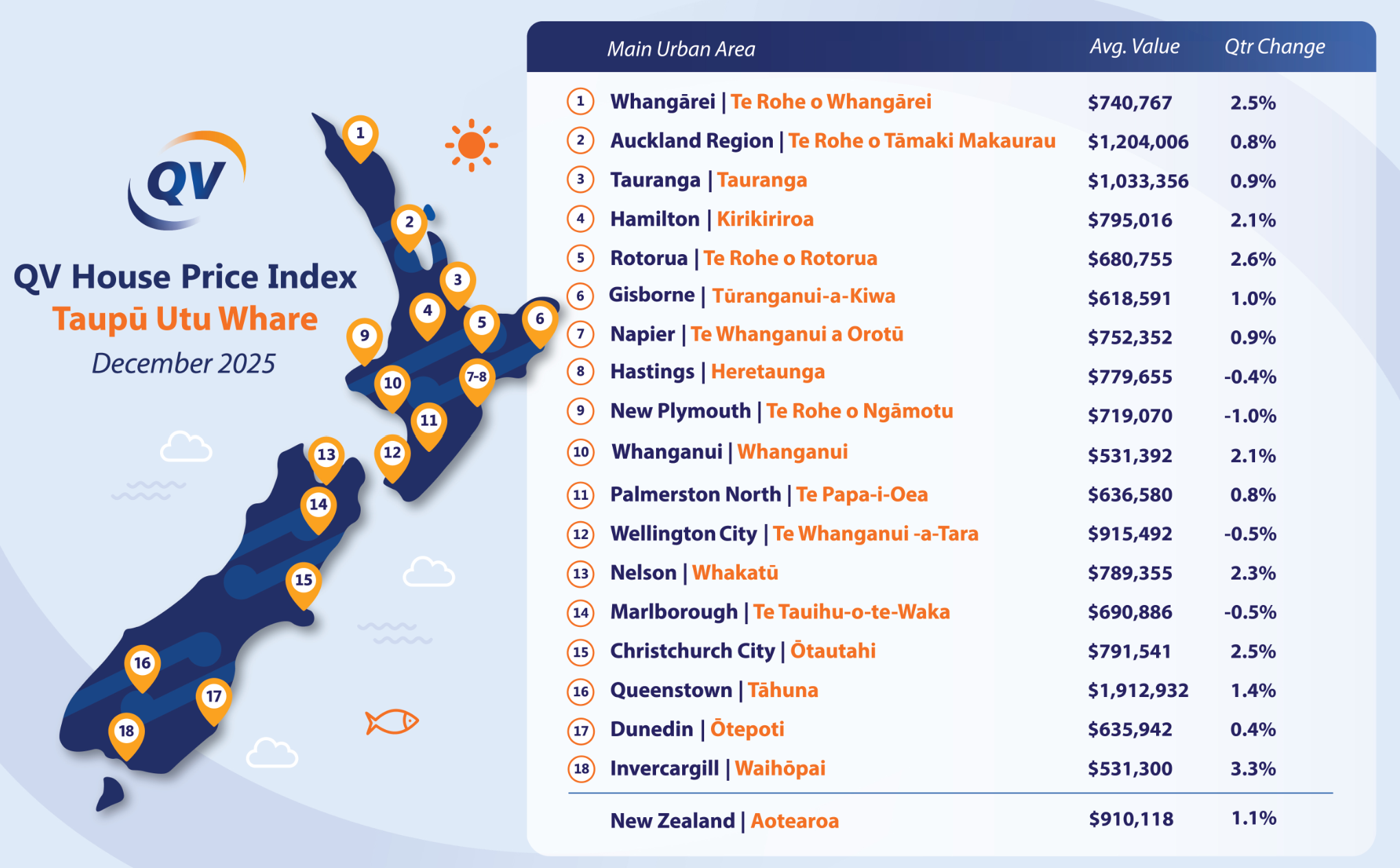
QV's House Price Index shows average residential property values across New Zealand rose 1.1% in the December quarter from the prior September quarter, lifting the national average to $910,118. Although that's 0.9% higher year-on-year, it's 13.1% below the national peak in January 2022.
The QV HPI uses a rolling three month collection of sales data, based on sales agreement date.
QV National Spokesperson Andrea Rush says the December quarter rise follows a prolonged period of flat or falling values during much of 2025. Rush says value increases are becoming more widespread across NZ, albeit the pace of change remains modest in many places.
"A clear majority of the areas we measure recorded quarterly growth, indicating that value movements are now occurring across a broader range of regions," says Rush.
However, big numbers of property listings remains a key housing market driver. The three big property portals ended 2025 with huge volumes of properties for sale. Realestate.co.nz had more than 30,000 for sale listings, TradeMe Property had more than 41,000, and OneRoof had over 38,000.
"With the number of homes for sale nationwide at the highest level in a decade, buyers continue to have the upper hand, with more choice and the ability to negotiate. This is keeping value movements in check, even as activity improves in some areas. That dynamic is also contributing to improved affordability in relative terms, particularly for first home buyers, who remain active across many parts of the country," Rush says.
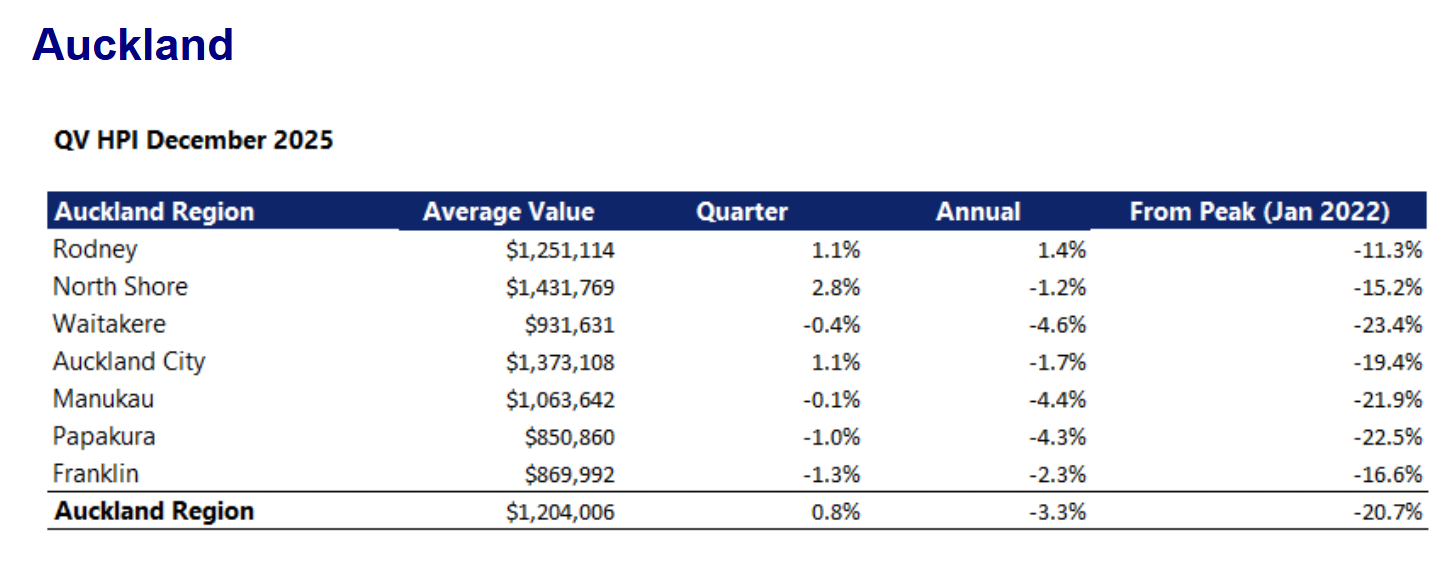
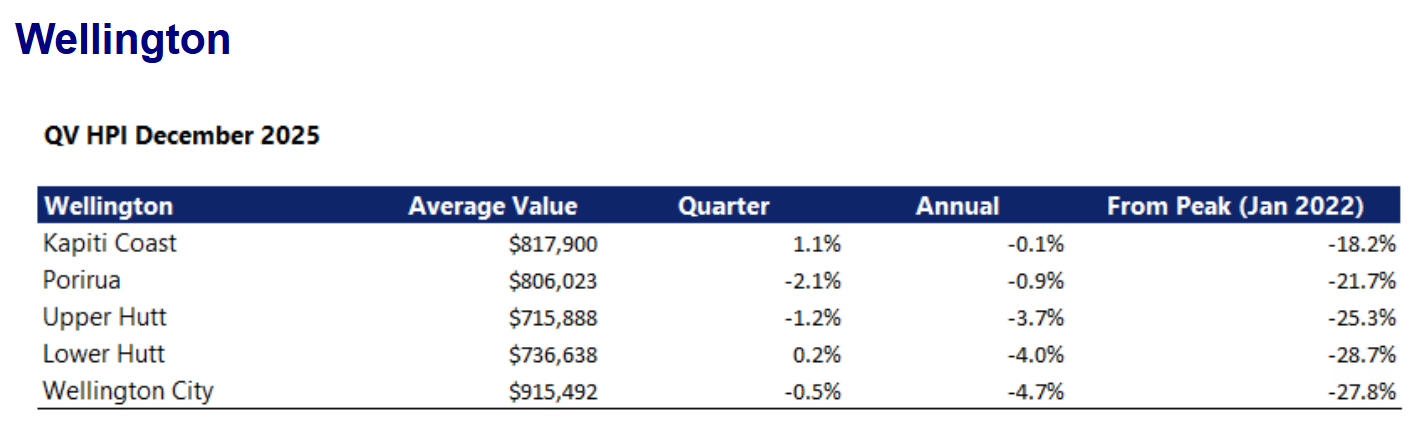
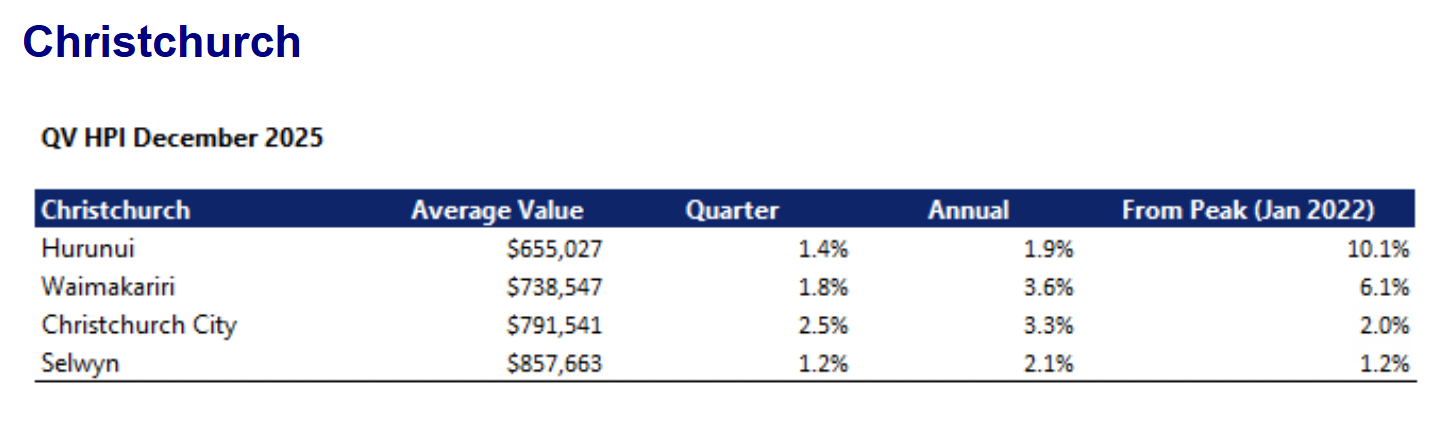
Of the main cities, Christchurch recorded the strongest quarterly growth at 2.5%. Next was Hamilton at 2.1%. The Auckland Region recorded a 0.8% increase, with Dunedin up 0.4%. Wellington City was the only major centre where values dropped, down 0.5%.
In the regions Invercargill recorded the strongest growth of 3.3%, followed by Rotorua's 2.6%, Whangārei's 2.5%, Nelson at 2.3%, Whanganui with 2.1%, Queenstown's 1.4%, and Gisborne at 1.0%. Tauranga and Napier were up 0.9%, and Palmerston North 0.8%.
New Plymouth was down 1.0%, Marlborough down 0.5%, and Hastings down 0.4%.
Development land value reset lower in some places
Rush says in the likes of Auckland and Christchurch, apartments and townhouses face pricing pressure because of ample supply, higher building and servicing costs, and because values for stand-alone homes have fallen.
"In many cases, buyers are choosing houses on their own sections offering more storage, privacy, living space and carparking over townhouses or apartments that lack these amenities and are often not significantly cheaper to purchase. Agents also report that buyers are favouring developments that do offer these features, particularly those in popular locations, over those that lack parking, storage, privacy and outdoor space," Rush says.
"We’re also seeing the effects of a reset in development land values in some locations, following elevated prices paid during the previous peak such as in Auckland’s Waitākere, Manukau and Papakura, where values have dipped more sharply. With QV CostBuilder data showing building costs remain elevated compared to pre-peak levels, alongside higher interest rates, some developers who paid a premium for land during the peak can no longer afford to develop or hold it, resulting in land being resold in some cases at significantly lower prices than originally paid."
Election looms
Rush says some uncertainty remains for the housing market this year, especially with an election looming.
"An election year can create a degree of caution, which may restrain activity at times as buyers and sellers take a more wait-and-see approach. As a result, any change in values is expected to be gradual rather than rapid."
Auckland high end prices rise, Wellington prices down almost 30% from peak
In Auckland QV Registered Valuer Hugh Robson says the biggest gain came at the higher end of the price spectrum, especially for homes priced between $2 million and $3.5 million, where sales volumes have risen.
“That segment has clearly regained momentum, and it’s helping to support overall values across the region," Robson says.
The average home value across Auckland is now $1,204,006, with values 3.3% below where they were at the same time last year, and 20.6% below the nationwide peak of January 2022.
QV Wellington Registered Valuer David Cornford says many parts of the Wellington region remain close to 30% below previous peak values, which is helping first home buyers enter the housing market.
"Lower prices have improved affordability for some buyers. However, interest rates remain much higher than during the peak which means servicing debt is still a barrier to many potential buyers," says Cornford.
In Christchurch QV Registered Valuer Michael Tohill says property listings are still high, while selling times have continued shortening, reflecting a well functioning market.
"Demand remains particularly strong in the $1 million to $2 million price range, with competitive bidding and solid sale prices being achieved," says Tohill.
He says building activity across Christchurch, Selwyn and Waimakariri remains steady, with builders reporting healthy forward work programmes well into 2026.
The comment stream on this story is now closed.
We welcome your comments below. If you are not already registered, please register to comment
Remember we welcome robust, respectful and insightful debate. We don't welcome abusive or defamatory comments and will de-register those repeatedly making such comments. Our current comment policy is here.