
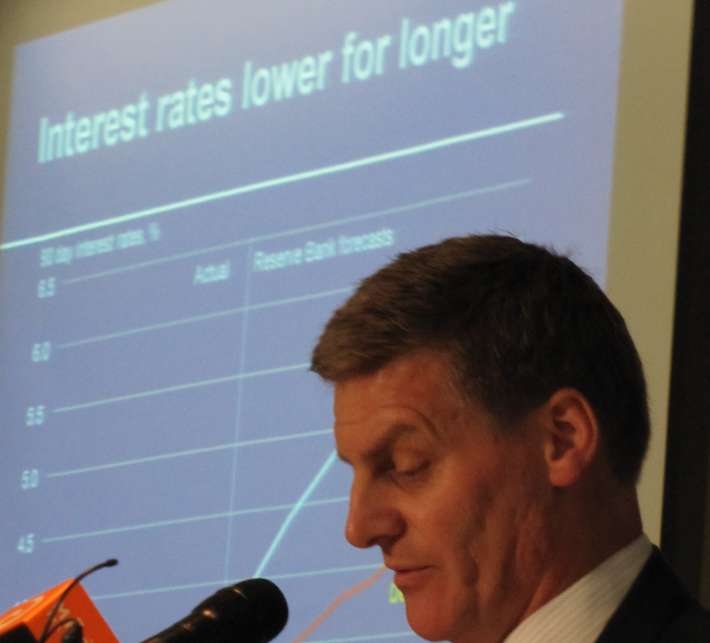
The Auckland City Council needs to ensure the settings are in place to ensure more low cost housing is built in New Zealand's biggest city, Finance Minister Bill English says.
Speaking on TVOne's Q&A programme to Shane Taurima, English was asked whether the government would consider borrowing extra money to invest in a massive house construction programme in Auckland in order to help drive down house prices there.
English replied by saying the government was already putting a lot of money into Auckland infrastructure, such as roading projects.
"With respect to housing, I mean, some of this is going to be a catch up from a period of years where there wasn’t much new housing construction started. That is starting to pick up," English said.
"With respect to the government’s contribution, we have a very large stock of houses through Housing Corp in Auckland. Roughly a third of them are the wrong size, in the wrong place and in poor condition, and we’re going through a very large-scale exercise to correct that so that we can actually help more people who have housing problems," he said.
The government was talking to the Auckland council about how it planned to help with the housing situation.
"We want to make sure that under the council’s plans, they take notice of housing affordability, that they make rules that are going to enable more and lower-cost housing; not less and more-expensive housing that would have to be subsidised by the tax payer," English said.
(See interest.co.nz article, Accommodation Supplement: Landlord subsidy punching a big hole in govt books due to unaffordable housing, or an essential benefit?)
The Auckland City Council had been planning to allow only 25% of new house building in the city over the next 30 years to occur within the city's existing metropolitan urban limits. It is now looking at a 60/40 split.
(See 2009 article, Motu's Grimes says Auckland urban limits driving land prices up, stifling development.)
Rising LVR ratios
Meanwhile, English was asked whether he was worried about first-home buyers again taking mortgages with loan-to-value ratios above 90%, possibly spending more than they could afford. Asked whether that was the government's worst nightmare, English said it was not.
"Look, there’s some pressure in the Auckland housing market, but there are no signs of some runaway bubble," he said.
"And bear in mind here that neither the banks in New Zealand nor the people who lend to our banks are going to finance some housing bubble right now. So even if there’s a few prices spiking up at the moment, credit growth - the amount of money actually leant for new mortgages - credit growth is actually around zero," he said.
On the 90%-plus mortgage lending, English said if there was a shortage of housing in Auckland, "then you’re going to have a bit more lending in order to enable the construction of more houses to alleviate the shortage."
"So, yes, we would expect a bit more money going into the housing sector. That is how you get more houses that respond to the demand that’s there," English said.
"What we’re saying to banks is they have to comply with the now stricter requirements on their capital arrangements, which will prevent them from financing a runaway housing bubble. But some sign of growth and lending from banks is actually positive for the economy and positive for the Auckland housing market," he said.
We welcome your comments below. If you are not already registered, please register to comment
Remember we welcome robust, respectful and insightful debate. We don't welcome abusive or defamatory comments and will de-register those repeatedly making such comments. Our current comment policy is here.