
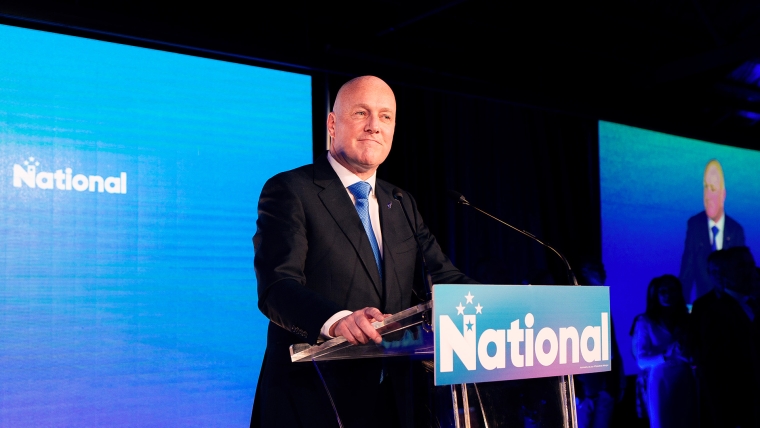
The political year has kicked back into life with the National Party’s caucus retreat in Christchurch on Thursday and an abrupt resignation from the Green Party.
Politicians are returning from their holidays in time for the first Cabinet meeting this coming Monday and Parliament’s first session the following week.
Prime Minister Christopher Luxon used his public speech to his caucus colleagues to encourage them to stay focused on New Zealanders everyday concerns.
“If we stay in touch with Kiwis… and forget about the voices of the commentators and the pundits … I'm sure that we can go on to actually win the next election in 2026 as well”.
He said National had been elected because New Zealanders felt the country was going in the wrong direction and the Labour Party had failed to manage the basics.
“They didn't want a government distracted on some pet ideological projects or some ideological debates. They want us to really focus on the things that will matter … and they have trusted us to get it right”.
Staying focused on everyday issues shouldn’t be a problem for National—a broadchurch, centrist party—but could be more of a challenge for its culture warring coalition partners.
Both the Act and New Zealand First parties have staked out strong positions on opposing the prominence of te reo Maori and Te Tiriti O Waitangi in public life.
Luxon’s coalition Government now faces intense backlash from Māori groups seeking to defend the progress they have made since the cultural renaissance in the 1970s—2000s.
New Zealand’s political calendar always starts with a pair of Māori events, Rātana and Waitangi Day celebrations, but this year there will be a third.
The Kiingitanga movement has called a national hui at Tūrangawaewae marae in Ngāruawāhia next week to discuss how best to respond to the Coalition’s proposed reforms.
Luxon won’t attend this event but did meet with Kiingi Tuuheitia at the start of this week.
Much of the political energy this summer will be focused on Act’s proposed Treaty Principles bill and other Government policies that affect the status and rights of Māori.
Meanwhile, National will press ahead with its 100-day plan, which mostly consists of slimming down the Government’s agenda to free up resources for basic services or tax cuts.
This year it has already ended the Clean Car Discount, introduced road user changes for electric vehicles, and officially cancelled the Auckland Light Rail project.
Imposing road user charges on electric vehicles has the odd effect of taxing those cars at a higher rate than efficient petrol cars — despite an ongoing effort to electrify NZ’s fleet.
The Coalition Government has until March 5 (counting the holiday period) to complete its 100 day plan.
Scuppering scandals
Prime Minister Luxon also used his caucus retreat speech to encourage his MPs to support one another throughout the Parliamentary term.
“Politics is a team sport,” he said. “And there's things that we all each can and can't do, but we support each other as we go up and down as a team”.
“Trust the plan, stay connected to each other, support each other and make sure that we are playing our roles on our team … to the very best of our ability”.
The backdrop to these comments was the dramatic downfall of Green Party MP Golriz Ghahraman, who Police charged with two counts of shoplifting this week.
In a resignation statement, the third term MP said the stresses of the job had affected her mental health and contributed to her behaviour.
Speaking to reporters on Thursday, Luxon said he expected his caucus to look out for one another’s mental health.
“When each of us are going through tough times, we actually know the people that are going to matter are the people that are in that room”.
He said they had talked a lot about providing support during regular caucus meetings and in a three hour session during the recent retreat.
Newer MPs had also been “buddied up” with senior ones who could provide support and guidance throughout the term.
Luxon also asked his MPs to focus on building relationships in their electorates and to learn to be good Parliamentarians in the house and select committees.
We welcome your comments below. If you are not already registered, please register to comment
Remember we welcome robust, respectful and insightful debate. We don't welcome abusive or defamatory comments and will de-register those repeatedly making such comments. Our current comment policy is here.