
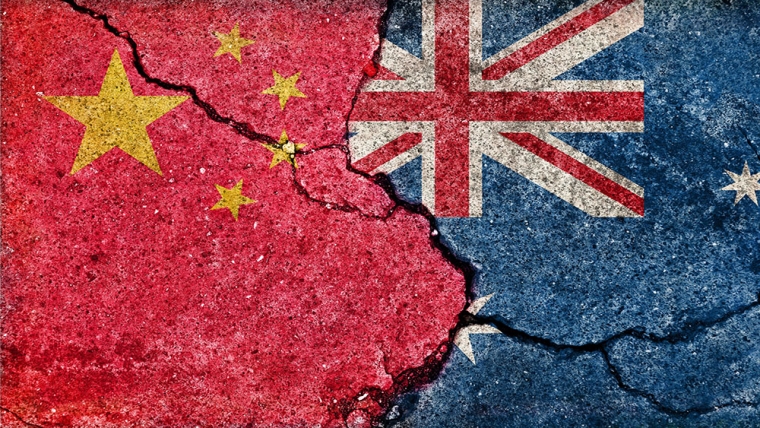
Former Prime Minister Helen Clark has published an open letter to Christopher Luxon, urging his Government to stop taking an “adversarial stance” against China.
The letter was signed by former politicians Geoffrey Palmer, David Carter and Don Brash, as well as Carl Worker, a former ambassador to China, and David Mahon, a prominent New Zealand businessman based in Beijing.
Former Prime Minister John Key did not sign the letter, though he has previously spoken in support of stronger ties with China.
The group paid for full-page adverts in five major newspapers across the country over the weekend, aiming to catch the attention of Prime Minister Christopher Luxon ahead of an expected trip to China.
The Prime Minister has yet to visit New Zealand’s largest trading partner, despite being more than halfway through his first term and having promised to double exports over 10 years.
In a press release, Helen Clark said it was important to maintain good relations with the United States, but New Zealand shouldn’t join any defence programmes “explicitly aimed at China” — such as AUKUS and the possible Pillar Two arrangements.
"For many years, New Zealand has maintained a balanced foreign policy, building strong relationships with both the United States and China. That has served our national interests well. Recent moves by the Government, however, suggest an increasing willingness to align New Zealand with the United States in a way that could harm our relationship with China.”
Drifting west
The shift towards the US reportedly began under Jacinda Ardern but has become more visible since the Coalition Government took office.
A Defence Capability Plan released earlier this year cited the risk of military confrontation between China and the United States as part of the rationale for a $12 billion investment in a more “lethal” defence force.
Clark and the other signatories criticised the Coalition for authorising New Zealand naval vessels to sail through the Taiwan Strait, which separates mainland China from self-governed Taiwan.
The move has been cited as a possible reason three Chinese warships sailed through the Tasman Sea, between Australia and New Zealand, earlier this year. Some have suggested it was a form of retaliation.
When Defence Minister Judith Collins spoke publicly about the Defence Capability Plan recently, she was asked whether New Zealand had provoked the sailing through its own naval actions near China and by being part of Five Eyes.
Collins replied that New Zealand had a “very close relationship” with China on economics and science, and a “respectful relationship” on maritime and security issues.
“When we pass through various areas and international waters, we are very careful to make sure we follow the rules, just as China did when it came down the Tasman,” she said.
Many in the audience believed that question—and another about “Trumpian America” instigating a future war in Asia—were likely to have been planted by the Chinese embassy in Wellington.
China’s ambassador has also openly criticised several government statements and actions, including a social media post implying Luxon’s visit to India had damaged the China–New Zealand relationship.
Trade without trust
Meanwhile, Kiwi businesses continue to sell more than $20 billion in goods and services to China — almost a quarter of all exports. It remains a key economic relationship at a time when free trade and market access can no longer be taken for granted.
Don Brash, former National Party leader and Reserve Bank Governor, now chairs the local subsidiary of the state-owned Industrial and Commercial Bank of China.
In the press release, he said it was crucial to retain a “bipartisan commitment” to the relationship with New Zealand’s largest export market.
“Our economic and security interests are best served through continued dialogue and co-operation, not through alignment with geopolitical tensions that could have long-term consequences."
The letter’s signatories want Luxon to use his upcoming trip to Beijing to “reaffirm New Zealand’s commitment to its strategic partnership with China in the interests of a peaceful and prosperous region and world”.
The open letter said: “It would not be surprising if China were to come to the conclusion that the special relationship which New Zealand has had with it since becoming the first developed country to have a free trade agreement with it in 2008 is no longer so valued by New Zealand.”
“We see no upside and very considerable downside in the situation which has developed.”
We welcome your comments below. If you are not already registered, please register to comment
Remember we welcome robust, respectful and insightful debate. We don't welcome abusive or defamatory comments and will de-register those repeatedly making such comments. Our current comment policy is here.