
sign up log in
Want to go ad-free? Find out how, here.

If she is serious about balancing the books, and restoring Pay Equity, Labour’s finance spokesperson, Barbara Edmonds, cannot avoid imposing austerity on her party’s own voters

Public Policy / opinion
If she is serious about balancing the books, and restoring Pay Equity, Labour’s finance spokesperson, Barbara Edmonds, cannot avoid imposing austerity on her party’s own voters
be
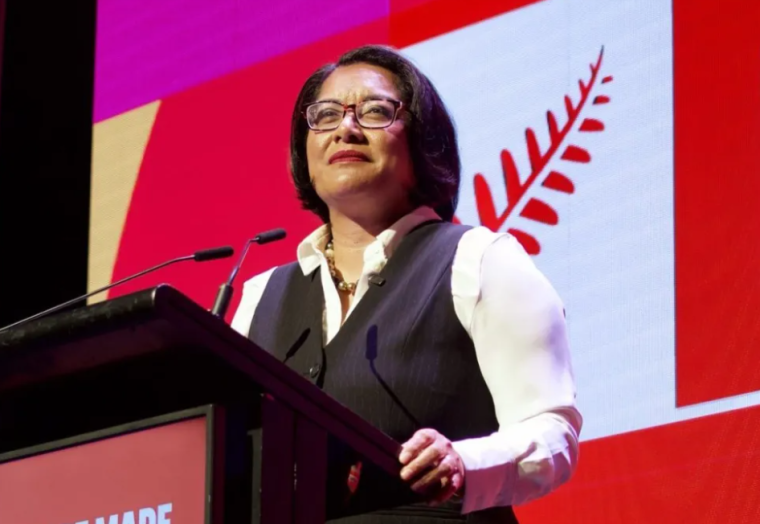
Barbara Edmonds.

By Chris Trotter*

Labour could win in 2026, but the fiscal and monetary conservatism of its finance spokesperson makes victory increasingly unlikely. Barbara Edmonds promise to “balance the books” hasn’t just handed over Labour’s hopes of electoral victory to Fortune as hostages, it’s sold them into slavery.

Edmonds argues that policy-making is all about the choices politicians make – which is indisputable. What she neglected to tell her party on Saturday, 29 November, however, is that the choices she has already made will, should Labour be successful in re-claiming the Treasury benches, leave the new government committed to a programme of swingeing austerity. Not that New Zealanders have much cause to worry, Edmonds’ policy choices have almost certainly ruled out the possibility of there being one.

Labour’s enemies have only to inform the electorate of Edmonds’ impossible economic arithmetic. Taken together, Labour’s commitment to restoring the Pay Equity claims extinguished under urgency by the National-Act-NZ First Coalition ($13 billion) coupled with the party’s commitment to footing the bill for meeting New Zealand’s climate change obligations ($2 billion to $5 billion) mean that, before it does anything else, an incoming Labour-led government would need to find “savings” amounting to (at the very least) $15 billion.

That would be a very tall order: even if the incoming Labour-led government was committed to lifting the rates of existing taxes and introducing a comprehensive array of new ones, which it most emphatically is not.

Just listen to Edmonds’ perverse boasts about the one new tax she is committed to introducing, Labour’s thin and fiscally anaemic Capital Gains Tax:

“In my first Budget as Finance Minister, I will introduce a simple capital gains tax on profits made from investment and commercial property. It is part of my plan to reward productive investment that grows the economy, not just the housing market. And because I am so determined to grow the economy, the tax will be targeted. The family home is exempt. Farms are exempt. KiwiSaver, shares, business assets, inheritances, and personal belongings – are all exempt. “Did you hear that, Christopher Luxon? They. Are. Exempt.” 

It is difficult to imagine a more abject surrender note to the defenders of neoliberal economic orthodoxy, but Edmonds manages it by reaching for the oldest and most hackneyed analogy of conservative finance ministers – comparing the management of a complex modern economy with the management of a household. But this is exactly what Edmonds does:

“As a mother of eight I know what it means to manage responsibly and make every dollar count. Taxpayers’ money should be spent with the same care. When I was growing up, every cent mattered. While we raised our young family on one income, every cent mattered. When I was a tax lawyer working with small businesses, every cent mattered. That’s the approach I will take as Minister of Finance. Getting the economy growing and balancing the books means we can’t say yes to everything – and I make no apology for that.”

Professor Richard J. Murphy, one of the world’s more vociferous promoters of “Modern Monetary Theory” (MMT) responds to the household analogy like this:

“[W]hen the state spends, what it puts into the economy becomes somebody else’s income, but that in turn then provides a second person with income, and on, and on, and every single time that happens, tax is paid.  So, if the government cuts its expenditure, it also cuts its income, and households don’t do that. So, governments and households are fundamentally different.”

Would Barbara Edmonds cut back on the amount of food, clothes and energy she purchased for her kids if she owned her own bank and could create her own money? Of course she wouldn’t! She’d do what the New Zealand state did when its citizens were threatened by Covid: create enough money to keep them safe and see them through. And yet, like every reactionary finance minister in history, this is precisely what she is promising NOT to do. Primly reassuring Labour’s AGM that:

“Responsibility must always come first. My job will be to make the hard, careful choices that grow the economy and give businesses and families the stability they need to plan. We won’t fix everything overnight, but as Finance Minister I will deliver the stability we need to build the future our country deserves. Responsibility, hard and careful choices, stability.”

The ridiculous assumption here is that Labour will be given the time needed to finally bring home the bacon. But this is a vain hope, especially when the extraordinary lack of courage and imagination in Edmonds’ economic policies makes any return on the voters’ electoral investment in the centre-left unlikely to be realised in anything under a decade.

Does the Labour leadership really believe that the voters are going to give Labour that long? Are they really that confident that the loyalty of working-class wage-earners will not be  tested beyond breaking-point by the spectacle of New Zealand’s welfare state wasting away on life-support while teachers, nurses, and other pay equity claimants suck $13 billion out of the economy?

It would seem that they are. So confident, in fact, that any Labour member, or MP, unwilling to accept Edmonds’ “responsible” microeconomics is now most unlikely to rise further within the party’s ranks. According to the NZ Herald’s political editor, Thomas Coughlan, such fiscal and monetary mavericks now “feel marginalised within Labour – and people on both sides of the debate agree they are right to feel that way.”

Labour’s trade union affiliates may have lined-up on the stage behind newly-elected Council of Trade Unions president, Sandra Grey, but all such straggly gestures of solidarity are rendered moot in the light of Edmonds’ reactionary economics.

Inspired though she so obviously has been by the democratic-socialist victory of Zohran Mamdani in New York, if Grey believes her challenge to “give workers a reason to vote for you. We need not only a change of government, we need a change in the economic, industrial and social order […..] We need to be courageous”, is going to fall on anything other than deaf ears then, clearly, she has not been paying attention.

The New Zealand Labour Party of 2025 draws its inspiration not from the USA but from the United Kingdom. Barbara Edmonds, like Sir Keir Starmer’s equally timorous Chancellor of the Exchequer, Rachel Reeves, is not seeking to manage her nation’s economy in the name of the people, but for the benefit of the markets.

Unlike Reeves, however, Edmonds does not have to keep one eye on the responses of her party’s left-wing MPs. In any shape or form recognisable to the New Zealand socialists who led Labour to victory in 1935, there are none.


*Chris Trotter has been writing and commenting professionally about New Zealand politics for more than 30 years. He writes a weekly column for interest.co.nz. His work may also be found at http://bowalleyroad.blogspot.com.

We welcome your comments below. If you are not already registered, please register to comment

Remember we welcome robust, respectful and insightful debate. We don't welcome abusive or defamatory comments and will de-register those repeatedly making such comments. Our current comment policy is here.

61 Comments

Duplicated: website glitch. 

Up
1

The brute arithmetic aside, is there also an issue of trust that any policy won't be hijacked or subverted by the special interest groups that are now Labour's support base? 

Up
1

"the extraordinary lack of courage and imagination in .... economic policies"


Seems to be what's on offer across our voting options in next year's election.  With only a couple of unelectable fringe offeri gs from the minor players.

Up
1

Find it extraordinary that the electorate could possibly contemplate a 7th Labour government so soon after the carnage inflicted economically by the 6th. Yes of course there was covid but that neither necessitated nor justified the open slather spending that they revelled in. As well the electorate for 30 years has made damn sure that the Greens be kept out of formal government, at the cabinet table in other words, and their behaviour of late has hardly quelled that suspicion has it. And then there is TPM, say no more!

Up
11

If you look at economic indicators like GDP and unemployment, the current government are far worse. 

Up
0

That is because National are trying to rebalance the books after Labour's massive overspending.

Up
9

I'm a frequent Green voter, but I have to say the recent promise to revoke any fast track projects even if they've been approved is a problem for me. I don't like the direction we're going in where each new government's first set of priorities is to undo what the last guys did - we can see the chaos this approach has caused under the current coalition. 

Up
5

I'm in the public sector and I'm hearing good things about work our board chair is doing to try and move towards some bipartisan goals to stop us from being a political football.

You're right to be concerned as I can't make any meaningful impact in my work if there's a reset every 3 years.

Up
6

So basically she’s got four options:

1) pay equity and austerity

2) pay equity and extra tax

3) pay equity and more borrowing 

4) no pay equity 

Hard to see NZers wanting any of the first 3 IMO. 

Up
3

Grow our per capita productivity to the point we can afford higher pay and pay equity? Don't see much sensible about that in anyone's policy.

Up
1

Can the government produce that? Maybe over the very long term by spending more on education etc. They could promise pay equity in 50 years time. 

Up
1

Maybe over the very long term by spending more on education etc

That's really the problem.

"Just get the country to make more money" is super easy to say. The answers are often also vague. We know that wealth and living standards improved by building roads, increasing education, that sort of thing.

But after a point, they have diminishing returns, especially if they're done for the sake of it. If we take education, we have massively increased tertiary education levels, but the result has just been more debt, and not higher incomes. Or we could build fast rail, that'd never get the patronage to pay for itself.

For the government to invest with the hopes of generating more than they spent, would require some truly unique entrepreneurial punts, which is the exact opposite of how the government thinks. They're instead trying to innovate via committee and plenty of feasibility studies.

Up
2

They could spend more on the right types of education- maths, physics, engineering, IT, medicine, biology, etc. Although they might all become extinct from AI. 
Or they could invest in the bigger cities to encourage the higher income earners to live in NZ. That doesn’t seem to fit within either parties ideology unfortunately. 
Labour only want to “invest” in day to day costs like health and handouts. National only want to “invest” in roads that have negative BCRs. 

Up
1

They could spend more on the right types of education

Yeah, we don't even get the basics right - we have heaps of grads, and yet also skills and quals shortages.

Although they might all become extinct from AI. 

And there's issue number 86; the government not only needs to have a rock solid economic growth plan, but also be able to predict the changes that are coming over the next 20 years or so. And even the private sector is going to have more misses than hits there.

Up
4

After some years of working with and mentoring startups and small firms, these are my immediate thoughts:

Education is only part of the only answer: there are a lot of practical things we could be doing, but make practical skills a much higher priority. We need more electricians, medical people of all kinds, engineers and so on, not more communications, sociology, legal and political science grads.

Give real incentives for efficiency: look at our building industry, where that seems to be a foreign concept and internationally well-proven methods and technologies are still not used. We still use error prone muscle power rather than machinery.

Unpick the private industry oligopolies in building, banking and others, and public monopolies on planning, that make doing real things here so expensive.

Concentrate on the things we do well, and move to doing real things rather than service industries and consumer driven demand that are going to wind up with us essentially standing behind counters, selling things to each other rather than making anything.

Stop being a handbrake on innovation: the instant response seems to be to regulate anything new - but to somehow do it both slowly and poorly so it needs to be kludged up later. It's also bad for creativity to have to endlessly work through administrative processes where everyone sees themselves as liable but no-one seems to have the power to make a decision with anything but reluctance - the recent changes to prevent councils being left holding the baby if something goes wrong in a building project are a good start, provided it means simplified building processes.

Up
4

Give real incentives for efficiency: look at our building industry, where that seems to be a foreign concept and internationally well-proven methods and technologies are still not used. We still use error prone muscle power rather than machinery

We're actually not too inefficient at building, the problem comes from a rolling level of new standards and legislation. That and we insist on bespoke designs when we should be pumping out houses like they're Toyota Corollas.

If there's a proven way to do building way more efficiently, someone is going to do that, because that'd make them more competitive in the market - the incentive is innate.

Up
2

The market incentives are there, but it seems as though there are too many entrenched mindsets, for whatever reason, for large-scale innovation to actually take place. Our build costs are 30% above Australia's and more than that over the USA, UK or any country in Asia. So, no, we're not cost effective house builders becasue so much of what we do is a low volume, fragmented cottage industry in a tiny market that can't leverage economies of scale.

Example: in the dark days of 2019 a scheme was come up with to bring in factory-made Structural Insulated Panel System (SIPS) houses from Canada. The one Canadian firm involved in that particular said they could put on an extra shift and would be able to ship hundreds of kitset houses per month if required. SIPS panels have been around for roughly 40 years, but are only infrequently used here becasue of the perceived material and labour costs of low volume manufacturing - but that gets offset by being able to have a weathertight house closed in, in two weeks, and having them done in real volume in an automated factory in Canada, that our volumes can't justify here, would have reduced the material cost to comparable to sticks and fluff building, while the labour costs would have plummeted. Once Fletcher's then set up their prefab 'factory' government interest just seemed to evaporate and their prefab housing setup was shut down this year. So: lots of incentive, but the mindset seems to stay the same as costs keep escalating.

Up
1

If it's pitched in such a way where people don't see they're ultimately paying for it somehow, it'll be a shoe in.

Up
2

Wouldn’t the opposition point out how we pay for it? 

Up
0

They always do, but once you mention "free money" most people turn off.

Up
3

..."there is no free lunch"

Up
0

Those that vote for it do indeed. Free 20hours childcare - gets sucked up in other costs by daycare providers, more money for benefits - gets sucked up by increased cost of living, Tacx breaks by current govt - got sucked up by increased cost of living. At some point the masses need to see past the ideas, and think if the targeted beneficiary of a policy will actually see the intended benefit, or if they'll simply be a vessel for the money to be hoovered up by those who will exploit it. 

Up
2

"4) no pay equity"

& acknowledgement of the entitlement "have my cake & eat it" scam it is.

Up
2

Does anyone know if this pay equity thing worked both ways, or did it specifically mention women (which is clearly not equity). For example, I imagine rubbish collection is mainly men, and I also imagine it’s not well paid considering the working conditions, so they get a pay rise too?
How can the government determine fair pay rates when pay isn't fair, it’s set by supply and demand? The only way I can see is to outsource the job to the private sector who can then compete for employees. It probably also reduces the ability to strike. May be able to pay less!

Up
0

Exactly my point. How can a government determine what a fair wage is? What does fair mean? 

I can see the issue - the government is a monopoly employer and can create lower wages (for everyone not just females). Wouldn't the best fix for that be to outsource the employment to the private sector? For example the government hires teachers from 10 different recruitment companies who set the wage appropriately using supply and demand. 

Up
0

Jimbo this is only happening because most gov employees are unionized and will benefit, its a kickback to union members


Up
1

"Labour’s thin and fiscally anaemic Capital Gains Tax:" It's a start and I hope does not extend too much beyond this.  The 3 free Drs visits is a sop to placate their own party members and some of the electorate in the hope to show they are using the additional revenue wisely. I view it for the first 5-10 years not as a major revenue gathering exercise but an attempt to level the investment decision playing field. The majority will view it as a tax grab.

As much as these conferences are for the public they are also there for the party faithful who attend so the conference politicking is directed at two audiences.

Up
5

I want to see a male and female cop paid the same, I want the same for teachers, drs etc.

But I do not think that childcare should suddenly see the same paycheck as air traffic controllers.

I do not want to live in a dystopian world where Labour make rules over who gets paid what.

The lunacy continues.

Up
12

What is your solution though? For example teachers, the government sets the salary. Yes they pay the same for females as they do males, but the whole industry may be underpaid and it is majority female. 

Up
0

"...the whole industry may be underpaid and it is majority female".

Correlation is not causation.

Up
2

Even if you take gender out of the equation, would you be happy that your career is underpaid because the government was using its monopoly position to underpay you? 

Up
1

I'd do what I did for the last 50 years & look for a better paid position with an employer that values my skills & experience more. And if there wasn't one I'd accept that was the market rate & stay put - because I'm not being underpaid.

"taking gender out" reconfirms that pay equity is a false premise.

Up
2

hard to call out teaching as underpaid any more!!!

if you do not like the pay scale retrain.

No one is promised riches

Up
6

I have a relative who's a teacher, no complaints there. And you're right about retraining if education &/or skillset becomes undervalued, outdated or obsolete: I've had to do that a few times, just the way it is with technology, economic & global changes over a working life. Although I usually found accumulated soft skills & management experience is transferable.

Up
4

I want to see people paid fairly for the individual attributes they bring to a role. You can argue over salary bands for the likes of police, teachers etc, but one has to be realistic in saying there may be certain individuals in roles where they come with more experience, capability, qualifications, and more than anything else - negotiation skills, who will command a higher salary than the average in that role.

If one person takes the 1st offer from an employer and does no negotiation, is it fair they should get bumped up in pay compared to someone that did negotiate and come to an agreement on salary that fits with the value they bring to the organisation?

Up
0

At the core I think CT is correct in discussing MMT in this context.

But the point that is missed, and is always missed is that when the politicians are imposing austerity on everyone else, they are not doing it to themselves. Their pay rises still come through, their retirement package is not dialled back to align with the rest of the nation. Their excuse is that they don't make the decisions about their pay and conditions. But fundamentally that is a lie. The government does write the rules for the higher Salaries Commission. End of story.

Up
3

Jesus what you propose is beyond Austerity.... 

eating your own dog food


Up
1

It's called leadership. If you're not prepared to do it yourself why would you ask others to do it?

Too many politicians are sucking from the trough while not making sure the reserves are there to keep the trough filled. 

Up
5

Most of them would earn more in the private sector. 

Up
0

You have seen our MPs, right? How many of them would be employable outside politics?

Up
5

Over the years I have met a few PMs and some MPs as well, Back in the seventies a good  CEO of the time remarked -  how many members of parliament would you like to employ, be employed by or employed with. The answer to that, in all that time -  could be counted on one hand.

Up
3

Labour would have to go back to teaching or fish and chip shops


Up
4

Perhaps in government departments, but I doubt the private sector. Just the example CT gives is of someone overseeing an area where it is clear from her commentary that she has at best very little understanding of the subject. 

Qualifications do not connect to competence. 

Up
1

I believe they had pay freezes for several years over Covid, I think including those years with high inflation. 

Up
0

Govt pay freeze was 2020, but many just hopped form job to job getting 20-30k extra in salary each time. I've never seen so many people in their 20's go from entry level role to 90-100k (or more) roles with barely any experience which you'd have expected is required for said roles. 

Up
4

The initial comment was about politicians, not public servants. Tough to job hop much as a career MP. 

https://www.stuff.co.nz/money/350240431/mps-paid-lowest-salary-70s-comp…

As of 2024, "Thanks to a pay freeze, politicians are currently paid the same as they were in July, 2017."

"Backbencher members of parliament are currently being paid the lowest salary relative to the country’s average wage since the 1970s"

Up
0

Lots of talk of a failed coup by CB,  but where there is smoke there is fire, maybe not CB but there are worried MPs...   IMHO ES is poised with MM as deputy

Up
1

Eleven months or so to go. To date the coalition has evidenced cohesion and stability true to MMP. Any disruption and/or disunity in any of the parties would remove the great advantage held over the opposition displaying  more or less the opposite,  courtesy in particular of the two minor parties on offer. 

Up
2

maybe you should read this https://www.nzherald.co.nz/nz/politics/the-week-the-national-coup-rumou…

There is disatisfaction around, principally the economy

we are not back on track

Up
2

Maybe so but to revert to my earlier post the electorate’s recognition of the failures of the last Labour government, and its accompanying punishment for their very public disintegration was only two years ago. It can hardly have been forgotten.  But yes read that piece and also that of  Audrey Young’s that National is well aware that a leadership coup would be suicidal. The possibility of a step aside by Luxon though was not ruled out. 

Up
0

maybe he does need to spend more time with family, suddenly...

Up
0

Maybe he can sell that one. Hasn’t been able to sell much else. Some are just not cut out for politics. David Shearer in an earlier time for example. Don’t see that as fault, actually quite the opposite. But in that arena if it don’t fit , then it’s the last place you want to force it.

Up
1

"The secret diary of .. Christopher Luxon’s last seconds

The anatomy of a coup according to the media"

https://newsroom.co.nz/2025/11/29/the-secret-diary-of-christopher-luxon… 

Up
2

The household budget analogy? Are we still there? Is that all we have as serious fiscal policy in NZ?. 'Balanced books' are a consequence of good fiscal policy and economic growth not under investment and weak demand.

The last 2 years should be ample proof of that fact - a fact that National and now Labour are choosing to ignore.

Up
0

The word "austerity" is not part of Labour's vocabulary.

Up
0

"Other people's money" was embedded in Labours DNA after Roger Douglas left

Up
4


"The New Zealand Labour Party of 2025 draws its inspiration not from the USA but from the United Kingdom. Barbara Edmonds, like Sir Keir Starmer’s equally timorous Chancellor of the Exchequer, Rachel Reeves, is not seeking to manage her nation’s economy in the name of the people, but for the benefit of the markets."

Sadly so...and like the UK Labour Gov they will also find themselves deeply unpopular (and importantly, unsuccessful) in short time should they manage to seize power at the next election.

Up
2

The UK budget was a typically cynical play to promote Labour dependency constituency to  keep them in power with zero consideration of the UKs economy.

The govts Office of budget responsibility concluded that none of the 88 measures announced would have any meaningful improvement on GDP.

Up
2

I saw this a couple of months ago which was an interesting find with the escalating numbers of people entering the UK on student visas then transitioning to work visas within a year.

Up
0

The Office of Budget Responsibility is the problem, and the slavish adherence to their false dogma...they continue to ignore financial and economic reality.


Up
0