
By Chris Trotter*
The Greens may not have a “Lord High Executioner”, though there are many who think they should! Nor I suspect do their musical tastes run to the Victorian operettas of W.S. Gilbert and Arthur Sullivan. There is one thing, however, that the Greens do share with the Lord High Executioner from The Mikado. Both have “a little list” of “the ones who won’t be missed”.
The Greens preliminary Party List for this year’s General Election, released last week, has already drawn considerable criticism. By the judgement of a committee of party “delegates”, apparently representative of the Green Party’s constituent bodies, three sitting MPs have been effectively demoted.
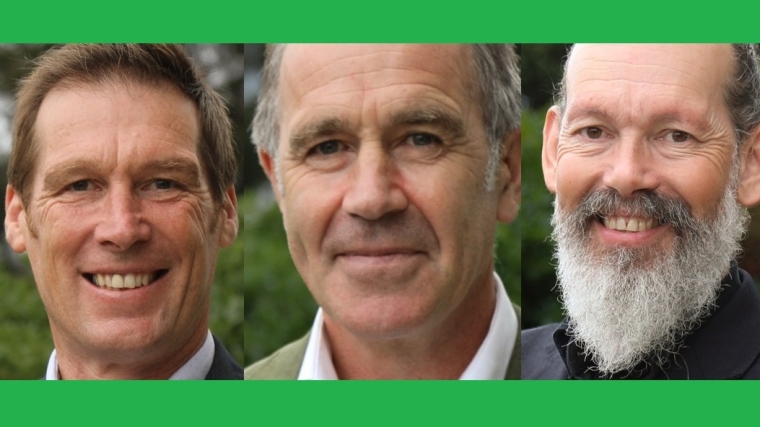
As a flurry of comments on social media almost immediately noted, the three MPs affected, Mike Davidson, Scott Willis, and Steve Abel, are all men. The message being sent, both to those with ambitions to represent the Green Party in Parliament, and those who might want to vote for them, could hardly be clearer. If you’re a bloke, expect to face strong political headwinds.
Green Party members will no doubt object that Mike Davidson (demoted from No. 15 on the Party List to No. 22) has spent only five months in Parliament. He entered the House of Representatives in October 2025 to take up the seat vacated by Benjamin Doyle.
What this fails to acknowledge, however, is that the time required for a new MP to become effective is generally measured in months. By the time the election rolls around in November, Davidson, a former Christchurch City Councillor, will be a fully-inducted MP, ready to represent Green Party voters from Day One in the next Parliament – if he makes it back.
That will not be the case if Tania Waikato, the Tauranga-based lawyer provisionally replacing Davidson at No. 15 on the Green Party List, makes it into Parliament.
Ranked immediately below Waikato is Scott Willis. His professional experience in green energy generation notwithstanding, Willis has been moved out of the safe zone of his party’s list-rankings. Clearly, the days when someone from a rural background with a “green heart”, “love of birdsong” and “commitment to climate justice” was welcomed as a powerful electoral asset are long gone.
The most difficult demotion to explain is that of Steve Abel. With his impressive record of environmental activism, especially in Native Forest Action and Greenpeace, Abel has done more than any other member of the Green caucus to keep alive the idea that the party’s most enduring political commitment is to the protection of New Zealand’s natural environment.
Providing the Greens win more than 10.5 percent of the Party Vote in November’s election, Abel’s provisional list-ranking of 14 should be just high enough to see him returned to Parliament. Had he retained his previous list-ranking of 9, however, his continuing contribution would have been much more securely grounded.
Why this seeming reluctance on the part of Green Party delegates (activists?) to position politically and professionally experienced men like Davidson, Willis and Abel – all of them sitting MPs – in the Party List’s safe zone?
Part of the explanation lies in the faddish left-wing notion that “You’ve got to see it to be it”.
Positioning people from marginalised groups high up on the Greens Party List, thereby vastly increasing their chances of becoming Members of Parliament, is a way of increasing their social “visibility” and amplifying their political voice. Once elected, these MPs will be able to speak out boldly on the issues dear to the hearts of the minorities they represent and bring much closer the cultural and legislative changes they are seeking.
To many voters, young people in particular, this approach is welcomed as an important political achievement in and of itself. The Greens are hailed as promoters of radical social change and praised for having the courage to turn the House of Representatives into a powerful “platform” for those without a voice, even if a majority of its members are made to feel uncomfortable in the process.
It was this demonstrative impulse: this desire to force the House to face realities it would rather ignore; that explains why so many Green MPs took their seats wearing keffiyehs – the sartorial signature of the Palestinian cause. In spite of itself, Parliament was being turned into a stage for progressive political theatre.
As a political strategy this performative style is fraught with risk. If taken to extremes it invites retribution from the Speaker’s Chair, the Privileges Committee, and, ultimately, from the House committee responsible for developing “Standing Orders” – the time-honoured rules of the parliamentary game.
More significantly, performative politics represents a fundamental misunderstanding of Parliament’s role in the New Zealand constitution. The House of Representatives is New Zealand’s legislature: it does not exist for the purpose of making gestures, it exists for the purpose of making laws.
The worth of the Green caucus should not be calculated in relation to how many minorities it contains, but in how effective it is at drafting and shaping legislation. Minorities are important only insofar as they contribute to the growth and development of statute law. In this regard, the “lived experience” of MPs drawn from marginalised groups can provide invaluable context for their party’s policies.
But can the Greens become effective legislators?
The fate of the former Green Party co-leader James Shaw suggests not. Far too many members of his own caucus and party regarded Shaw’s willingness to work with the parties of the Right as a betrayal of the Greens’ kaupapa. From the very beginning they were suspicious of his smooth corporate style, a suspicion that only grew as it became clear that his willingness to reach out across the aisle – as opposed to turning himself into a clothes horse for every passing radical cause – was capable of producing tangible and progressive results.
The only sensible conclusion to be drawn from Shaw’s success was that Green policies stand a much better chance of being implemented if the party fills its ranks with men and women who are knowledgeable, reasonable and personable.
Green MPs should be people other MPs can work with without being told to “check their privilege”. People who, in the tradition of the Chinese reformist leader Deng Xiaoping, don’t care whether a cat is green, red, or blue – so long as it catches environmentally problematic mice and socially destructive rats.
People like Mike Davidson, Scott Willis, and Steve Abel. MPs who will most definitely be missed from the Greens’ Party List.
*Chris Trotter has been writing and commenting professionally about New Zealand politics for more than 30 years. He writes a weekly column for interest.co.nz. His work may also be found at http://bowalleyroad.blogspot.com.
We welcome your comments below. If you are not already registered, please register to comment
Remember we welcome robust, respectful and insightful debate. We don't welcome abusive or defamatory comments and will de-register those repeatedly making such comments. Our current comment policy is here.