
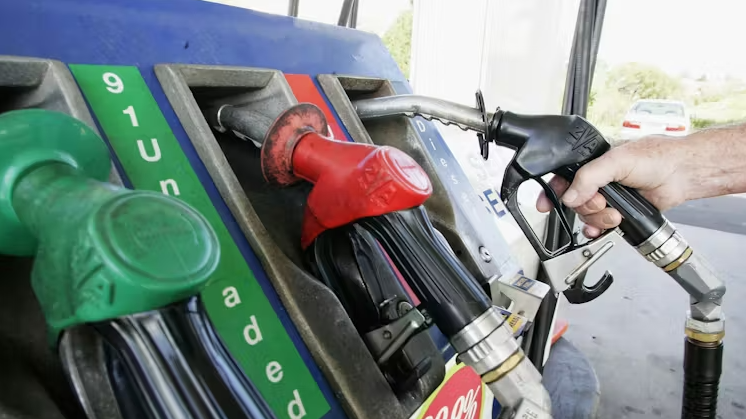
New Zealanders are already changing how they travel, shop and spend as high fuel costs rip through the country's economy, with airlines cutting flights, businesses absorbing freight costs and households pulling back on spending.
Flights
Air New Zealand announced on Tuesday plans for further flight reductions due to high jet fuel costs. A spokesperson said it would affect 4% of flights and 1% of passengers.
"Like airlines globally, we're experiencing jet fuel prices that are more than double what they would usually be. This is driving higher costs across the industry, and we've made further increases to some airfares to help manage this."
Responding to the change, which affect areas such as Nelson and Tauranga, Prime Minister Christopher Luxon said while he was also affected by not being able to use Air NZ's full schedule; "the reality is, they need to make commercial decisions based on what they're experiencing, with respect to how they're navigating high prices of jet fuel".
At the end of March, Jetstar confirmed cancellations - with 12% of its scheduled flights impacted including between Auckland and Christchurch, and Wellington in May, and some flights between NZ and Australia.
Transport
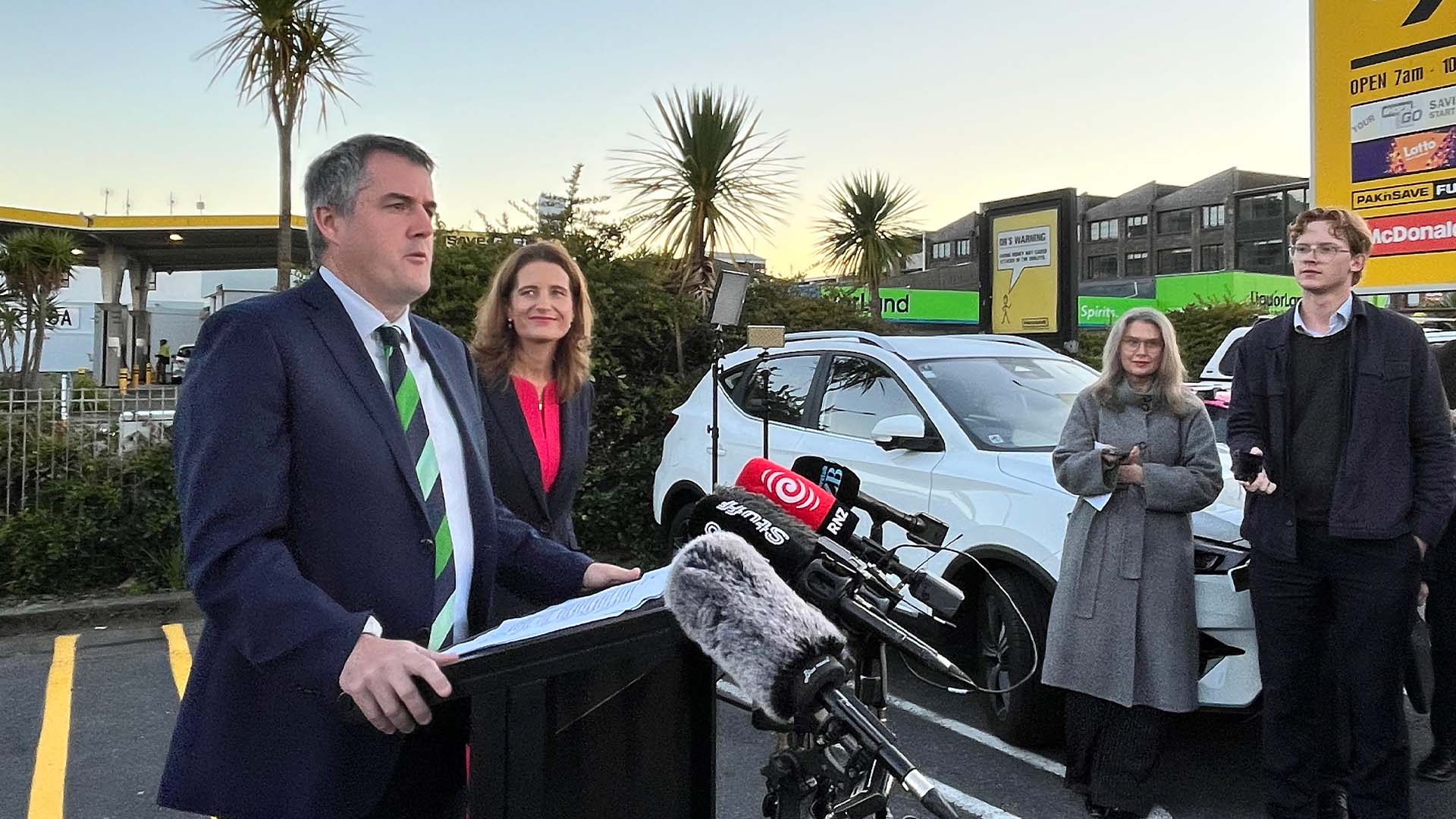
Transport Minister Chris Bishop said people were driving less; "which you'd expect, people taking public transport, a bit more and much less of a reduction on the heavy vehicle fleet, which is unsurprising either because the elasticity of demand on that is lower than it is on private vehicle use."
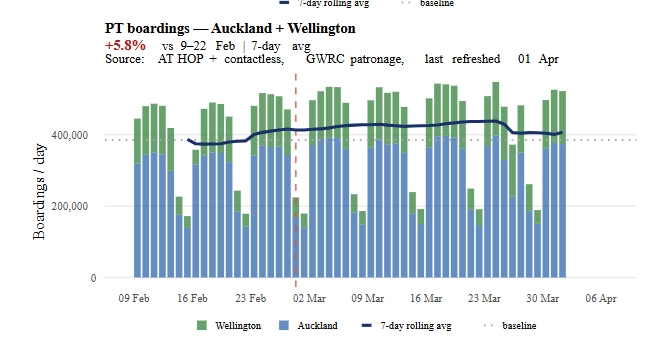
Public transport usage across Auckland and Wellington has increased 5.8% in the last month for the seven day average compared to February 9-22, according to the Ministry of Transport.
The Ministry of Transport's weekly low emission report for the end of March showed an uptick in electric vehicle (EV) registrations - 525 more battery EV and plug-in hybrids than the previous week. The year to date to March 29 showed 3,144 more than the same time period the previous year.
Retail and business
Data from digital accounting service Hnry suggests sole traders are drastically changing their behaviour. Hnry CEO James Fuller says this amounts to a 30% drop in fuel or mileage claimed in the last month and distance travelled fell by 50%. As well, average fuel transactions decreased by almost $20.
"It's less that sole traders are a bit concerned about this, they're actively travelling less for work."
He said many were choosing to protect customers from price increases. "Which means that all of these prices increases are directly hitting their margins, their cash flow, their profitability."
There are instances of tradies leaving their trailers at sites rather than transport them to and from work sites overnight, he said.
Retail NZ CEO Carolyn Young told Interest.co.nz retailers were either absorbing costs from freight costs, "or they're passing either some or all of it in order to ensure that they can continue to be effective in their business".
A number of businesses that were absorbing costs were assessing "on a regular basis how long they can continue to absorb those additional costs, because they know how hard it is for consumers to dig deeper into their pocket."
Young said that, as well as dropping business and consumer confidence numbers, was "all going to have a really big impact on on how retail operates over the next coming months."
"Even if this conflict in the Middle East was resolved today, we know that for supply chains to get back to normal and for freight to be flowing through, including the oil and petrol that would be three to four months at least."
There was slightly more caution around spending for consumers.
"When your confidence drops, then you're going to spend less, and you know you're not going to think about going out and buying.
"The longer the conflict continues, the more we'll continue to see a retraction in spending."
ASB's latest economic update said the high fuel prices continued to "sting" household discretionary spending and raise the cost of living.
"We estimate it will increase the cost of living by ~$55 per week for the average household over 2026. This pinch adds to a multi-layered threat to NZ demand which is likely to lower household consumption over the year."
Food prices
A Foodstuffs spokesperson said as of last week they had not seen any significant shifts in consumer behaviour, but the main issue on their operations was the significantly higher fuel costs - "but at this stage we’re absorbing that to help keep our food prices as steady as possible for customers."
"We’re working closely with our suppliers and freight partners who are busy planning ahead.
"Depending on the situation, this could mean things like carrying a little more stock, ordering earlier, or sourcing from a broader mix of regions to ensure people and communities can go to their local grocer and get the essentials they need, when they need."
Fresh produce delivery business Wonky Box told RNZ their suppliers, especially those who rely on fuel for transport, were under "significant pressure."
On the impact on food prices from rising diesel costs, Finance Minister Willis said it was the case that diesel "is both an input into the production of food, the harvesting of food, the planting of food, getting the milk and the tanker to the factory... the finished product of food being moved from the farm to the supermarket also has a fuel component."
"When we look at this conflict internationally, it's also had a big impact on the price of fertiliser, which will impact global food prices. They will tend to go up. And New Zealand, of course, does import quite a portion of our food, and so we'll be exposed to imported inflation in that way as well."
It was Willis' expectation it would all have a negative impact on food prices - "I regret that hugely."
Inflation, how high could it go?
Asked if Treasury was forecasting inflation heading up, potentially to around 7%, Willis said on Sunday Treasury had not yet formed a view of what their scenarios would mean for inflation forecasts.
If New Zealanders should be prepared for potentially high inflation, Willis said; "it's already tough for Kiwis, I think they can see right now that their costs have gone up on a weekly basis because of the soaring price of fuel, and we are very conscious of it."
"Unfortunately, what we see is that when petrol and diesel go up in cost, that has implications for prices across the economy, everything from freight through to your groceries.
"And so we can expect that inflation will go higher. How much higher it goes really depends on how long this conflict lasts and how long it is until the Strait of Hormuz is open."
Diplomatic relations
Foreign Minister Winston Peters is heading to Washington this week to meet Secretary of State Marco Rubio face-to-face.
Luxon said he would not "prejudge his conversation", but New Zealand's message was clear: "Escalating rhetoric and escalating actions, frankly, at a time like this are not helpful, and in fact... that escalation ends up hurting New Zealanders."
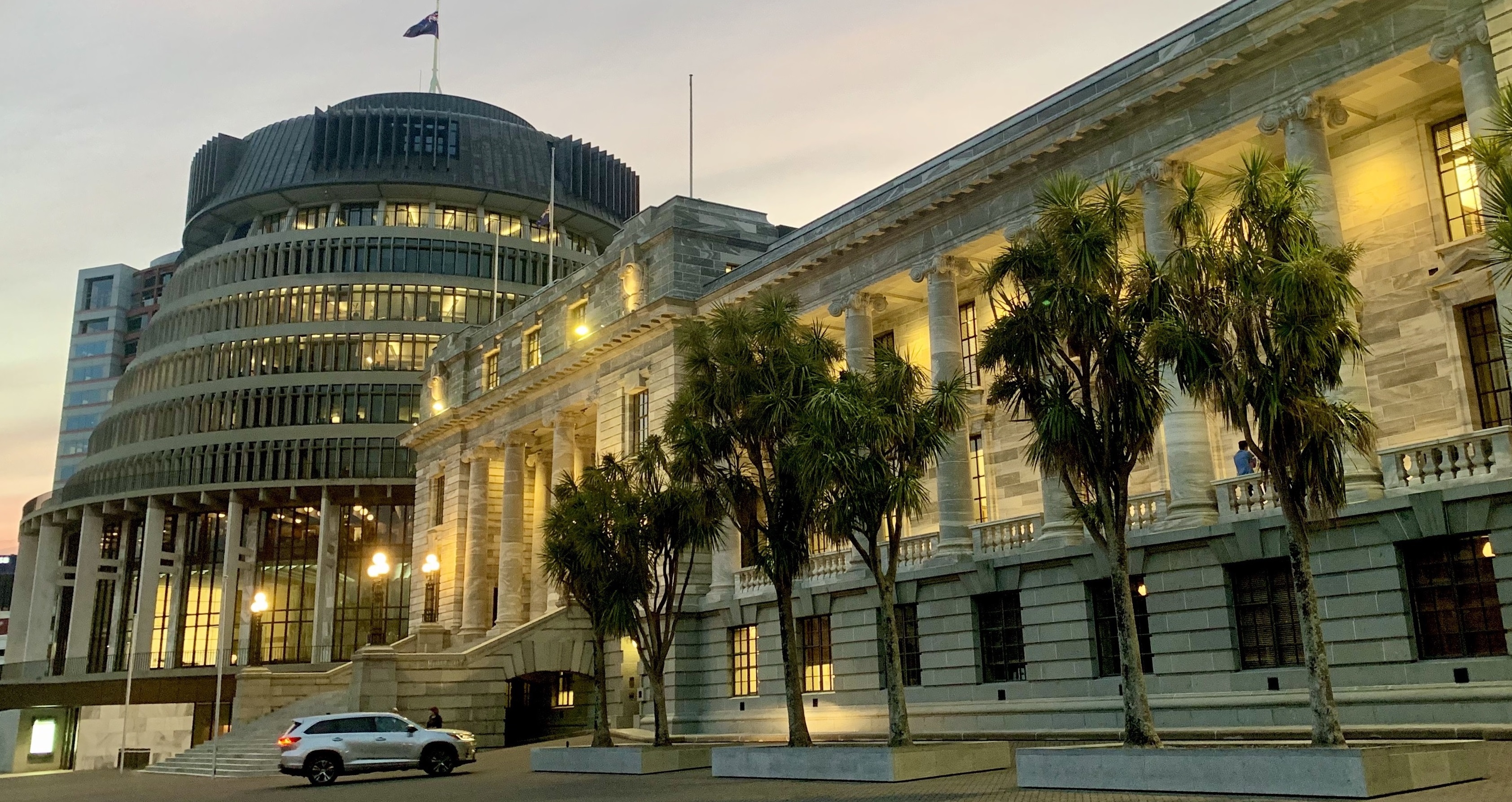
Do the people in Parliament feel the pressure?
Green Party co leaders
Chlöe Swarbrick: "I don't personally own a car and catch public transport around Auckland city centre, but I want to acknowledge the reality that you're talking to two privileged people, of a bunch of 123 very privileged Members of Parliament."
Marama Davidson: "I, again, am in a privileged position having been able to buy an electric car and an electric bike."
Te Pāti Māori co leaders
Debbie Ngarewa-Packer: "We drove down, but drove down with a car full but again, we're privileged, and I think, yeah, that's something that we don't take for granted, that not everyone else is in the same boat."
Ngarewa-Packer said she owns a hybrid.
Rawiri Waititi: "I wish I could have an electric car. I live three hours away from my nearest airport, and I'll never get there in time."
National MP Tim Costley: "I do drive an electric car, but my wife doesn't. So we just try to be careful about when we use it and when we don't."
NZ First Minister Casey Costello: "I actually don't own a vehicle at all at the moment, and I walk to and from Parliament."
Labour MP Kieran McAnulty: "I don't fly. I drive to work, and I've got no alternative, because unfortunately, until the new trains that we funded come to Wairarapa, the schedule doesn't really work."
Asked if his hybrid made it easier on fuel, McAnulty said, "Yeah, it does, but [you're] very conscious of it, like we're all of us are looking at invitations that we're receiving in light of the fuel situation. So it doesn't mean that we will say no, but we'll certainly consider it."
"We're trying to fit more things into a day. Is obviously a limit to what you can do in a day. All of us being conscious of the fuel situation when we accept an invitation."
Outgoing Energy Minister Simon Watts: "...Just in terms of our own situation, we have an electric vehicle. But that wasn't because of this crisis. That's just the reality of how we operate."
Labour MP Reuben Davidson: "More recently, I've tried to minimize air travel, which is difficult, but held a number of meetings that could have been held in person, online, instead. My colleagues and I are quite prone to carpooling, particularly with airport runs."
"I drive a fairly old Volkswagen Tiguan, and it is diesel vehicle, so I pay road user charges, and currently I pay for the diesel for that vehicle as well."
Labour MP Jenny Salesa: "I have a hybrid car, and my husband's car is 100% electric car, and so we're affected, I suppose, but not as much affected as other households that are more dependent on fuel."
National MP Judith Collins: Asked if there had been any changes she had made in light of the fuel crisis - "Not particularly, obviously, I'm aware of the price of fuel, and of course it's much more expensive. Like many New Zealanders, we're... saying, is it worth going that far in our petrol driven cars? You will see that NZDF pulled out some of the contribution to warbirds for Wanaka. And they're all very disappointed, but they've made that decision that there it's not a critical use for them."
Labour MP Megan Woods: "I drive an EV. So I'm in an incredibly fortunate position, and I know for so many families out there that it must just be terrifying going to the petrol station and filling the tank at the moment."
Labour MP Barbara Edmonds: "I am in a fortunate position. I have an EV, but I've also got a big family that needs a van."
We welcome your comments below. If you are not already registered, please register to comment
Remember we welcome robust, respectful and insightful debate. We don't welcome abusive or defamatory comments and will de-register those repeatedly making such comments. Our current comment policy is here.