

The Government’s “targeted, timely and temporary” fuel relief package does as I thought it would, make use of the Working for Families tax system, but not to the extent that I had hoped. The proposal is to increase the In-Work Tax Credit (IWTC) by $50 a week. That will last for up to 12 months or sooner if until 91 octane falls below $3 a litre for four consecutive weeks.
The package will benefit 143,000 working families with children who will get receive the full $50 a week, with another 14,000 additional families getting a reduced payment, thanks to the impact of the abatement thresholds. First payments will be made on 7th April if people receive IWTC and Working for Families weekly, or 14th April if they're paid fortnightly. The package is expected to cost $373 million if it runs for a full year will be counted against the Government's operating balance for Budget 2026, which is coming up next month on 28th of May.
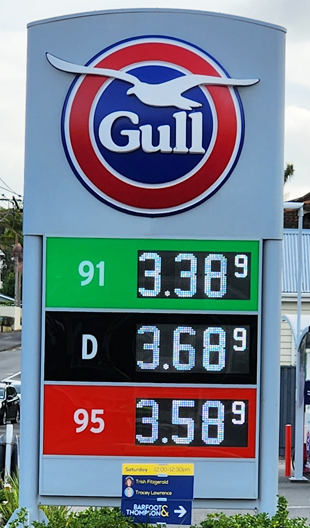
Whether it's why broad enough is obviously a concern because prices are racing up particularly that of diesel which at my local Gull petrol station has risen 30 cents per litre this month alone to overtake 91 Octane petrol. There's a lot of pressure on families out there.
The Lord giveth…and taketh
The start of the new tax year on 1st April also means a number of other changes took effect, some of which will take funds away from families. One of the more noticeable changes will be the increase in KiwiSaver contribution rates, which rise from 3% to 3.5% for both employers and employees. This happens automatically unless the employee applies for a temporary reduction to stay at 3% which can be for between 3 and 12 months. An employer is not required to increase their contributions if an employee requests a temporary reduction. According to an ASB survey perhaps 15% of employees planned to request a temporary pause on the increase to 3.5%.
ACC rates have also increased with the earner's levy rising from 1.67% to 1.75% per $100 earned up to the maximum of $156,641 per annum. The minimum wage increases from $23.50 an hour to $23.95 an hour. But Best Start payments for babies born after 1st April will now be subject to abatement on annual family income over $79,000.
In my last podcast prior to the announcement of the fuel relief package, I suggested one option could be to increase abatement thresholds. It so happens the abatement threshold for Working for Families was increased, with effect from 1st April, from $42,700 to $44,900, the first increase since June 2018. However, in keeping with the theme of giving with one hand and taking with the other, the abatement rate also increased from 27 cents per dollar to 27.5 cents per dollar.
Relief package highlights abatement issue
The $44,900 income threshold is for a FAMILY’s income. Also keep in mind that someone working 40 hours at the new minimum wage of $23.95 per hour, has a total annual income of $49,816, which is nearly $5,000 above the new threshold.
The Government’s package here highlights an issue we’ve raised repeatedly now for several years about the interaction between low abatement thresholds leading to high effective marginal tax rates for persons on average and sometimes below average income.
The Government finds itself, giving with one hand, and then taking with the other. And the taking bit isn't always noticed by the general public. The announcement of a $50 boost will go down well for those 143,000 families that are going to get it, very welcome indeed. But there's the other 14,000 families who won't be getting the full benefit, and a whole group that never got anything at all but still have increased transport costs.
The Working for Families abatement threshold is far too low which results in clawing back family income at a time when families need every cent possible, because this fuel shock is going to feed through to transport costs, obviously, and from there into the price of food.
An incredibly complicated system in need of reform
Over the past 30-odd years New Zealand has developed an incredibly complicated system of benefits where we're giving with one hand, clawing back with another hand, and not looking at the overall impact of what we're trying to achieve. I understand the question of abatement thresholds and its impact was actually discussed at the recent International Fiscal Association conference and my thanks to Robyn Walker of Deloitte for raising the issue for discussion.
But this is something I'm going to continue to raise. It would good to be hopeful we might see something in the coming Budget, but I wouldn't hold out much hope for that because if something in this area was under serious consideration, it might have been included as part of this temporary package. But clearly, that's not likely to happen, particularly since the threshold has just been increased.
Changes to thin capitalisation
The necessary legislation for the fuel relief package was included in the Taxation (Annual Rates for 2025–26, Compliance Simplification, and Remedial Measures) Bill we've been discussing in the past couple of podcasts. A number of other late amendments were also included in the Bill prior to it finally passing into law. A major change was in relation to the thin capitalisation regime in relation to infrastructure projects.
By way of background, overseas investors can choose to fund their New Zealand investments with equity or debt. If the investment is made via equity there's no deduction available. However, if the investment is debt funded a deduction is normally available for any interest payable on the debt. Consequently, from a tax perspective debt financing is obviously preferable.
Back in 1995, New Zealand introduced some thin capitalisation (or thin cap) rules, which basically said for foreign-controlled home subsidiaries, the amount of tax-deductible debt would be limited to 60% of the net debt asset ratio for the New Zealand entity. (There's some fluctuation allowed to this threshold depending on the worldwide group tax percentage for the total group of companies).
Thin cap rules are very common worldwide as a counter to excessive interest deductions, but it's been recognised they can be a potential hindrance on infrastructure projects.
A targeted exemption
I understand discussions have been going on for some time with interested parties with suggestions that New Zealand follows Australia in introducing a specific thin cap exemption for infrastructure. The Government has therefore
“Agreed to a targeted exemption to the thin capitalisation rules specifically for infrastructure investment (including new infrastructure projects as well as existing infrastructure businesses), that aims to mitigate a potential impediment to foreign investments in New Zealand's infrastructure under the existing rules.”
Under the amendment effective from the start of the 2026-27 tax year, any entity now electing into it will be able to deduct interest expenses on its full amount of debt, without a thin capitalisation adjustment so long as the debt is applied to the eligible infrastructure entity’s business or project, is from a genuine third party and does not have any equity-like features. The lender must only have recourse to the assets and income of the entity. Furthermore, the New Zealand entity still has to be capable of supporting the debt on a standalone basis without any further support from its investors.
This is a step forward and ties in with the Government's overall plan to develop infrastructure and assist infrastructure projects. There’s been some discussion about the revenue loss risk on such an initiative, but equally we're experiencing the risk of not building enough infrastructure in the first place. So maybe accepting there may be a risk around tax seepage is the right way forward.
Tax change for the New Zealand Superannuation Fund
The Bill also enables the New Zealand Superannuation Fund to pay its tax payments annually rather than through the provisional tax regime. as it currently does. This is designed to help its cash flow because as the country's largest investor and taxpayer, it locks up a lot of capital in provisional tax payments, which if it gets wrong, can have quite severe use of money interest implications.
Using tax pooling to collect tax debt – another band-aid solution?
One other interesting change is a pilot extending the time limit to use tax pooling to satisfy income tax debt for the 2022-23 and 2023-24 income years. At present if you have not paid your tax in full for those years use of money interest (8.97% from 16th January this year) will be charged.
The proposal is to allow payments to be made using tax pooling (which has a lower effective interest rate) for those outstanding years until 1st of October 2027. This option is not allowable if the applicant has been bankrupted or is the subject of recovery proceedings for unpaid tax. The debtor must be up to date with their income tax and GST returns and with your GST and PAYE payments. (Inland Revenue does have some discretion to allow tax pooling if it considers it’s a one-off scenario, and it has accepted an application for financial relief under the Tax Administration Act).
This is an interesting idea to try, which could help with the over $9 billion of tax debt currently outstanding. However, I think it's another example of perhaps putting a patch on or a Band-Aid on instead of rethinking the whole issue. At the moment late payment penalties AND use of money interest apply to late paid tax. In my view it should be either late payment penalties or use of money interest, but the combination of the two is a double whammy, which I don't think is particularly effective and just aggravates clients.
Use of money interest is a vital tool, and I have no issues with it. We could argue that the rate is very high, but then it has to be because the Government doesn't want to be treated as a banker of last resort. Nevertheless, I think reviewing the whole issue of late payment penalties, use of money interest, and how much of a factor they are with companies and individuals defaulting on their tax, would be a worthwhile exercise.
Inland Revenue myIR accounts under cyber-attack
Finally, Inland Revenue is always on the watch out for cyber security risks and so it's introduced two-step verification when people are accessing their My IR accounts. This is to counter attempts by cyber criminals to hack into people's My IR accounts.
Last month Inland Revenue noticed a significant increase in malicious attempts to log on with over 500,000 attempts made.
Unfortunately, around 300 MyIR accounts, which did not have two-step verification set up, were accessed. Inland Revenue has closed these accounts and they're also monitoring another 900 accounts where a correct password was entered, but the two-factor authentication prevented access.
Always be alert that your My IR account contains highly sensitive data. This includes, dates of birth, addresses, details of your bank account, and your earnings. It's good to know that Inland Revenue is watching closing. Sometimes two-step verification can seem like a pain in the backside, but it's a vital tool. And with over 500,000 attempts to hack in one month, there's a serious issue that Inland Revenue has to guard against.
And on that note, that's all for this week. I'm Terry Baucher and thank you for listening. Please send me your feedback and requests for topics of guests. Until next time, kia pai tō rā.
(This is an amalgamated transcript of the 23rd March and 3rd April podcast episodes. It has been edited for brevity and clarity).
And on that note, that's all for this week. I’m Terry Baucher and thank you for listening. Please send me your feedback and requests for topics or guests. Until next time, kia pai to rā. Have a great day.
We welcome your comments below. If you are not already registered, please register to comment
Remember we welcome robust, respectful and insightful debate. We don't welcome abusive or defamatory comments and will de-register those repeatedly making such comments. Our current comment policy is here.