
A fresh-faced Christopher Luxon stood in front of what was left of the National Party faithful shortly after National’s bruising 2020 election loss, delivering a charismatic, upbeat speech with tones reminiscent of John Key.
He was one of just a small handful of new National MPs - a scarcity after the ‘red wave’ wiped out the notion of many of the ‘safe’ blue seats.
Luxon drew a bigger cheer than then-leader Judith Collins. He was clearly leadership material.
From there, he swept in, performed well on the campaign trail, and finished 2023 as prime minister. Luxon was ripe and ready to lead.
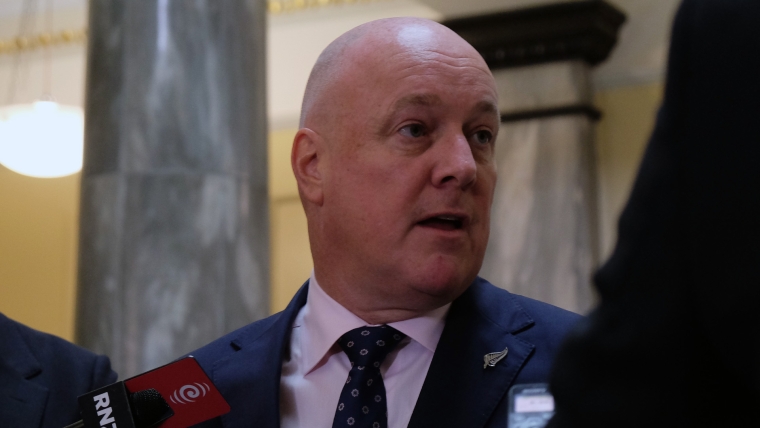
Fast forward to lunchtime Friday, where Luxon endured a painfully awkward press conference batting away intense questioning around his leadership following fresh speculation, leaning on a repetitive crutch to survive the five-minute onslaught:
- “I have the support of my caucus.”
- “I have the support of my caucus.”
- “I have the full support of my caucus.”
- “I'm confident I have the numbers and I am confident I have the support of my caucus.”
- “I know that I have the support of my caucus.”
- “I'm very confident I have the full support of my caucus.”
- “I'm just saying to you, I have the support of my caucus.”
- “I talk to my caucus members all the time, and I have the full support.”
- “As I said to you, I have the full support of my caucus.”
News of the press conference performance had swept through Wellington political circles in almost as much time as the stand up lasted.
One journalist asked, “what do you say to MPs in your own party who are nervous about your performance…?”
“Can you tell me who they are?” he said. “Who are they?”
Signs point to a pool of National MPs concerned that if current polling numbers were replicated at the election, their caucus could shrink down to a size only slightly larger than that of 2020.
Politicians are not exempt from the plight of psychological egoism - and clearly, no one is selfless in politics. You are in Parliament for your party, your people, yourself.
And for many of these MPs, it is not only the state of their party or the likelihood of being able to govern after the next election that rattles them the most. The real rattler is the raised uncertainty of a job post-November.
Former Minister and United First leader Peter Dunne said MPs are constantly thinking of their own futures. "[Former Labour Prime Minister] Mike Moore used to joke that the three most uttered words in politics were, 'why not me?'
"MPs have that survival instinct… the party will be one thing, but the other thing will be, where do I finish in all of this? And if we're going to lose, why am I going to sit around and just let us sink into oblivion? Why don't I make a move to do something about it and hopefully save myself."
Dunne said it was likely there was internal polling looking at what seats were at risk, "and some of those MPs in those very marginal seats will be starting to get very twitchy..."
"All of those factors come into play, and that does inevitably give rise to a sense of desperation, whether that's wise or not is an entirely different question."
More recently, Luxon appeared to have shaken off the quite intensive leadership rumours circulating earlier this year as National’s polling dropped below 30%.
Luxon also appeared to have improved his media performance in the last week, which coincided with reports of the recruitment of Rachel Smalley as a communications advisor. In a media conference on Wednesday on fuel, Luxon cut most of the corporate speak he's famed for and was relatively clear on his messaging.
But on Friday, the rumours resurfaced sparked by the Herald’s frontpage story on leadership speculation, alongside a Talbot Mills corporate poll putting National at 29% to Labour’s 36%. Talbot Mills also does Labour’s internal polling.
Dunne said National was in a difficult position.
"If they stick around 30% they're not going to be very strong players in the future coalition the way they have been in the current one, so their long term positions are a bit weak.
"If they, on the other hand, change the leader, then history suggests that they will struggle to win the election. It’s a rock and a hard place."
Looking back to the 1997 coup where Jenny Shipley rolled then-PM, the late Jim Bolger, Dunne described the situation as "a bit like Dead Man Walking from the from the day she took over."
"What the public sees is a sense of disunity, and disunity is always fatal. While it might be people thinking about their own futures, the public just get a sense of this thing sort of falling apart, or they can't sort of pull themselves together... that's equally devastating."
We welcome your comments below. If you are not already registered, please register to comment
Remember we welcome robust, respectful and insightful debate. We don't welcome abusive or defamatory comments and will de-register those repeatedly making such comments. Our current comment policy is here.