
By Natalia Albert*
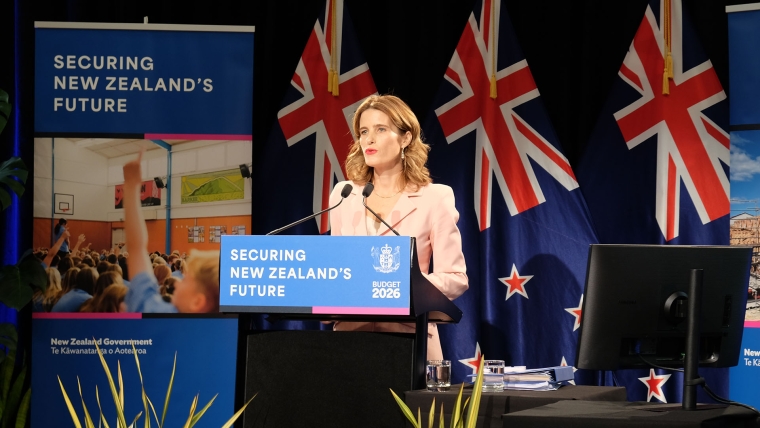
Budget Day is the kick-off to the election campaign and the closest thing New Zealand politics has to a religious festival. There's a lockup at the Beehive for the economic elite and a congregation of journalists who emerge to tell us what it all means and what to think.
By the end of the day the verdicts are filed. The government has been responsible and prudent. The opposition has been incompetent and reckless. NZIER and Berl have started running the numbers and making their graphs.
Budget Day is big politically, but not for the economic reasons everyone treats it as. It's big for political signalling reasons. If you set the money aside, this is the day the government tells you what it cares about. The Wellbeing Budget is the biggest example of how this actually works in practice. You can't commercialise or finance the idea of wellbeing, especially not across a nation, but you can signal that it matters to you as a government. This government's value is responsibility. Theirs as a government, and yours as an individual.
I wrote about the wellbeing era last winter, and the bit worth pulling forward is this. The Wellbeing Budget was never really an accounting exercise. It was a values declaration with a very estimated price tag. The Ardern government couldn't put kindness on a balance sheet, but it could put it on a podium, and that was most of what wellbeing was for: a public claim about what the state was meant to be for. Whether you found that moving or insufferable said more about your politics than about the numbers. The numbers were almost beside the point. Same this week.
What's worth noticing across both eras is that governments don't actually change whether they do values signalling. They change which values get signalled, and in what register. The wellbeing years did it in the language of care, kindness and social cohesion, even when the budget mechanics didn't always follow. The responsibility years are doing it in the language of discipline, efficiency and getting the basics right. Both are moral claims about who the government is for.
The current government has its own values claim, and it's been telling us what it is all week. The Prime Minister has spent the run-up calling Thursday's budget a "grown-up" one, free of what he calls a lolly scramble, with the last government cast as the babysitters. That's the campaign tagline now. "Responsible" is doing the work "kindness" did six years ago.
Adulthood is responsibility, restraint is virtue, asking for more is petulance. The responsibility runs both ways. Theirs as a government, in being prudent with the books. Yours as an individual, in being prudent with your life. The state will be smaller because adults don't need babysitting, and so, by implication, neither do you.
Fiscal discipline matters. You can't borrow forever to cover every day running costs. Sometimes restraint is the right call. What I am saying is that "responsibility" is a values claim doing political work well beyond the books, and it deserves to be looked at as such rather than as a self-evident fact. I will also assume as a fact that you need both the government focused on the collective as well as making decisions based on each of us carrying our own weight. Liberal democracies need the political pendulum to swing Left and Right in a way that keeps stability.
However, language matters more than numbers. If restraint is adulthood, then a nurse asking for a pay rise is asking for lollies. A family who can't make rent is asking for lollies. The Climate Emergency Response Fund was, evidently, lollies. Pay equity for women in chronically underpaid sectors was lollies. The point of the frame is that disagreement gets recoded as immaturity, and you can't argue with a grown-up about whether they're a grown-up without sounding petulant. That's the trap.
You don't have to take my word for what this government values, though. The receipts are public, and I went through the last two budgets in detail last week. The short version: judged by where the money has actually gone, this government wants a bigger military, a “smaller” state, and a better deal for business. The steady losers have been the climate, the care economy, and the everyday services an $8.5 billion funding gap is quietly hollowing out. Those are the values of this government.
So here's a suggestion for Budget 2026, instead of trying to follow the money, read the items as their values. What words get the warm adjectives ("strategic," "essential," "core," "productive") and what words get the cold ones ("discretionary," "duplicative," "wasteful," "legacy")? What does the government call an investment, and what does it call a cost? Who's a "taxpayer" in the speech, and who's a "recipient"? Whose work is "frontline," and whose is "back office"? What gets called a "saving," and what gets called a "cut"? When something doesn't get funded, is it "deferred" or "reprioritised"?
They are values.
Budgets are how governments tell you who matters. The wellbeing era told you that wellbeing did, even though it struggled to translate that into delivery, and your view on whether it ever really tried will depend on where you sit. The responsibility era is telling you that responsibility does, even though it's already clear who's expected to carry the cost of that virtue and who isn't.
*Natalia Albert is a political scientist living in Wellington exploring how to govern divided societies in diverse, liberal democracies, with a focus on New Zealand politics. She writes weekly on her Substack, Less Certain. Albert stood as a TOP candidate in the 2023 election.
We welcome your comments below. If you are not already registered, please register to comment
Remember we welcome robust, respectful and insightful debate. We don't welcome abusive or defamatory comments and will de-register those repeatedly making such comments. Our current comment policy is here.