
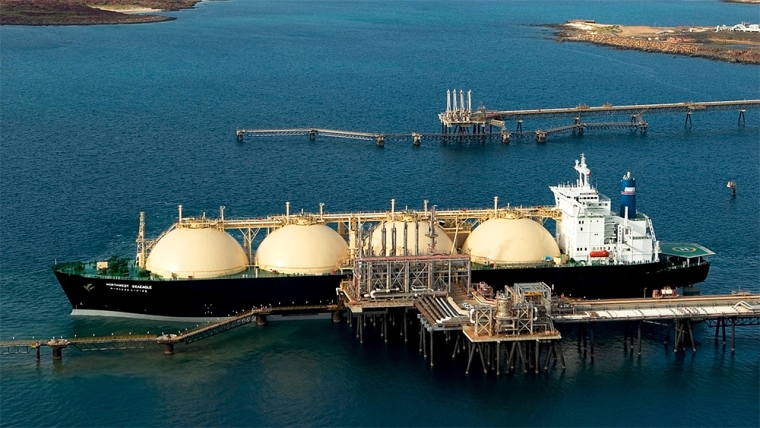
Energy Minister Simeon Brown says the Government is moving forward with its plans for a liquefied natural gas (LNG) import facility by progressing two potential providers to a Request for Proposal (RFP) stage.
Brown made the announcement during a speech at the Auckland Business Chamber on Tuesday morning, where he said the Government intends to sign a contract with a preferred provider this year and have the new LNG facility operational in 2028.
"As New Zealand’s indigenous gas supplies run down, that squeeze only gets worse. Without LNG to fall back on, a dry year leaves us with unacceptable choices,” he said, describing New Zealand as an “outlier” when it came to access to gas.
“An LNG import facility is the fastest and most affordable way to cover the dry-year gap, keep the lights on, and protect thousands of Kiwi jobs. Every other comparable country in the OECD either has access to abundant natural gas or access to gas imports. New Zealand is an outlier, and it is time we caught up,” he said.
Asked by media following his speech when a deal with a preferred provider was being signed, Brown said: “Absolutely before the election.”
LNG facility 'won't be funded by a levy on power bills'
The Ministry of Business, Innovation and Employment (MBIE) began a procurement process for an LNG import facility in October last year. In February, the Government announced it would contract to build an LNG import facility in Taranaki that would cost “north of $1 billion” and be operating as soon as 2027 or early 2028.
At the time, the Government said the cost of the infrastructure would be paid for via a levy on electricity, and the cost connected with importing LNG will be paid by users of gas produced from LNG.
Brown said on Tuesday the Government is currently working through how the LNG import facility will be paid for, but confirmed that "it will not be funded by a levy on power bills."
“I have asked MBIE and National Infrastructure Funding and Financing (NIFFCO) to work through the detail of how the facility will be paid for, including engaging with the gentailers on a fair funding model, and will have more to say in due course,” he said.
Since the Government announced the LNG facility in February, Brown said wholesale electricity prices for 2028 and 2029 have fallen by around $20/MWh. According to Brown, these price drops represent potential annual savings of up to $800 million.
“Recent events in the Middle East are a timely reminder that New Zealand needs secure, diversified fuel supplies. Despite the conflict, LNG remains the fastest, cheapest and most flexible dry-year solution that can be put in place this decade,” he said.
“Responsibility for keeping the lights on sits squarely with the electricity sector, and that is the principle guiding our decisions on funding.”
Power companies need to face ‘real consequences’
Brown also announced on Tuesday that the Government is planning to amend the Electricity Industry Act in order to give the Electricity Authority “a clear role” in ensuring dry-year risk is effectively managed across the system. The Electricity Authority is an independent Crown entity tasked with governing the electricity market, but it does not set power prices.
“Today, MBIE begins consultation with the sector on a new Winter Energy Reliability Obligation. It will require large electricity buyers to lock in back-up supply well ahead of forecast dry winters – when lower rainfall reduces hydro lake levels and limits electricity generation – alongside requirements for generators to have firm fuel available if hydro storage runs low before winter,” he said.
Brown said the Electricity Authority will be required to annually report to the Minister on current and emerging security of supply risks, improving transparency and oversight.
The obligation will ensure the sector secures enough cover ahead of time, particularly during dry years when hydro generation is limited, according to Brown, with LNG just one option alongside new generation, demand response, and storage to ensure a reliable power supply.
“Dry-year risk sits with the electricity sector, not with taxpayers and not with households. It is only fair that the big power companies and large electricity users are the ones responsible for managing it,” he said.
“Power companies, particularly the large gentailers, need to face real consequences when they fall short.”
Brown said this is why the Government is increasing penalties for serious rule-breaking from a maximum of $2 million to up to $10 million, or three times the commercial gain, or 10% of a company’s turnover, whichever is the greatest amount.
In April, the Electricity Authority started asking power companies for more information about higher power prices. The Electricity Authority said most households were facing average increases of around 8% to their power bills going into winter, on top of last year’s 8% increase.
The Government is also planning to update the Government Policy Statement (GPS) on electricity to set clear expectations that the Electricity Authority prioritise dry-year and wider security of supply risks, alongside reliability and affordability, Brown said on Tuesday.
We welcome your comments below. If you are not already registered, please register to comment
Remember we welcome robust, respectful and insightful debate. We don't welcome abusive or defamatory comments and will de-register those repeatedly making such comments. Our current comment policy is here.