
By Chris Trotter*
It was a decent turnout for a cold winter’s night in the Auckland suburb of Three Kings. A rough headcount indicated somewhere between 80 and 100 voters had ventured forth to experience Labour’s Michael Wood and Barbara Edmonds live at the Fickling Centre. Those numbers, five months out from Election Day, strongly suggest that the grip of National’s Carlos Cheung on the Mt Roskill electorate is tenuous – at best.
Observing the number of grey heads in the auditorium I realised that at least some of the voters in attendance will have seen something very like this movie before.
In the General Election of 1990, with the cutting-edge of Labour’s reforms now slicing into Godzone’s bone, and the National Party promising a return to “the decent society” that Rogernomics had already fundamentally undermined, the historically “safe” Labour seat of Mt Roskill flipped. Sitting Labour Cabinet Minister Phil Goff was unceremoniously shown the door by National’s Gilbert Myles. Thirty-three years later the voters of Mt Roskill did exactly the same thing to Goff’s hand-picked successor, Michael Wood.
Wood may well have held his seat in 2023 (others did) had he not scandalised the nation by repeatedly ignoring pleas from no less a constitutional heavyweight than the Cabinet Secretary to manage his share portfolio in full accordance with the Cabinet Manual. Exactly why he failed to do this remains a mystery to just about everybody – including, I suspect, Wood himself.
Whatever the explanation, Woods’ failure left the then Prime Minister, Chris Hipkins, with no choice but to demand his resignation. While damaging to his government, which would rack up an impressive number of ministerial scandals in the run up to Election Day, it is doubtful that Hipkins was too discomforted by Woods’ fall from grace. The MP for Mt Roskill had worked hard to become, and was widely acknowledged as, the darling of the Labour Left – a formation unbeloved by the Prime Minister and his right-wing factional cohorts.
Just how little love is lost, even now, between Labour’s right and left was made clear by the recent release of the Party’s official list. The most astute economic thinker in Labour’s ranks, the CTU economist Craig Renney, found himself slotted-in at No. 51, a position so low that it amounted to an open declaration of ideological hostility.
To enter Parliament Renney will have to defeat the Greens’ Julie Ann Genter in the contest for the newly-created electorate of Wellington Bays. While this is entirely doable, even likely, it is bound to leave a bitter taste in the mouths of the broader Wellington Left. Expecting left-wing voters to choose a progressive male over a progressive female is an exceptionally big ask in a city whose substantial left-wing majority skews sharply female.
In the olden days (i.e. 35 years ago) the argument would have been short and sweet. “Renney is the Labour Left’s best hope of effecting a fundamental shift in economic policy,” the old hands would have informed the younger firebrands. So their eco-feminism would just have to wait. But in 2026 such “old hands” as still carry significant political weight in Labour are painfully few in number, and hardly any of them are male.
Renney will have to campaign with considerable care in Wellington Bays – and not as a proud left-winger.
Michael Wood has confirmed his reputation as a shrewd political operator by avoiding Labour’s Party List altogether. If the electorate’s voters want him back in Parliament they will have to elect him as the Member for Mt Roskill.
Not for Wood the ignominy of seeing his supposed comrades allocate him a derisory slot alongside Renney’s on Labour’s Party List. Rather than negotiate his way through the Byzantine process of securing a viable List ranking, Wood has opted to put his trust in the brutal arithmetic of First-Past-the-Post democracy.
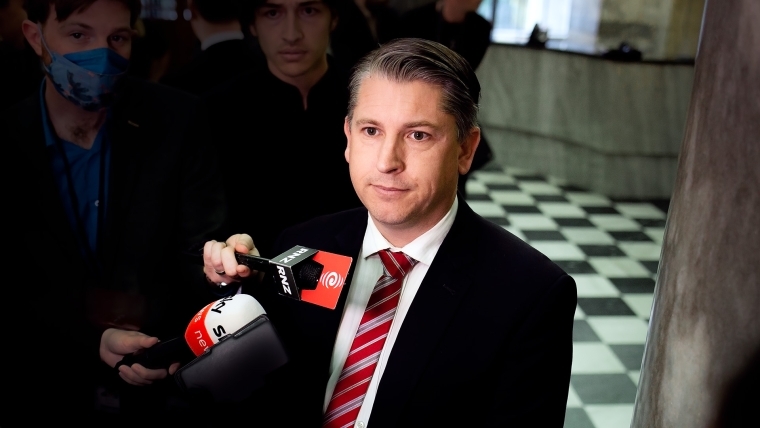
With that in mind, Woods’ performance at the Fickling Centre was a master-class in the persuasive power of a well-crafted political narrative.
Wood told his audience a story about a retired Samoan gentleman he had encountered while out canvassing. The old man recalled his arrival in New Zealand as a child back in the 1960s; describing how both his parents had struggled to give him the best possible start in life; and how their unstinting hard work had been rewarded by his success.
So far, so inspiring: this was the New Zealand dream made flesh.
Then came the twist. Wood learned that the old Samoan’s children, despairing of ever securing a well-paying job, buying a home, or starting a family, were preparing to emigrate to Australia.
Wood is a skilled enough rhetorician to have anticipated that his audience would guess the story’s ending. He understood that by confirming their guess he would bind them even more firmly to its conclusion. The ideological bones of his narrative: virtuous social-democracy versus vicious neoliberalism; were made all the stronger by being left unspoken.
It was a rhetorical tour-de-force.
The contrast between Woods’ performance and Barbara Edmonds' could hardly have been sharper. The praise of the business sector and its mouthpieces notwithstanding, Edmonds' understanding of economics is depressingly conventional. Sadly, her plain-vanilla, right-leaning economic pitch is in no way invigorated by a lively rhetorical style.
Listening to Edmond ramble-on for 40 minutes without delivering anything in the way of inspiration (unless one regards more-of-the-same as inspirational) I was forced to conclude that Hipkins made her Labour’s finance spokesperson on account of her dull conventionality not in spite of it. A Finance Spokesperson who delivers exciting and inspirational speeches packed with game-changing policies, is not what Chippie was looking for.
When your election-winning strategy is best summarised as: “Nobody moves, nobody gets hurt”, you’re not looking for dancers but statues.
This account of Woods’ public meeting of Thursday, 11th June 2026 cannot be concluded without some reference to the audience. I came away with the strong impression that they had come out expecting to be goaded into indignation and rage, and were disappointed that Labour’s representatives insisted on being so thoroughly well-behaved.
I watched Wood as the evening wore on, noting the way he responded to the low growls of emotion that even the most restrained criticism of the Coalition Government elicited from the audience.
I was reminded of the final lines Mark Anthony’s funeral speech in Shakespeare’s Julius Caesar:
But were I Brutus,
And Brutus Antony, there were
an Antony Would ruffle up your spirits,
and put a tongue In every wound of Caesar that
should move
Reminded but not surprised: why would the party that struck down the social-democratic state seek to ruffle up the voters with the best reason to mourn its assassination?
*Chris Trotter has been writing and commenting professionally about New Zealand politics for more than 30 years. He writes a weekly column for interest.co.nz. His work may also be found at http://bowalleyroad.blogspot.com.
We welcome your comments below. If you are not already registered, please register to comment
Remember we welcome robust, respectful and insightful debate. We don't welcome abusive or defamatory comments and will de-register those repeatedly making such comments. Our current comment policy is here.