
By Mandy Te and Anna Whyte
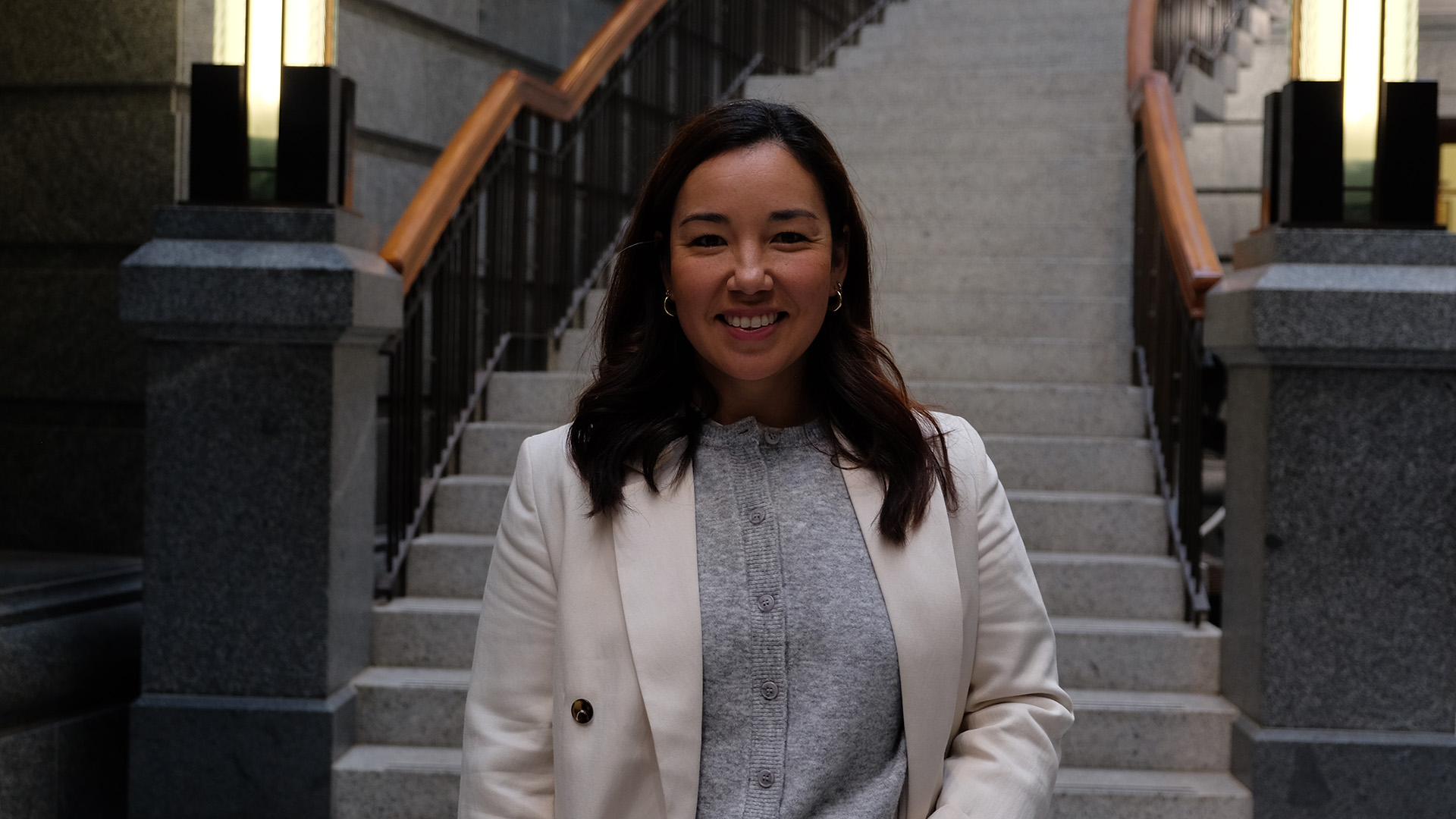
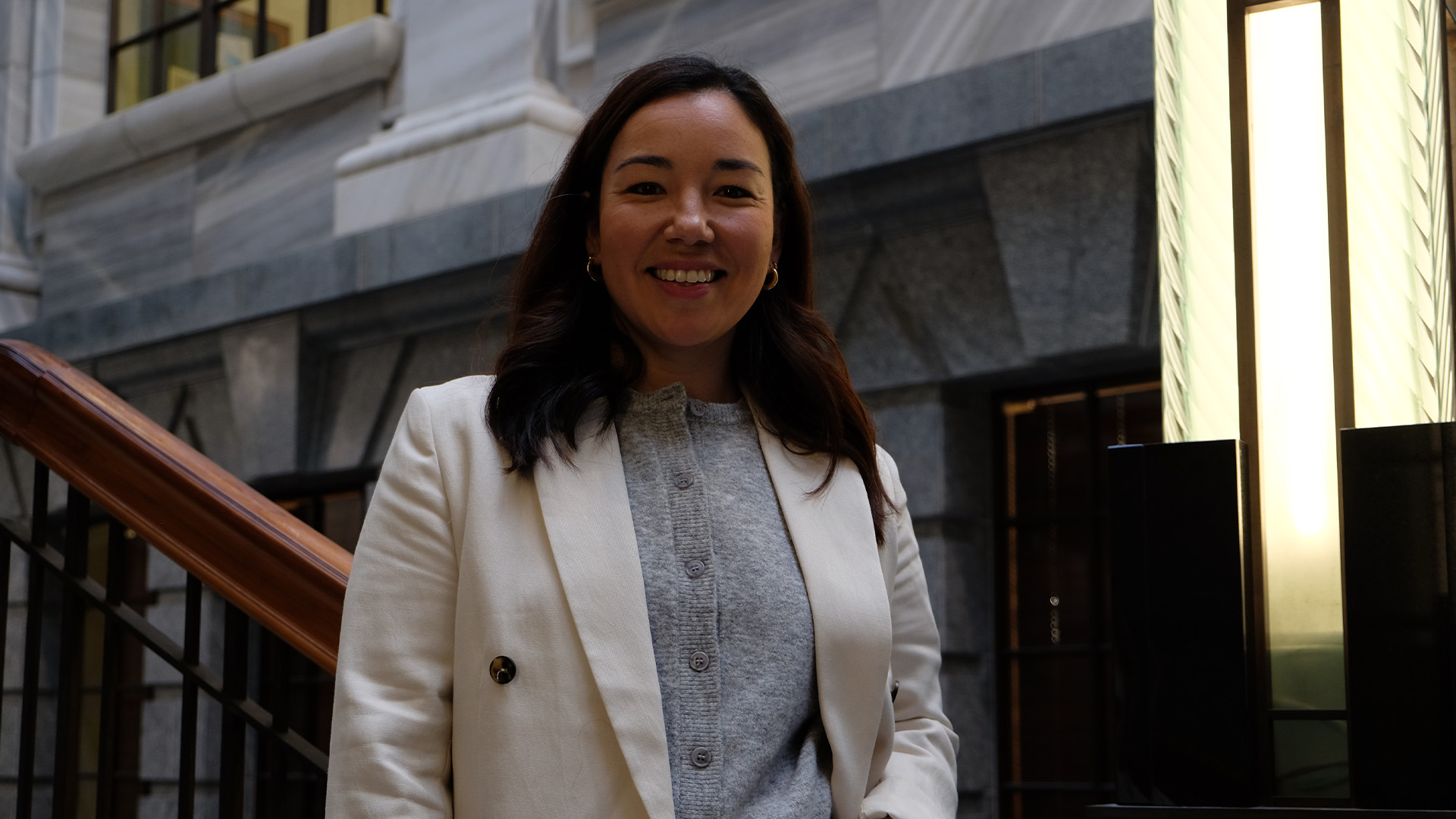
Opportunity Party leader Qiulae Wong says if elected into Parliament, she wants to be part of a Government where her party can further their objectives and policies.
“If that’s not going to be the case, if we’re having to … compromise on everything and just be there for the votes, that’s not something we would agree to,” Wong told interest.co.nz in a sit-down interview on Wednesday. “We’d rather be on the crossbenches or potentially in Opposition if that's the case.”
Her comments follow recent political opinion polling showing Opportunity has increased its support, nearing the 5% Parliamentary threshold line in the June 1News Verian Poll (4.6%), the July RNZ Reid Research (4.7%) and the recent Talbot Mills Poll (4.7%).
The latest modelling in the NZ Herald-Motu Research Poll of Polls, released on Wednesday, showed an average predicted party vote of 5.3% for Opportunity, while the July Taxpayer's Union-Curia Poll had the party sitting on 3.3%.
“We need to be really clear on what our values are in that first term, and that we’re going to deliver something of value to Parliament so that we get to stay in 2029," Wong said.
It was also important to consider what other minor parties were putting on the table.
“It’s probably not going to be a two-party coalition. If there are things there that are really contrary to what we believe so things like the Gender Definitions Bill, which we don't believe is a good piece of legislation, the Treaty Principles Bill, for the same reason, we wouldn't agree to that,” Wong said.
“And so we'll either have to go into a confidence and supply arrangement or walk away completely.”
Opportunity can work ‘constructively’ with National
Earlier in the week, Prime Minister and National Party leader Christopher Luxon ruled out working with the Opportunity Party, saying “when you want to spend more, tax more, borrow more - we ain’t doing business with you.”
Labour leader Chris Hipkins hasn’t ruled them out but he hasn’t ruled them in either, telling reporters: "It's an absolute reality that no party under MMP who hasn't already been represented in Parliament has crossed the 5% threshold, so there's always a first for everything, but it's still pretty unlikely they're going to achieve it."
Asked about Luxon’s comments, Wong said she thought it was premature of National to rule Opportunity out.
“It’s just indicative of old school politics trying to paint people in a left or right box when actually it’s more complex than that, and we need to work together on some of these solutions.”
“There is actually a lot that we agree with them on and I think we can work constructively,” she said.
Asked how the three policies Opportunity had released fit into a right-leaning Government, Wong said she thought there was a bit of misunderstanding around their tax policy.
“That tax policy, if enacted in full, would result in a tax cut for 70% of New Zealanders and that’s something that National campaigned on last election.”
“So our objective with the tax policy is to broaden the tax base, make our economy more resilient, help people take home more of their hard-earned pay from work by shifting some of the burden onto property,” Wong said.
“For lots of people, that will just be a tax switch, so they’ll pay a bit more in their land tax, but they’ll also receive more from their income tax through the citizens’ income.”
“So I think if we can sit down and actually have a proper conversation around what we’re trying to achieve, we’re not naive to think that we can do this overnight and that we’re going to come into Parliament for a first term and do tax reform straight away.”
Wong said resistance around new ideas was one of the things that held New Zealand back and we needed to get beyond it.
Asked what policies of theirs she thought National would find attractive, Wong pointed to the party’s innovation policy, which had lots in it about growing the economy, creating higher wage jobs and tackling competition to bring prices down for everyday New Zealanders.
Who is the Opportunity Party’s voter base?
Wong said anecdotally, Opportunity had heard their voters were across the political spectrum.
There were a lot of former National voters that were frustrated at the lack of progress on environmental issues this term, and a lot of former Green Party supporters; “that were perhaps more of the James Shaw ilk that feel they don’t really align with that party anymore,” she said.
“It was interesting to see the recent Talbot Mills poll because that dug a bit deeper into where our voters are coming from, so it's not just anecdotal. There was some data there, and that validated that I think the largest portion was actually from National, and then obviously our former supporters, and then Labour was the next one.”
Asked about Gareth Morgan, who founded the party and was its first leader, Wong said she had never met him.
“He doesn’t fund [the party]. He’s not involved in any way. It’s only been recently that he started to write some commentary,” she said.
In a recent piece for Newsroom, Morgan wrote: “For both its short and medium term future, I would say it [the Opportunity Party] must stay on the crossbenches, undertake to give the ruling government its confidence vote for the duration, and be free to promote and vote on legislation on its merit.”
Asked what she thought about his commentary, Wong said what he had written was fair and could be a really good outcome for Opportunity.
“We're keeping all of those options on the table when it comes to negotiations. I think the flip side of that is that some of our voters would love to see us in a coalition government because we probably have more chance at getting some of our ideas across the line rather than necessarily just supporting the legislation of other parties.
“So there's pros and cons to each, and we'll have to just see what the major party in particular is willing to give us, and where they want to take the direction of the country.”
‘Some big meaty things we can achieve’
Wong said Opportunity would put out some clear bottom lines closer to the election, primarily to provide voters transparency on what the party would take into those negotiations.
“I think there are some big meaty things that we can still achieve.”
An area that comes to mind is energy. “Labour and National recognise that energy sovereignty and affordability is really important, but we might be able to push them a little bit further on some of those policies.”
“If we can achieve a couple of really decent things in those first three years, that will be a huge achievement for us.”
Deep dive into Opportunity’s policies
Asked about the party and its health policy and plans for training, hiring graduates and funding the health sector, Wong said Opportunity would have a full health policy coming out in the next month or so.
“Where we come at these big issues from is always: how do we tackle the systemic problems? So we have a big focus on prevention. What are the big public health initiatives that mean we will have a healthier population that’s putting less pressure on our entire health system? And then, how do we fund primary care better so that our hospitals are not overloaded?”
Wong said the party's focus was on prevention, primary care and making sure that those funding models adequately support resourcing for those different communities.
“The workforce is a big issue as well. There's never enough money for health, and I think that's why having a good, productive, innovative economy is also a critical part of the puzzle. Because if we're not growing our economy, we're going to have to make harder and harder trade-off decisions around hospitals versus schools versus superannuation.”
Asked about superannuation and if Opportunity wanted to raise the retirement age, Wong said raising the age was challenging for those that work in manual jobs or people who have shorter life expectancies.
“If that can be managed with raising the age, then that’s a possibility.”
Wong said the party wanted to see New Zealand move towards compulsory KiwiSaver.
Opportunity's 'smart on crime' policy states it wants to "raise the age of the youth court jurisdiction, in line with developmental science."
Initially, the party had this age set at 25 but Wong said they were looking at that evidence again. They hadn’t put out an updated version of that policy yet but she said they expected the age to be lower.
Getting into Parliament in any shape is better than not being there
Wong said getting into Parliament in any shape or form was better than not.
“We would rather be in Opposition than not be there at all. I think it gives us the might of the parliamentary service to support us to work towards getting elected into Government in a future term. It gives us an opportunity to have more say in the public arena and shape the conversation and the narrative which is in the media."
“There’s huge gains to be had even in Opposition. It’s not our first choice but we’ll certainly take that over working from the outside and relying completely on volunteers and donations to keep the party going.”
‘I don’t think I’ve ever worked this hard in my life but it’s extremely rewarding’
Asked how her upbringing and heritage influenced has her politics today, Wong said she comes from a multicultural background. “I’m half Chinese and half Pākehā European … My Chinese family grew up in Fiji so we sort of have this Pasifika connection as well.”
She has always been surrounded by lots of different people from different walks of life.
“I think that has shaped my view that different perspectives are really valuable, and that coming at a particular problem from one perspective all the time is not a useful approach. And I’ve seen that in my business career as well. That the more diversity that you have of people within an organisation, the better decisions you make.”
“I think it’s a real shame that in politics we have this view that if you have one team with one ideology in power, then they’ve got to have all the answers to everything. I just don’t think that’s the case.”
As for her personal voting habits, she said she has voted across the political spectrum.
While the leadership role for Opportunity was advertised on Seek, Wong heard about the role because she was on the party’s mailing list.
She was working at KPMG at the time, doing sustainability and climate consulting, and said she was frustrated at the change in direction the government had taken around climate legislation and what that meant for the business community.
“I certainly was thinking a bit about where else I could have an impact … whether that meant going into politics, whether that was local government or doing something like this. So it was good timing, I think [when] that role came up.”
Asked how she’s been finding politics, Wong said she’s been enjoying it.
“I know it’s pretty intense and I don’t think I’ve ever worked this hard in my life but it’s extremely rewarding.”
We welcome your comments below. If you are not already registered, please register to comment
Remember we welcome robust, respectful and insightful debate. We don't welcome abusive or defamatory comments and will de-register those repeatedly making such comments. Our current comment policy is here.