
A preferred provider for a liquefied natural gas (LNG) import facility in Taranaki has been shortlisted by the Government, but any decisions will be finalised after the election, following the formation of the next Government.
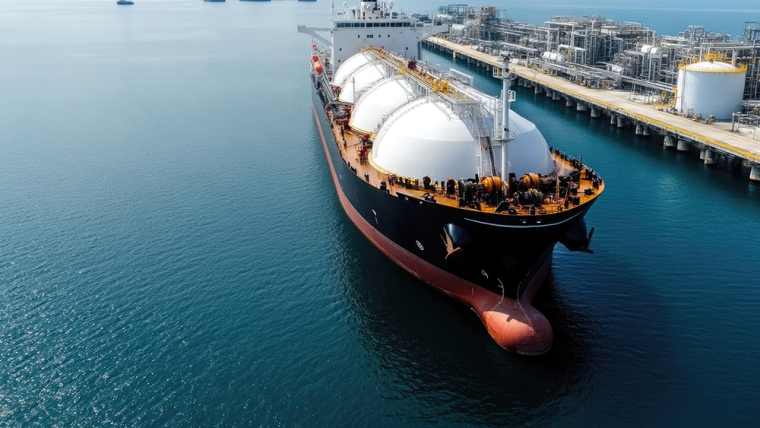
While the preferred provider has not been named, updated information from the Ministry of Business, Innovation and Enterprise (MBIE) said the shortlisted proposal it was considering involved a moored vessel that can store LNG and is capable of regasifying and distributing natural gas into the transmission pipeline when required.
The shortlisted proposal also involves another vessel that carries LNG from suppliers and delivers the LNG to the moored vessel.
“The moored vessel is expected to be located along the Main Breakwater. From assessments to date, it is unlikely that risk management zones around the LNG facility will impact access to Ngāmotu Beach, the Lee Breakwater, or the surrounding community,” MBIE said on its website.
LNG is natural gas that has been cooled and liquified so it can be transported easily.
Energy Minister Simeon Brown has been approached for comment.
'The facility will not go ahead unless the safety case is accepted'
MBIE said when it came to public safety, it would not recommend the Government sign a contract for an import facility that it or its external engineers have safety concerns about.
“However, the developer will separately need to provide a design notice to WorkSafe for feedback, and then a full safety case to be accepted or declined."
“The facility will not go ahead unless the safety case is accepted," MBIE said.
MBIE said emergencies relating to LNG were rare but the developer would still need to have emergency response plans in its safety case.
“These are developed with emergency services, civil defence organisations and Port Taranaki before being submitted to WorkSafe.”
MBIE made it clear the procurement process was still ongoing and it was progressing discussions with the preferred provider.
Gentailers to pick up the bill
In February, the Government first announced it would contract to build a LNG import terminal in Taranaki with plans to have it operating as early as 2027.
At the time, then-Energy Minister Simon Watts said: “New Zealand is experiencing a renewable electricity boom, but a rapidly declining gas supply has left our electricity sector exposed during dry years, when our hydro lakes run low."
“The result is greater reliance on coal and diesel, and ultimately higher electricity prices, putting more financial pressure on families and making businesses less competitive.”
Watts said the cost was subject to commercial negotiation but it would be about north of a billion dollars.
“The levy for the infrastructure is paying for the insurance that LNG provides. It is therefore appropriate that the electricity system bears this cost,” a government fact sheet said at the time.
A portfolio reshuffle in April saw Simeon Brown pick up the Energy portfolio and by June, the Government had changed its tune, backing down from applying a levy to electricity to cover the costs of the planned LNG import facility. Instead, gentailers would be picking up the bill for increasing electricity costs.
The gentailers are companies that both generate electricity and sell it to consumers such as Contact Energy, Genesis Energy, Meridian Energy and Mercury Energy. Genesis, Meridian and Mercury are majority government owned.
Brown told reporters at the time: “New Zealanders know that the responsibility sits with the gentailers to pay to manage dry year risk. It's their obligation, it's their responsibility."
Labour has been outspoken against having a LNG import terminal, with party leader Chris Hipkins promising to scrap it if Labour takes office before contracts are signed.
We welcome your comments below. If you are not already registered, please register to comment
Remember we welcome robust, respectful and insightful debate. We don't welcome abusive or defamatory comments and will de-register those repeatedly making such comments. Our current comment policy is here.