
New Zealand’s gentailers, not consumers, need to pick up the bill for increasing electricity costs, according to Energy Minister Simeon Brown.
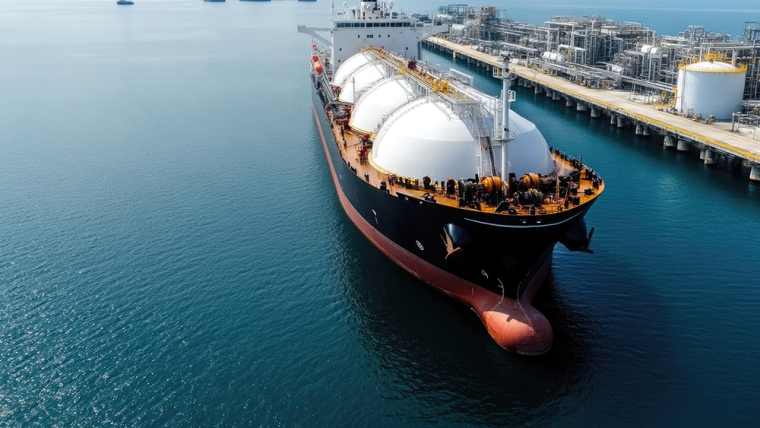
The Government has backed down from applying a levy to electricity to cover the costs of the planned liquefied natural gas (LNG) import facility in Taranaki.
Brown announced this while speaking at the Auckland Business Chamber on Tuesday. The Government now intends to sign a contract with a preferred LNG provider before the general election in November and have the new facility “operational” in 2028. Previously, the Government had forecast the import facility opening in 2027.
Brown, became Energy Minister in April for the second time, said that high energy prices cost New Zealand’s economy an estimated $5.2 billion in lost GDP in 2025 and the risk of a dry year is “priced into every power bill”.
“People have been paying for the dry year risk, even in the years where there hasn't been a dry year, and when a dry year does eventuate, we see an even more extreme impact on prices,” he said.
In February, when Simon Watts was still Energy Minister, the Government announced the new LNG import facility would be paid for via a levy on electricity. At the time, Watts had put the cost of the LNG terminal at “north of a billion dollars.”
“The levy for the infrastructure is paying for the insurance that LNG provides. It is therefore appropriate that the electricity system bears this cost,” a government fact sheet said at the time.
'The responsibility sits with the gentailers to pay to manage dry year risk'
But following his speech on Tuesday, Brown told reporters: “New Zealanders know that the responsibility sits with the gentailers to pay to manage dry year risk. It's their obligation, it's their responsibility.”
The gentailers are companies that both generate electricity and sell it to consumers such as Contact Energy, Genesis Energy, Meridian Energy and Mercury Energy. Genesis, Meridian and Mercury are majority government owned.
Asked if Watts, the former Energy Minister, got it wrong by proposing a levy as a way to pay for the terminal, Brown said the Government had still been “working through the detail” at the time.
“What we're saying here is actually the power companies who make significant profits, they are responsible for managing the dry year risk in New Zealand, and the government is saying very clearly they will be required to pay for this,” Brown said.
“We are putting the responsibility where it sits very firmly in their camp, not on the power bills of customers.”
“[...] the forward prices for electricity have reduced quite significantly since we've made those announcements and so this puts downward pressure on power prices,” he said. “My expectation is this will become part of the cost of [gentailers] running their business, and ultimately the forward [electricity] price means the cost to consumers, businesses, and households is seeing downward pressure.”
According to Brown, since the Government announced the LNG facility in February, wholesale electricity prices for 2028 and 2029 have fallen by around $20/MWh.
Brown said the Ministry of Business, Innovation and Employment (MBIE) and National Infrastructure Funding and Financing (NIFFCO) were leading the commercial negotiations with gentailers.
The Government is also planning to amend the Electricity Industry Act in order to give the Electricity Authority “a clear role” in ensuring dry-year risk is effectively managed across the system.
This will include requiring large electricity buyers to lock in back-up supply well ahead of forecast dry winters and also have “firm fuel available” if hydro storage runs low before winter, Brown said on Tuesday.
Labour says local alternatives need to be examined
Labour energy and resources spokesperson Megan Woods said an LNG facility “locks” New Zealand to international gas prices that the country has no control over.
"There is also real uncertainty about how this will be paid for. The Government has finally admitted that its initial plan to charge Kiwi households for the LNG was out of touch. New Zealanders deserve to know what they're on the hook for before a multi-year contract is hastily signed.”
Woods said New Zealand investing in locally generated energy would do more for the country’s long-term energy security, compared to sending money offshore to import gas from “volatile parts of the world”.
“There are real local alternatives and these need to be examined. Genesis has told Parliament that an upgrade of the existing Huntly power station could do the same job for less money, using New Zealand biomass fuel and creating New Zealand jobs,” she said.
Forsyth Barr downgrades 3 gentailers saying 'the sector is likely an election issue'
On Monday, Forsyth Barr analysts Andrew Harvey-Green and Hugh Lockwood downgraded their share performance ratings for Mercury, Genesis and Meridian, while keeping its ‘outperform’ rating for Contact untouched.
The analysts said they were retaining their rating for Contact as they “look through the short-term overhang” following Infratil’s sell-down of its 5% stake in May.
Genesis and Meridian have been downgraded from ‘neutral’ to ‘underperform’ and Mercury has been downgraded from ‘outperform’ to ‘neutral’.
“While on an absolute basis we are generally comfortable with where the sector is trading, on a relative basis it is harder to see the sector continuing to outperform,” Harvey-Green and Lockwood said, pointing to consumer and business confidence showing signs of stabilisation.
“In addition, wholesale electricity prices have declined to a point where there is earnings downside risk if prices fall further. The sector is likely an election issue.”
We welcome your comments below. If you are not already registered, please register to comment
Remember we welcome robust, respectful and insightful debate. We don't welcome abusive or defamatory comments and will de-register those repeatedly making such comments. Our current comment policy is here.