
The Government is proposing to bring agriculture into the Emissions Trading Scheme (ETS) by 2025, giving it a greater discount than other industries currently receive.
The Ministry for the Environment is proposing the agricultural sector be given a 95% discount or “free allocation of emissions units”.
Trade-exposed industrial emitters currently receive discounts of between 60% and 90%.
While the Labour-New Zealand First Coalition Agreement stipulated agriculture should receive a 95% discount “upon entry” into the scheme, neither the Ministry nor the Interim Climate Change Commission (ICCC), which on Tuesday released a report on agricultural emissions, provided a timeline for when this discount should be wound back.
The ICCC simply said impacts on rural land values, profits, employment, emissions leakages, etc would be need to assessed, and any future changes to the discount should be informed by independent advice from the yet-to-be-created Climate Change Commission.
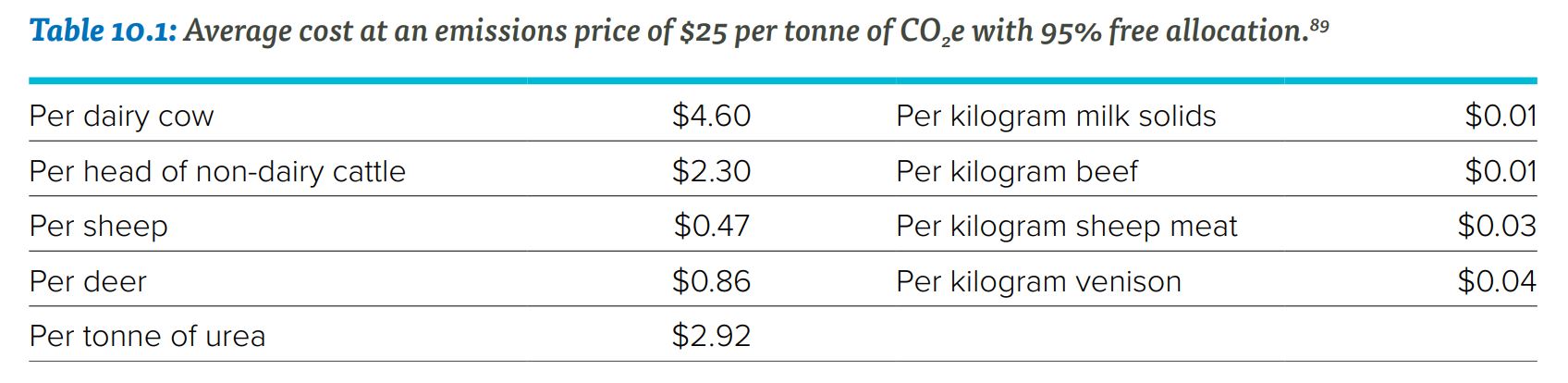
Based on the current ETS price (which is expected to rise substantially over several years) of $25 per tonne of carbon emitted, the ICCC estimated the average dairy farmer would pay 1 cent per kilo of milk solids. Put in context, Fonterra’s farmgate milk price is above $6 per kilo of milk solids.
Consensus over how to price emissions come 2025
The Ministry, in its discussion document, also recommended pricing livestock emissions at the farm level and fertiliser emissions at the processor level.
Its rationale, supported by the ICCC, was that farmers could use “more specific calculation methods that recognise a wider range of practices that reduce emissions”.
Meanwhile because the only recognised way of reducing emissions from fertiliser is to use less of it, which farmers can’t necessarily do, it’s best passing the cost of fertiliser emissions on to processors.
Leaving it with farmers would only cost them and wouldn’t necessarily change their behaviour.
The agricultural sector supports the introduction of a pricing mechanism "at the margins", but not necessarily one implemented under the ETS.
The ICCC acknowledged that a farm-level scheme would be more expensive than a processor-level one.
Needing to cover 20,000 to 30,000 farmers, it would cost between $15 and $39 million a year to operate. Meanwhile a processor-level scheme would cover fewer than 100 participants and cost about $3 million.
Conflict over what to do in the interim
The ICCC therefore suggested that processors (dairy processors, meat processors, and fertiliser manufacturers and importers) be made to start paying for emissions from 2021 ahead of the obligation being put on farmers in 2025.
It suggested recycling the $47 million it expected to collect from processors each year, back to the sector to help farmers get set up for when they have to start measuring and paying for their emissions.
The agricultural sector isn’t happy with this.
It has made its own proposal, which the Ministry has included in its discussion document.
It wants to manage its own programme to get the agricultural sector into an emissions pricing system by 2025, funded through its levy organisations like Federated Farmers, Dairy NZ, and NZ Beef and Lamb.
The Ministry explained: “The sector’s proposal includes a commitment from agricultural leaders to work with the Government to design a pricing mechanism at the farm level by 2025 – where any price is part of a broader framework to support on-farm practice change, is set at the margin and only to the extent necessary to incentivise the uptake of economically viable opportunities that bring about lower global emissions.
“The Government notes the emissions price that applies to all of New Zealand’s other emissions is not linked to the availability of economically viable opportunities.”
Neither the ICCC nor the Ministry mentioned treating biological emissions differently to fossil fuel emissions under the ETS, as the Parliamentary Commissioner for the Environment suggested in a comprehensive report released in March.
The public has until August 13 to make submissions on the Ministry for the Environment's discussion document.
We welcome your comments below. If you are not already registered, please register to comment
Remember we welcome robust, respectful and insightful debate. We don't welcome abusive or defamatory comments and will de-register those repeatedly making such comments. Our current comment policy is here.