
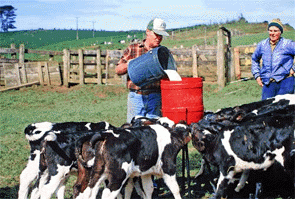
The calf rearing business has had a history over the years of boom and bust, but the feeling is this year could be a good year to raise a few.
With most of our bull beef destined for the manufacturing beef market in the US and that country devastated by a widespread drought, analysts suggest lack of supply will soon drive demand in a fast food driven market.
International demand for dairy replacements will also fuel demand and with milk powder prices easier, if animals can be purchased at a sensible price, margins should be good.
The saleyard market is now ramping up with numbers so look here » for weekly saleyard prices, and links to information on profitable rearing.
Many farmers' wives and kids raise a few as a cash venture and a group of fully grown Friesian steers/bulls can finance a holiday, school fees or a child's treat, which may be important in what shapes up as a difficult year with many of the other livestock options.
Strong global demand for beef and dairy stock means this year could be shaping up as one of the better ones for calf rearing, says one large-scale rearer from Mid Canterbury. Richard Fitzgerald is rearing about 1000 calves this year on his farm near Methven. The boom-bust nature of the industry meant there were few large scale calf rearers left in Canterbury reports The Central Farmer.
Mr Fitzgerald has recently returned from a six week overseas trip as part of his 2012 Nuffield Scholarship. Global demand for beef was strong and there was also strong international demand for dairy stock, particularly from China, he said. "It's looking like a good year to rear calves. There's quite a lot of demand out there at the moment." There were also different options available for rearers this year.
He had been approached to rear high BW friesian bulls and heifers. He had also been offered an attractive beef bull contract that would give him a $180 margin, but had yet to sign it.
Mr Fitzgerald believes he would sell a good quality friesian bull calf at 100kg for $330 to $340. He would be looking at purchasing these animals to rear when they were four-days-old at around $80. He would then be spending roughly $90/head on milk powder and an additional $20/head on other costs. Milk powder prices have dropped slightly from last year because of falling international dairy prices while meal was up slightly from last year.
Critical to making good returns was sourcing good quality stock, Mr Fitzgerald said. He said there was no market for dairy breed weaner calves that were not pure friesians. It will also be the first year rearers have had to deal with NAIT. Mr Fitzgerald said the livestock company he deals with had increased their commission charges to cover the costs of having to scan animals by an extra percentage point.
Calf sales had begun at the Temuka Saleyards with small numbers of friesian bull calves making $75-$140. Peter Walsh and Associates dairy specialist Don Borlase expected the market to stay around $75-$85 once it had settled down. Demand for beef had fuelled competition from buyers for reared calves, providing different options for calf rearers this season, he said. "The rearers had a good year last year and there are good forward contracts out there for friesian bulls and it's looking like one of the better years I have seen."
We welcome your comments below. If you are not already registered, please register to comment
Remember we welcome robust, respectful and insightful debate. We don't welcome abusive or defamatory comments and will de-register those repeatedly making such comments. Our current comment policy is here.