
This is the sort of science an independent research body should be doing, as farmers have little chance of evalulating the correct product to use against a barrage of marketing claims and incentives to purchase.
Farmers have been attracted to the easy to use pour on and injectable products, but it appears they may not be as effective as their makers claim.
A lack of independent trials is also an issue in grass cultivar evaluation and often products are marketed by an association with high profile farmers endorsing the product.
True and extensive independent trials are what is needed if the correct choice is to be made for what will be a big cost and medium to long term investment.
Do you feel confused by choice when looking for a product to do the job and should we ask an independent research body to do more evaluations so farmers can make the right choices based on science, not marketing incentives, as is the case in many products now?
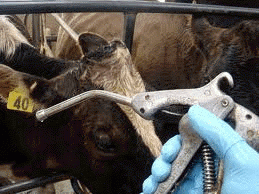
A new study by AgResearch scientists shows oral cattle drenches are far more effective than the equivalent pour-on or injectable products.
In a study soon to be published in the international science journal Veterinary Parasitology, AgResearch scientists Chris Miller and Dave Leathwick measured how effective the same drench active (moxidectin) was when given orally, as a pour-on or as an injectable. They conducted trials on 14 farms throughout NZ, and say while pour-ons and injectables are easier to use, they do not deliver the same benefits.
“Based on overseas data, I would not have been surprised if the pour-on product was generally less effective than the other two routes as there are issues with drug penetrating the skin and animals either licking the drug off their own backs or their neighbours,” says Dr Leathwick. “We also thought the oral drug would work pretty well, while injectable macrocyclic lactones (the drug family which includes moxidectin, ivermectin, abamectin etc.) are regarded as the gold standard when treating cattle parasites on a global basis.”
He says when the results were analysed, the study confirmed how ineffective the pour-on product was, reducing the number of worm eggs shed in faeces by only around 50%. “What came as a surprise, however, was that the injectable product performed no better than the pour-on. In comparison, the much cheaper oral product reduced worm egg output by over 90%.”
The parasite surviving treatment was predominantly Cooperia, which on most farms showed a level of resistance to these drugs. However, this was not always the case and the presence of resistance does not explain the difference between the routes of administration.
“What we have already proven is that using drugs with higher efficacy against worms lifts animal productivity, while killing more worms by using an effective drench reduces the selection pressure for resistance to develop, promoting the sustainability of worm control."Dr Leathwick says follow-up studies have confirmed that this is not unique to moxidectin and that other pour-on and injectable products were no more effective.
“The next steps are to repeat the study against different worm species and also develop techniques to measure drug concentrations in the tissues where the worms live.” He says there is four to five years of research ahead to determine whether the research findings apply equally to all worm species, and to assess the likely implications for long-term, effective worm control should farmers continue to use pour-on or injectable products.
We welcome your comments below. If you are not already registered, please register to comment
Remember we welcome robust, respectful and insightful debate. We don't welcome abusive or defamatory comments and will de-register those repeatedly making such comments. Our current comment policy is here.