

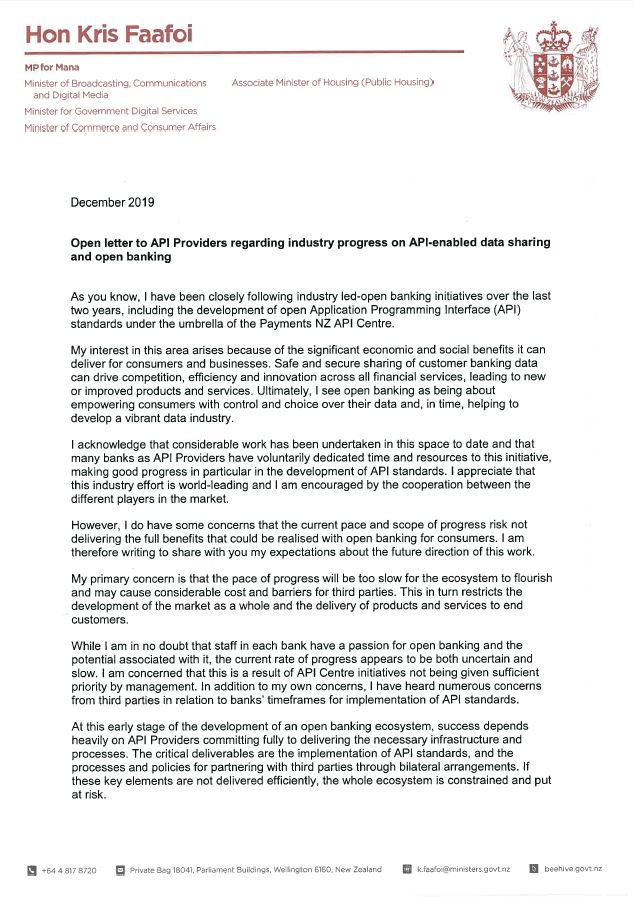
Commerce and Consumer Affairs Minister Kris Faafoi is cracking the whip on banks, setting deadlines for them to make open banking operational.
Faafoi wants bank customers to be able to extract their data and give it to approved financial technology firms that can do what banks do - and more. For example, process payments or gather transaction histories for budging purposes.
Authorities in the UK and Australia have forced banks to do this through law. Faafoi has however taken the approach of his National predecessor, and told banks to lead the charge on their own to avoid regulation.
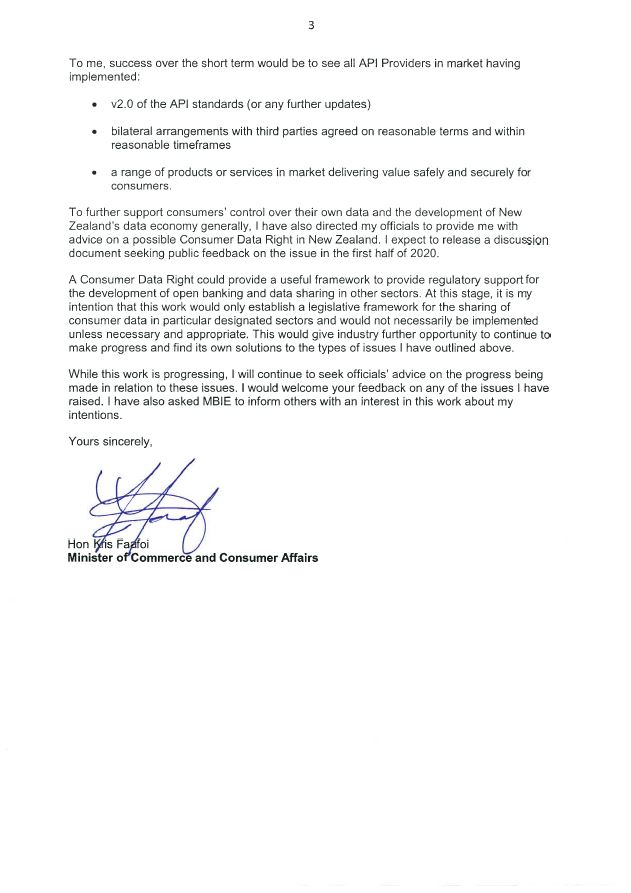
However, he said in a letter to the industry, he has now directed government officials to look into creating a Consumer Data Right in New Zealand.
This would establish a legislative framework for the sharing of consumer data in particular designated sectors, but wouldn’t necessarily be implemented “unless necessary and appropriate”.
His rationale is, why should banks have a monopoly over the management of their customers’ money, when there are financial technology firms that can also do so, creating more competition and therefore better outcomes.
Faafoi wants banks to provide the infrastructure, enabling approved financial technology firms to sit on top and offer banking-related services.
So instead of using a Visa or Mastercard to shop online, open banking could enable shoppers to access their bank accounts directly to make payments, possibly at a lower cost. Datacom and Paymark already offer such payment products.
Faafoi told the industry the rate of progress being made on open banking is “uncertain and slow”.
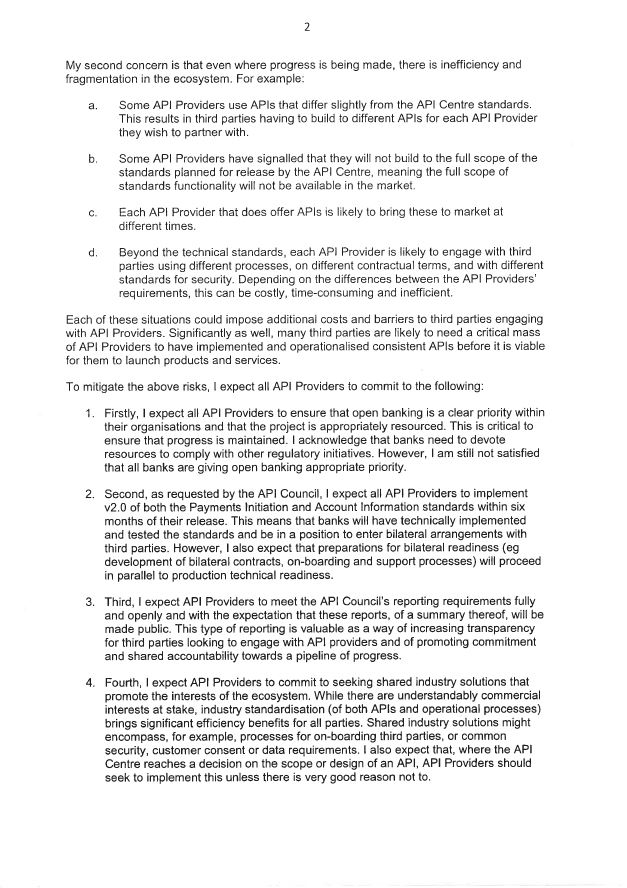
He said where progress is being made, there is “inefficiency and fragmentation”.
He recognised that for open banking to really have the desired effect, financial technology firms need “critical mass”.
In other words, if a firm starts an app that lets you pull together your transaction histories from your various bank accounts, with different banks, it really needs all the banks to be on board for this tool to be useful. The same goes with payments tools.
Faafoi said: “I am still not satisfied that all banks are giving open banking appropriate priority.”
Faafoi has said that providers of APIs (the technology that essentially links two systems), including banks, need to adopt standards designed by an industry-owned organisation within six months of them being available.
Payments NZ has created a set of standards to accompany APIs its created.
These outline how open banking should be designed to manage risks and be secure. For example, they detail how customers who entrust a third party to access their banking information need to be informed when consenting to this.
Faafoi said banks need to adopt the second version of these standards within six months of them being available.
He said the agreements made between banks and third parties need to be made on “reasonable terms” within “reasonable timeframes”.
While Payments NZ has created standards, it is still up to Bank X to make contractual arrangements with Fintech Y around how costs and liability will be shared. For example, if Fintech Y is hacked and someone loses their banking information, who’s liable?
Thirdly, Faafoi said he wanted to see a "range" of products or services brought to market that deliver “value safely and securely for consumers”.
Faafoi wanted these three things implemented in the “short term”.
We welcome your comments below. If you are not already registered, please register to comment
Remember we welcome robust, respectful and insightful debate. We don't welcome abusive or defamatory comments and will de-register those repeatedly making such comments. Our current comment policy is here.