
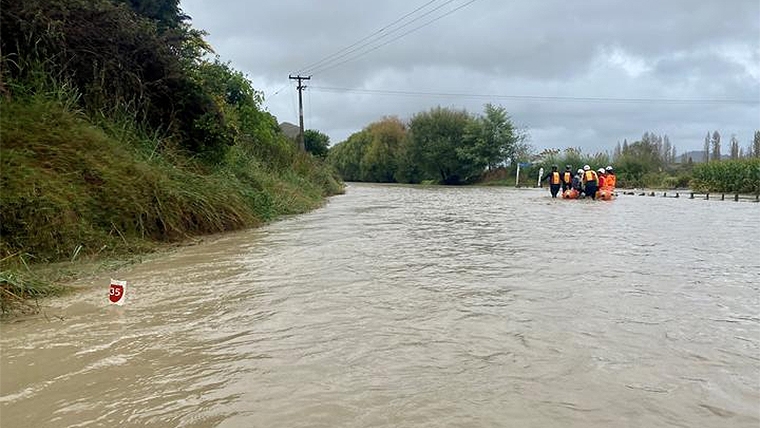
The Reserve Bank (RBNZ) is warning property owners may see a fall in values in flood zones as the understanding of risks improves and this is priced into the housing market.
The RBNZ makes these comments in a pre-released article from its November Financial Stability Report, which is due to be released in full on Wednesday.
Given the data and capability for assessing river and surface water flood risk nationwide isn't as advanced as that for coastal flooding, the RBNZ says it asked the big five banks to assess their exposure to river and surface water flood risk in the Auckland region. To do this they used Auckland Council data mapping a 1-in-100 year flood zone aligned with a scenario where current climate policies remain unchanged out to 2050.
Although banks’ approaches varied, the RBNZ says most results include a conservative assumption that a property is at risk if any part of the land area touches the flood zone.
"The results of this exercise illustrate the magnitude of river and surface water flood risk in a severe climate change outcome. In Auckland, we found that more than a quarter of the banks’ mortgage lending was in the flood zone. This is equivalent to around 12% of their total mortgage lending at a national level, under a severe climate change outcome," the RBNZ says.
"This exercise has now shown that river and surface water flooding looks to be a greater climate-related hazard for residential mortgages than coastal flooding, in terms of total lending."
"Climate change-induced increases in flooding risk, and related potential changes in insurance behaviour are unlikely to be fully captured in current house prices. Therefore, owners may see a fall in property values in flood zones as we gain an improved understanding of the risks and this is priced into the housing market," the RBNZ says.
The RBNZ looked at how banks’ current mortgage portfolios would be affected by flooding risks out as far as 2100, assuming no change in the types of properties banks will lend against.
"New mortgages typically have a maximum 30-year term, and on average a mortgage’s principal will be paid down over a shorter time horizon. This means that, through gaining a deeper understanding of the likelihood and extent of future flooding risks, banks can position themselves to avoid being exposed to these risks over time, for example by tightening lending requirements in high-risk flood zones. It also gives banks an opportunity to work with existing customers to manage and mitigate risk," the RBNZ says.
"Importantly for banks, 80% of current mortgages in the identified flood zones have LVRs [loan-to-value ratios] below 60%. A low LVR means the mortgage borrower has a significant amount of equity to absorb a decline in property value, if this were to occur faster than the remaining term of the loan."
"Falls in the value of properties securing mortgages do not on their own lead to losses for banks. However, with less security supporting a loan, a bank would be more exposed to loss in the event a borrower defaults," the RBNZ says.
The RBNZ plans to probe the impact on bank losses, looking at a range of property value sensitivities, in a Bulletin article next year.
The full RBNZ article, which also covers coastal flooding risks, is here.
Also see our Of Interest podcast: Tower CEO Blair Turnbull on insurance, climate change & avoiding uninsurable areas.
And see everyone expected to pay their part in climate adaptation here.
We welcome your comments below. If you are not already registered, please register to comment
Remember we welcome robust, respectful and insightful debate. We don't welcome abusive or defamatory comments and will de-register those repeatedly making such comments. Our current comment policy is here.