

Over the last month there has been a substantial shift in how money markets are thinking about what central banks will do to fight inflation.
The view is hardening that the next rate review will be a hike. And that is a view in many key economies.
In Australia and England the shift is the most dramatic, from virtually no chance a month ago, to now seeing it as a 90% chance.
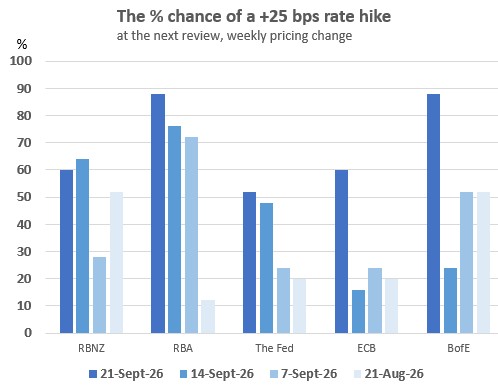
Driving these financial market views are how they think the respective central banks see urgency in pushing back against inflation.
Slow or timid policy responses risk inflation embedding. When that happens, it is so much harder to recover without causing a recession in economic activity.
Recent policy guidance is much clearer now that central banks are looking at the inflationary forces they face and seeing more urgent action is required and required soon.
This is true in New Zealand as in others jurisdiction. But for us if the Reserve Bank of Australia, US Federal Reserve, and even the Bank of Japan start moving up, beyond last weeks' Fed and BoJ increases, then the tide will come in globally for interest rates. And no matter what the Reserve Bank of New Zealand does, our interest rate environment will rise.
We welcome your comments below. If you are not already registered, please register to comment
Remember we welcome robust, respectful and insightful debate. We don't welcome abusive or defamatory comments and will de-register those repeatedly making such comments. Our current comment policy is here.