

By David Hargreaves
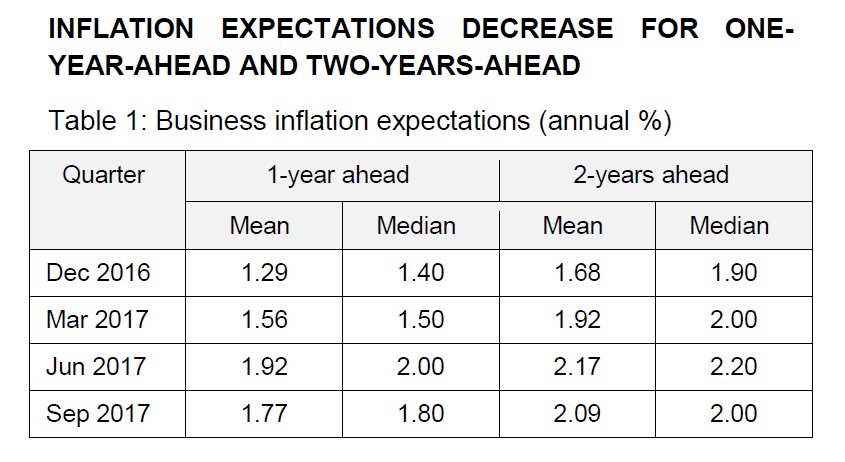
The latest quarterly Reserve Bank Survey of Expectations, has shown a drop in the anticipated rate of inflation over the next two years.
The expected rate of inflation in two years is now 2.09%, down from 2.17% as per the previous survey released in May.
Expectations of inflation in one year's time dropped more sharply, down to 1.77% from 1.92%.
The Reserve Bank Survey of Expectations asks a sample of economists, business and industry leaders questions relating to perceptions and expectations on a range of economic indicators.
It is closely watched by the RBNZ itself and can be very influential in terms of the bank's thinking on interest rate moves. A sharp fall in inflation expectations early last year for example was a key factor in the RBNZ shortly afterwards cutting the Official Cash Rate.
Normally expectations don't move much from survey to survey, but on the back of some substantial increases in actual inflation earlier this year, there was a matching sharp increase in inflation expectations.
Back in February, the expectation of the inflation rate two years out jumped from 1.68% to 1.92%. That's a very big move by the standards of this survey. It then subsequently moved up well above 2% in the following survey.
However, the RBNZ didn't react either to the actual or expected rises in inflation, being prepared to 'look through' them in the belief that inflation would subside again. And the central bank has been proven correct, with latest CPI figures slumping.
The RBNZ is universally predicted to keep the OCR at 1.75% when making its next call on interest rates this coming Thursday (10th). The only question being asked by economists is whether the RBNZ may now in fact remove reference to anticipated rises in interest rates commencing in 2019.
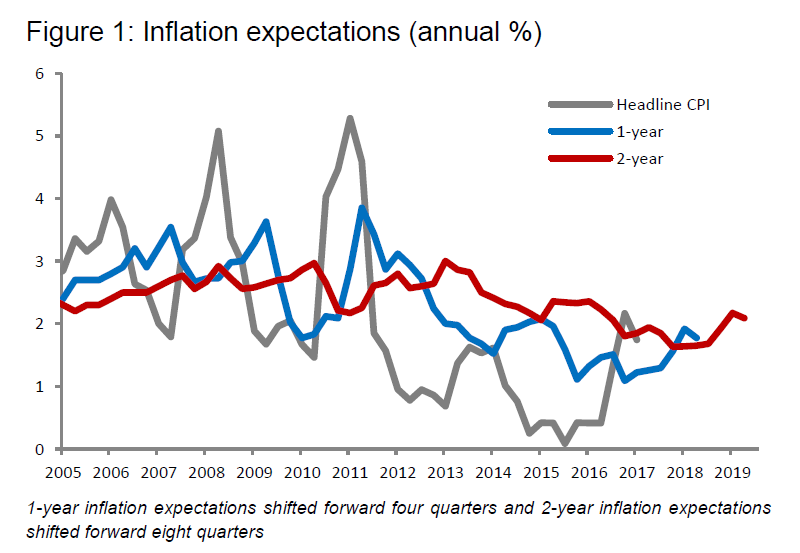
If anything, economists might have actually anticipated a bigger fall in inflation expectations, given the recent very benign CPI figures and some other supporting evidence suggesting that the blip in inflation earlier in the year really was very much a one-off.
The question the RBNZ is now likely to be increasingly asked is not when it will raise the OCR, but whether it might in fact consider another reduction in interest rates - particularly with the Kiwi dollar still high.
And in that respect, while much in the latest survey will be reassuring for the central bank, it won't have been too thrilled - though probably not surprised - to see expectations of the level of the New Zealand dollar in the future now higher.
Respondents to the survey now expect the NZ dollar exchange rate to be US71c against the US dollar at the end of December 2017, increasing from US69c in the previous survey. On Monday the Kiwi was at US74c. The RBNZ has said recently it wants to see it lower - and will likely reiterate this message in its OCR review on Thursday.
We welcome your comments below. If you are not already registered, please register to comment
Remember we welcome robust, respectful and insightful debate. We don't welcome abusive or defamatory comments and will de-register those repeatedly making such comments. Our current comment policy is here.