

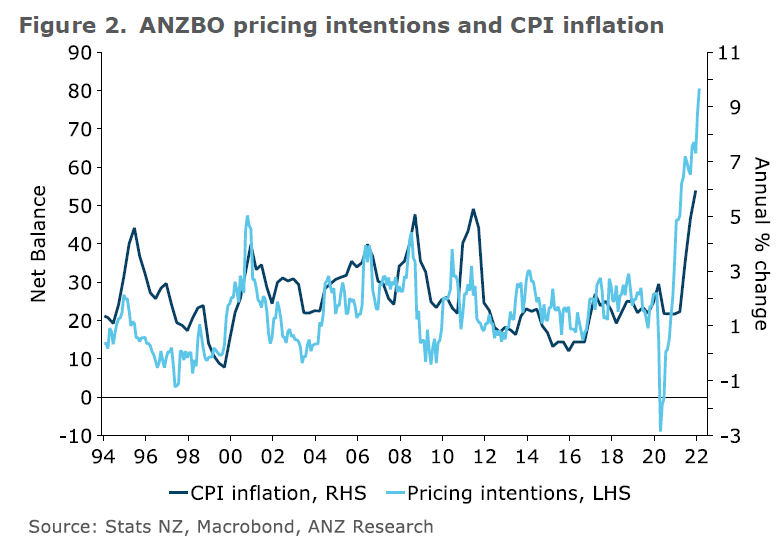
The pricing intentions of Kiwi businesses suggest inflation is "moon bound", according to the March ANZ Business Outlook Survey.
ANZ's NZ chief economist Sharon Zollner said inflation pressures had continued to lift, with the commodity price impact of Russia’s invasion of Ukraine "giving pressures fresh impetus".
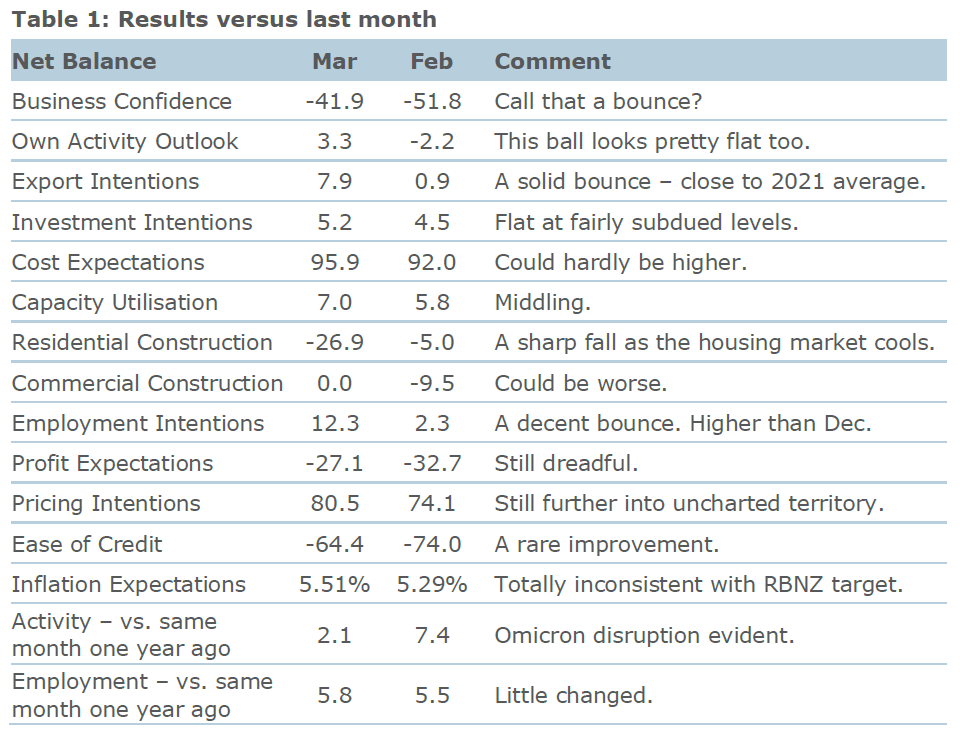
"Inflation expectations rose to a new record high of 5.5% and pricing intentions took yet another meaningful leg higher to a net 81%. Indeed, the latter suggests CPI inflation is moon-bound," she said.
"A remarkable net 96% of firms report that they expect higher costs. Can’t get much more broad based inflation pressure than that."
But the news "gets even worse", Zollner said, if you split the sample of survey respondents into the early and the later part of the month.
"Amongst the 29% of firms who responded after the reminder email went out on 21st March, a net 99% expected higher costs in the next three months, and 1-year-ahead inflation expectations were a startling 5.9%, nearly three times the RBNZ’s [Reserve Bank's] 2% target midpoint."
Both the business confidence and 'own activity' measures in the survey recovered a little in March compared with February, but both remain considerably lower than at the end of last year, Zollner said. In fact most activity indicators bounced back a little, "perhaps as the worst fears about the impact of Omicron waned".
However, Zollner said there was "a wariness evident" across the that doesn’t seem likely to be entirely due to the current Omicron outbreak.
"Overall, the themes are consistent with the themes outlined in our recent forecast update and OCR [Official Cash Rate] call change; the housing market and the outlook for speculative construction is weakening quite rapidly; households are facing increasing headwinds and budgetary pressures, and are reducing their discretionary spending; firms’ margins are getting squeezed; inflation pressures are extremely broad-based and still intensifying.
"It’s not a very pleasant mix, and the near-term growth outlook is clouded. But with inflation pressures now so extreme, and the RBNZ’s inflation-targeting credibility on the line, it’s full steam ahead for rate hikes – we’re forecasting 50bp hikes in both April and May.
"It could well be a rough ride, but maintaining medium-term price stability is the best contribution monetary policy can make to New Zealand’s big-picture economic prospects from this very difficult starting point."
Zollner said given the overwhelming consensus about cost and price escalation, ANZ "tweaked" the questions to ask businesses how much they think these variables will change over the next three months. All sectors are anticipating more margin pressure ahead.
“We now also ask by how much businesses think wages changed in the last year and are expected to change in the next 12 months. The strongest wage pressure is in agriculture, followed by construction. There’s little evidence of a wage price spiral here, insofar as most firms are anticipating similar wage lifts next year as those delivered in the past 12 months.”
The March survey includes the quarterly questions about problems firms are facing, and investment intentions.
"Finding skilled labour remains firms’ biggest problems, though it isn’t getting worse, while non-wage cost inflation and high rates of pay are growing as problems. Traditional recession-type problems such as cashflow/debtors and low turnover remain well down the list.
"In terms of what’s driving investment decisions, interest rates are not yet a significant factor for either firms intending to invest, or those not. Concern about the domestic economic outlook is rising, and is the top factor constraining investment by quite some way.
"For those intending to invest more, labour costs are an increasing driver, but the domestic economic outlook and skilled labour shortages remain considerably more important."
We welcome your comments below. If you are not already registered, please register to comment
Remember we welcome robust, respectful and insightful debate. We don't welcome abusive or defamatory comments and will de-register those repeatedly making such comments. Our current comment policy is here.