
Food price inflation is continuing to ease - though possibly not fast enough for shoppers.
According to Statistics NZ food prices in the month of September were virtually unchanged on a seasonally adjusted basis.
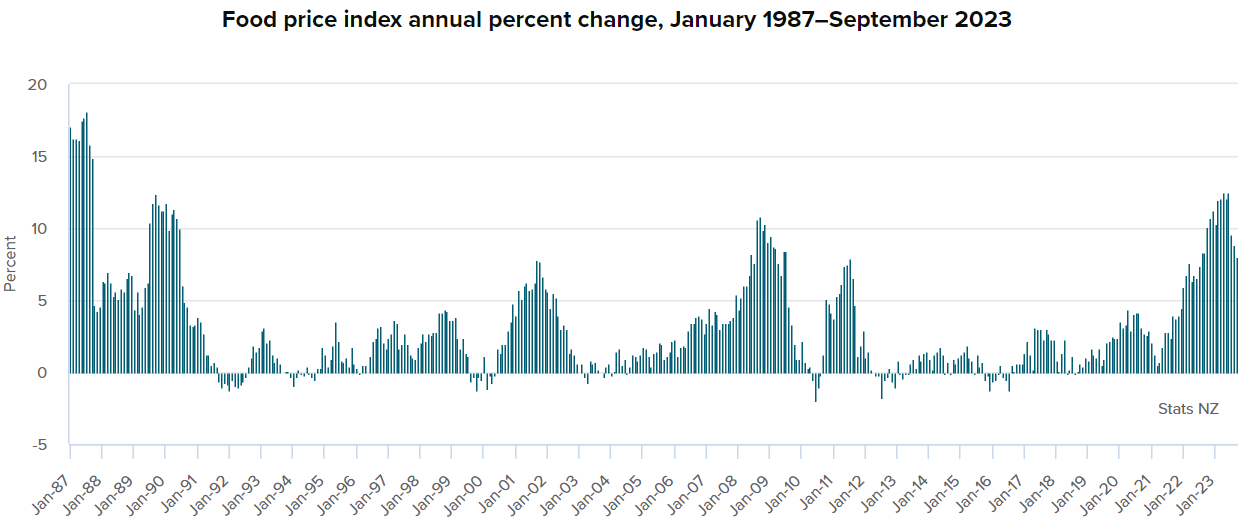
This took the annual rate of food price inflation down to 8.0% from 8.9% as of August. And that's now actually the lowest annual rate of food price inflation we've seen in this country since July of 2022, when the figure was 7.4%.
Earlier this year the Food Price Index twice saw more than 35-year high annual increases of a whopping 12.5%.
The nitty gritty of the latest month's figures includes that food prices actually fell 0.4% in September 2023, but after seasonal adjustment, they rose 0.1%
Stats NZ said in September 2023 compared with August 2023:
- fruit and vegetables prices fell 3.9% (down 0.9% after seasonal adjustment)
- meat, poultry, and fish prices were unchanged at 0.0%
- grocery food prices were unchanged at 0.0%
- non-alcoholic beverage prices rose 1.0%
- restaurant meals and ready-to-eat food prices rose 0.3%.
Food prices make up a little under a fifth of the total composition of the Consumers Price Index, our main recognised measure of inflation. CPI figures for the September quarter are due to be released on October 17, with current expectations that the annual rate of inflation will remain somewhere round about the 6.0% level it was at in June.
ASB senior economist Mark Smith said that over the third quarter of the year, food prices rose 0.8%, "which will contribute 0.15 percentage points to Q3 CPI, marking the lowest quarterly increase since late 2021".
"Driving overall food prices lower were falls for fruit and vegetable prices likely related to the earlier cyclone Gabrielle premium," Smith said.
"The dynamic of widespread price rises looks to be slowing. About 49% of items (52% of expenditure weight) rose in September, but this was compared to 50% of items seeing price falls (47% of weight).
"It suggests that soft household demand and greater consumer resistance to paying higher food pricing might be impacting food retail pricing decisions. If the latter is the case, this is encouraging for the future food price inflation outlook (i.e. lower inflation).
"...It is our view that conditions are in place that should see NZ food price inflation continue to cool heading into 2024, but a difficult period lies ahead for NZ consumers," Smith said.
In terms of the 8.0% increase in annual food inflation, Stats NZ said these were main contributors:
- fruit and vegetables prices increased 1.4%
- meat, poultry, and fish prices increased 6.9%
- grocery food prices increased 10.7%
- non-alcoholic beverage prices increased 8.3%
- restaurant meals and ready-to-eat food prices increased 8.6%.
"The largest contributing food group was grocery food, which includes non-perishables and dairy products," Stats NZ's consumer prices manager James Mitchell said. "Fresh eggs, potato crisps, and lollies were the largest drivers within grocery food."
In terms of the monthly actual fall in food prices for September, Mitchell said decreasing prices for fruit and vegetables, such as tomatoes, cucumbers, and lettuce, contributed the most to this.
We welcome your comments below. If you are not already registered, please register to comment
Remember we welcome robust, respectful and insightful debate. We don't welcome abusive or defamatory comments and will de-register those repeatedly making such comments. Our current comment policy is here.