
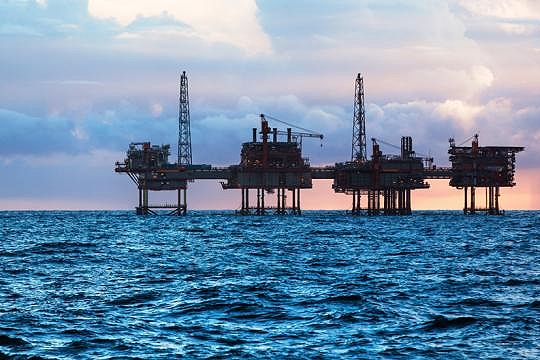
The natural gas industry appears unlikely to rush into offshore drilling, despite Government plans to formally give consent.
Instead, they are expected to adopt a defensive posture, and focus on extracting more gas from existing onshore wells in preference to costly quests for new gasfields offshore.
The previous Labour Government banned new offshore wells in 2018. The current Coalition Government is in the process of repealing that ban.
The main players in the gas industry are saying little in response, but are certainly withholding any enthusiasm.
One potential contender is the Austrian company OMV. But it has been trying to sell its New Zealand assets since last year – mainly stakes in the Maui and Pohokura gas fields - and an official says that sale is its focus at present. Another contender could be Greymouth Petroleum, which has several onshore sites and was a fierce critic of the 2018 ban. But it flatly refused to comment on the proposed lifting of the ban.
An industry veteran is NZ Oil and Gas, which played a big part in the development of the Kupe field. But it has been gradually selling out of New Zealand in favour of Australia and is even delisting from the NZX in favour of the ASX. Todd Energy is the fourth possible player. It is known to be very busy with other projects which could mean it has little time for any new offshore quests for new gas fields, though details are unclear.
Most companies defer substantive comment to their industry body, Energy Resources Aotearoa.
Its chief executive John Carnegie says bluntly that many energy companies have lost faith in New Zealand and the Government will have to do a lot to overcome the “massive” damage from the 2018 ban.
“The solution needs to be proportionate to the damage caused. We have to go further. It’s not enough for the New Zealand government to do the same thing that Australia is doing. We’d have to go further because we’re starting from further back than Australia.”
Carnegie asks why anyone would want to invest in New Zealand given its sovereign risk when they could invest in Australia instead if conditions were equal.
So, he says companies need more details about how the Government will organise a new regime which allows offshore exploration. One worry is that the current Government might allow drilling but a future Government might stop it, possibly after just one three-year electoral cycle. This would be unacceptable when developing a new gas well can take 10 years.
Several ideas have been discussed by the Resources Minister Shane Jones to try to overcome this problem. One is a redeemable bond payable by the State in the event of permission being cancelled after expensive exploration has already taken place. Another would impose an obligation to purchase gas anyway, which is similar to the take-or-pay contracts imposed on the Crown in previous years.
Carnegie is refusing to endorse or oppose any of these ideas until more is known about them.
“I don’t necessarily think we would want either of those ideas, but he (Jones) is definitely on the right track. He is beginning to think outside the square and that’s what the Government needs to do.”
This latest controversy follows a report about limited gas reserves a year ago and an even more serious report in May. Carnegie says the information in those reports is causing problems already, with the country’s largest gas user Methanex already having had to curtail production.
“Essentially what would happen (without new drilling) is a high-priced energy future for New Zealand,” Carnegie says.
“It would potentially make Liquified Natural Gas (LNG) imports more likely. At the moment, New Zealand is isolated from international cost pressures. This would connect us to the international gas market and we would have to pay international LNG prices. It would have us in a queue, and we would be at the bottom of the queue because if it’s Australian LNG, then all of those contracts are largely committed to Asia.”
Carnegie says all these problems constitute a manufactured crisis because they were predicted at the time of the 2018 ban.
“This is the chickens coming home to roost.”
At the time of the ban, the Government argued that the world could not afford to burn even known reserves of fossil fuels and expect to keep warming below the 1.5 degrees desired by the Paris Agreement on climate change. That awkward fact meant that searching for still more fossil fuels gas made no sense at all. But opponents argued a gradual transition to renewable energy would make more sense than the sudden ban, and a subsequent report by the Parliamentary Commission for the Environment was highly critical of the ban.
We welcome your comments below. If you are not already registered, please register to comment
Remember we welcome robust, respectful and insightful debate. We don't welcome abusive or defamatory comments and will de-register those repeatedly making such comments. Our current comment policy is here.