

Food prices fell for the third consecutive month in November - the first time there's been three consecutive falls since December 2023.
Rent prices have had their lowest annual rise since at least 2010, with a 1.4% increase in the 12 months to November, down from 1.6% in October.
The above two facts put together - given that food and rents make up well over a quarter of our Consumers Price Index (CPI) inflation - bode well for the December quarter inflation figures due to be released on January 23.
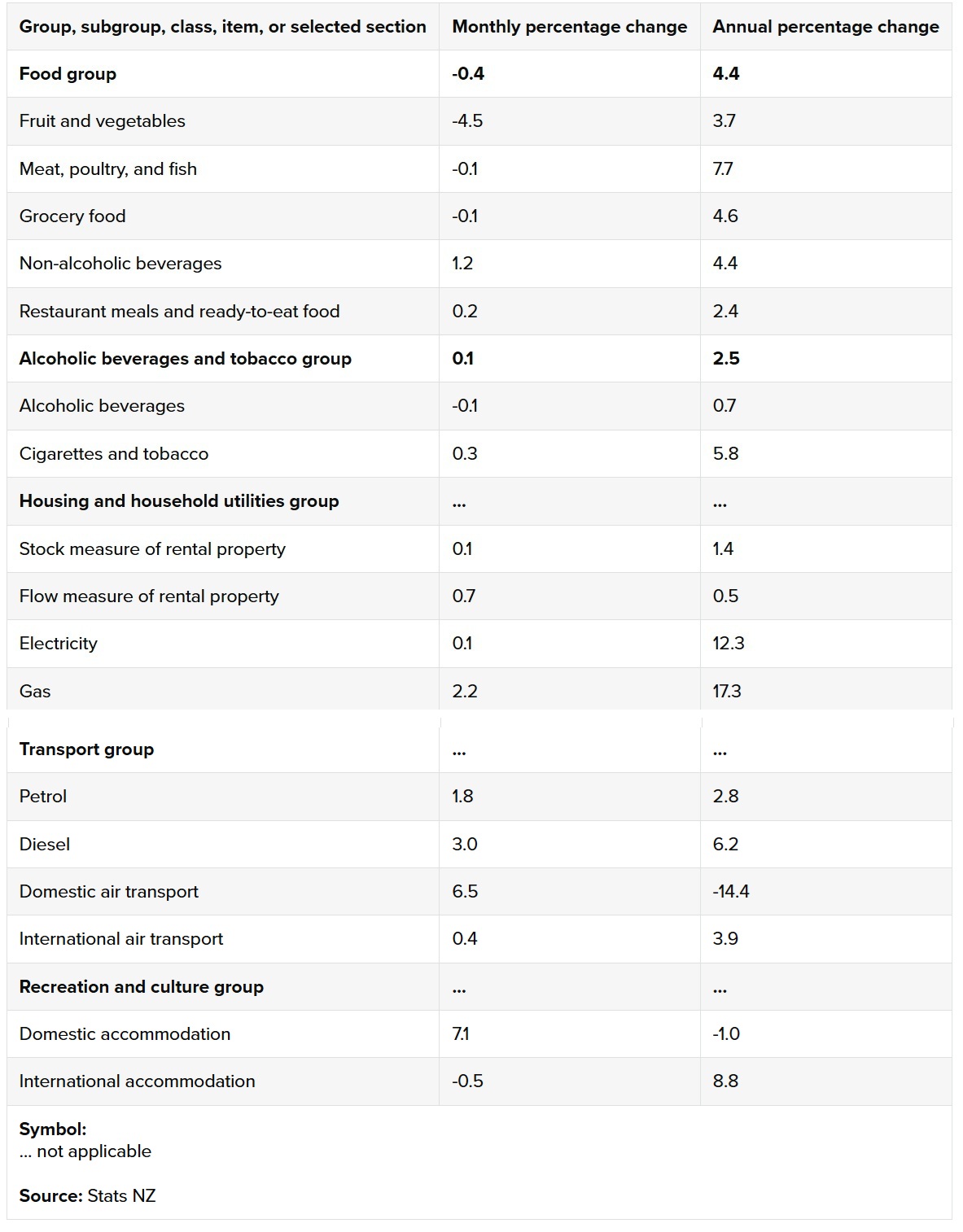
Statistics NZ's latest Selected Prices Indexes (SPI) information shows that food prices fell 0.4% in November, while annually, prices increased 4.4%, down from an annual rate of 4.7% in October.
The monthly SPI data contains about 47% of what makes up the CPI - so, it's a good early indicator of what the CPI is doing.
This is the second, middle, month contributing to those CPI inflation figures for the December quarter. And the December quarter CPI figure will be a key input for the Reserve Bank's first Official Cash Rate decision of 2026 on February 18.
The annual rate of inflation as at the September 2025 quarter pushed up to 3.00%, right at the top of the RBNZ's targeted 1% to 3% range. However, the RBNZ, in its November Monetary Policy Statement (MPS) forecast that inflation would drop to 2.7% for the December quarter.
Such an outcome would be important in allowing the RBNZ to leave the OCR at 2.25%, which is its current intention, with Governor Anna Breman, in her first major monetary policy communication this week, saying "if economic conditions evolve as expected the OCR is likely to remain at its current level of 2.25% for some time".
Breman's pro-active statement came as wholesale interest rates had risen sharply, plus some mortgage and deposit rates in the wake of the RBNZ's November OCR communications, which had clearly indicated the central bank saw itself as having finished cutting the OCR - while the markets had expected it to signal there may still be more cuts ahead.
Given what has happened in the markets, the RBNZ would probably enjoy the flexibility of being able to suggest in February that the door was still open to further OCR cuts - but it would need inflation to co-operate. The current indications are that inflation will co-operate.
The latest food price figures were given a big downward shove by seasonal patterns - with fruit and vegetables dropping 4.5% in November.
Stats NZ said a range of seasonal produce, including tomatoes, strawberries, cucumbers, and lettuce, contributed to this decrease.
In terms of the the annual food price increase of 4.4%, Stats NZ said higher prices for the grocery food group, up 4.6%, contributed the most. This was followed by meat, poultry, and fish, up 7.7% annually.
Across the 12 months the average price for:
- milk was $4.91 per 2 litres, up 15.8% annually
- porterhouse/sirloin beef steak was $45.39 per 1kg, up 26.7% annually
- white loaf bread was $2.13 per 600g, up 53.2% annually.
The average prices for milk and bread represent the cheapest available options for each.
"Bread is a staple food for many households," Stats NZ's prices and deflators spokesperson Nicola Growden said.
"It now costs 74 cents more for a loaf of white bread than this time last year."
Here is the detailed SPI information for November as supplied by Stats NZ:
We welcome your comments below. If you are not already registered, please register to comment
Remember we welcome robust, respectful and insightful debate. We don't welcome abusive or defamatory comments and will de-register those repeatedly making such comments. Our current comment policy is here.