
Here's our summary of key economic events overnight that affect New Zealand with news Canada is making a push to separate itself from the risks of being tied too tightly to the US.
But first in the US, industrial production rose marginally in December from November to be +2.0% higher than year ago levels.
The January NAHB/Wells Fargo Housing Market Index retreated in January from December and back to October levels and -21% lower than year ago levels. Builder sentiment deteriorated across all components of the index.
The New York Fed's regional services sector tracking reports yet another sharp contraction in their region in January, although not as sharp as in December
Across the border, Canadian housing starts turned in another strong result in December, up by +11% from November, to the highest rate in five months. That caps a good full year, up +5.6% in 2025 from 2024.
The Canadian prime minister has been in China and has negotiated a truce with Beijing in their tariff tussle. The Chinese will now import large volumes of Canadian crops in return for a 40,000 car concession for Chinese EVs. Those will displace US-sourced EVs. The Canadian farm lobby is happy, their car-manufacturing lobby isn't.
China continues to run down its holdings of US Treasury investments with them falling -11.2% in November from a year ago. Their holdings of US paper drops them to third place behind Japan and the UK. Overall foreign holdings of US debt actually rose +7.3% in the year to US$9.35 tln, a record high. That is 30% of the US$30.8 tln of debt that isn't internal. That is down from the peak proportion (35%) about a decade ago.
Malaysia's economic activity continues to impress. They recorded Q4-2025 GDP growth of +5.7% with a strong factory sector supported by strong internal demand.
Singapore's (non-oil) exports rose +6.1% in December from a year earlier, a moderated pace of growth from November. (Their refined oil exports grew at more than twice that pace.) This means that Singapore's non-oil full-year 2025 exports came in +4.8% above their equivalent 2024 level.
We don't often look at South America, but we possibly should note that Brazil turned in a good rise in business activity in November in an overnight report.
In Australia, short term tourist arrivals jumped nearly +20% in November to 831,000, a record high for any November. New Zealand continues to be their largest source of tourists. Aussie travellers chose Indonesia over New Zealand for their outbound travel - just. Then Japan, then China. The US was sixth, the UK ninth, both suffering notable falls in popularity from the same month in 2024.
The UST 10yr yield is now just on 4.23%, up +7 bps from this time yesterday and its highest since September. A week ago it was at 4.18%. The key 2-10 yield curve is now at +61 bps. Their 1-5 curve is now at +26 bps and the 3 mth-10yr curve is now at +54 bps. The China 10 year bond rate is unchanged at 1.84% and down -5 bps for the week. The Japanese 10 year bond yield is up +2 bps at 2.19%, up a sharp +10 bps for the week. The Australian 10 year bond yield starts today at 4.71%, up +2 bps from yesterday, up +4 bps from a week ago. The NZ Government 10 year bond rate starts today at 4.47%, up +4 bps from yesterday, up +3 bps for the week.
Wall Street has opened its Friday with the S&P500 up +0.1%, up the same for the week. Overnight, European markets were mixed between London's no-change and Frankfurt's -0.7% drop. Yesterday Tokyo closed down -0.3% for a stellar +5.0% weekly rise. Hong Kong was also down -0.3% for a +1.8% weekly rise. And Shanghai dipped -0.3% as well yesterday to end its week down -0.8%. Singapore closed up +0.3%. The ASX200 closed up +0.5% for a +2.0% weekly rise. And the NZX50 rose +0.4% in its Friday session to finish up just +0.2% for its week
The Fear and Greed Index is now firmly in the 'greed' zone from the 'neutral' zone last week.
The price of gold will start today at US$4581/oz, and down -US$24 from yesterday, up a net +US$80 for the week. Silver is down -US$4 at US$88.50/oz but up from US$80 a week ago.
American oil prices are up +US$1 from yesterday at just under US$60/bbl, while the international Brent price is now at US$64.50/bbl. A week ago these prices were US$59.50 and US$63.50 respectively, so very little net change.
The Kiwi dollar is up a bit less than +10 bps from yesterday, now at just on 57.5 USc, up +20 bps from a week ago. Against the Aussie we are up +40 bps at 86.1 AUc. Against the euro we are up +10 bps at just on 49.6 euro cents. That all means our TWI-5 starts today just over 61.6, and up +10 bps from yesterday, up +20 bps for the week.
The bitcoin price starts today at US$94,581 and down -2.2% from this time yesterday. But it is up +3.5% from a week ago. Volatility over the past 24 hours has been modest at just on +/- 1.3%.
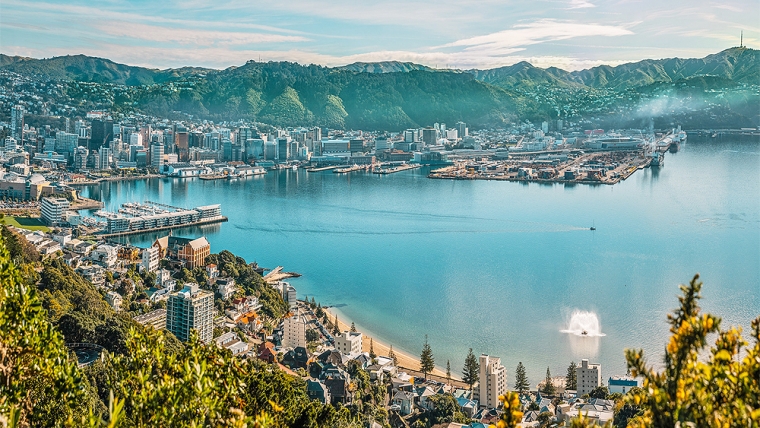
Please note that the Wellington region is on holiday on Monday, January 19, 2026. The rest of the country is open normally.
Daily exchange rates
Select chart tabs

The easiest place to stay up with event risk is by following our Economic Calendar here ».
We welcome your comments below. If you are not already registered, please register to comment
Remember we welcome robust, respectful and insightful debate. We don't welcome abusive or defamatory comments and will de-register those repeatedly making such comments. Our current comment policy is here.