
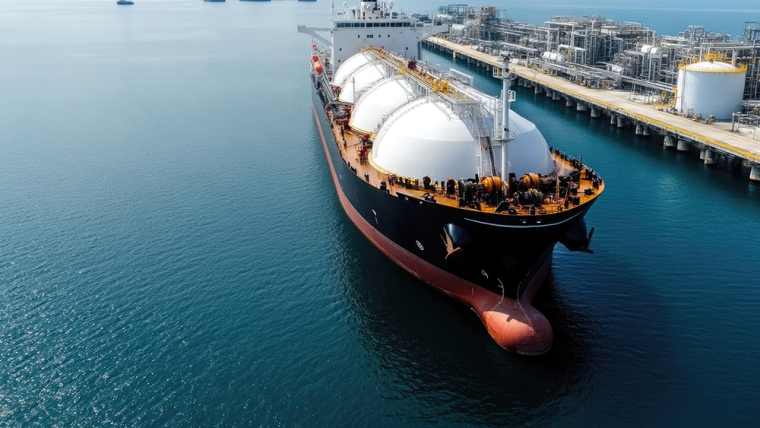
A heated exchange in Parliament over the Government’s liquefied natural gas (LNG) plan comes as global prices surge amid escalating conflict in the Middle East, sharpening questions about whether the policy will shield New Zealanders from electricity shocks or expose them to volatility.
Prime Minister Christopher Luxon and Opposition leader Chris Hipkins clashed over the proposal, with Labour continuing its LNG attack and Luxon defending what he described as an “And-And-And” approach to energy security.
Hipkins has continued to press the Government on its plan to establish an LNG import terminal by 2027, intended to reduce the risk of electricity shortages during dry years. LNG is natural gas that has been cooled into liquid form, allowing it to be transported by ship.
Luxon accused Hipkins of “trying to gaslight his way through” Labour’s previous policy settings.
The issue of energy reliance has come squarely into focus for New Zealand following the conflict in the Middle East after US-Israeli strikes on Iran. A significant quantity of LNG and about a fifth of the global oil supply by sea passes through the Strait of Hormuz, a narrow passage between Iran and Oman. Any blockages would have severe effects on oil prices. CNBC reported Qatar paused LNG production earlier this week following drone strikes by Iran.
Hipkins questioned the Prime Minister on Wednesday about the LNG plan “in light of the 50% [price] spike just this week”.
Asked if he had assessed the risk of a major supply or price disruption before committing New Zealand households to the levy, Luxon said the plan was about lowering power bills and that it was a back up source of energy.
The Government has said the cost of its LNG plan will be more than $1 billion, which will be paid for via a levy on electricity.
“International commodity prices rise and fall, you don’t change your strategy just because of that,” Luxon said.
“This is a natural thing that LNG prices go up and down… irrespective of that, it’s still the right answer to make sure we have a back up option to diminish dry year risk.”
Associate Energy Minister Shane Jones said the real problem that LNG was dealing with "is the firming obligations on running the electricity system, and hey, it's a decision that our cabinet has made, and the procurement process is underway”.
Asked if he supported it, Jones said, “I’m a loyal servant to the coalition government”. If it would survive the election and if NZ First would let it go ahead in the next term, Jones said, “let’s just wait, there's a procurement process, and we have to stick with it”.
Infrastructure questions
The recent National Infrastructure Plan by the Infrastructure Commission rang warning bells over the country’s rapidly declining gas supply and the pressure to transition to other energy sources.
"Barring a low probability discovery of a major new field, gas users… will face higher prices and will need to either switch fuels or exit production,” it said.
“Sound analysis of the cost of alternative options is needed. For instance, importing LNG may be a commercial option for some individual industrial and other consumers to consider, but it isn’t clear that it would lower average electricity prices.”
Hipkins asked if Luxon thought the Infrastructure Commission was wrong.
“No disrespect, I’m not taking lectures from that member on energy policy,” Luxon said.
“I don't take lectures from that member because it was an abject failure. The Labour-Greens energy policy was a total failure, he knows it, and he’s trying to gaslight his way through it.”
And-and-and
Asked if New Zealand’s power prices would be more volatile now if the country was more reliant on LNG, Energy Minister Simon Watts said the domestic price of gas, "on the basis that we've got domestic gas available, is set differently to the international price".
“I don't think the two can be linked. The challenge is, is New Zealand doesn't have sufficient domestic gas to make power, and we basically are short on power, and therefore the price has spiked to match supply and demand.
“The risk is the counter factual, which is, we don't have any gas, right? And then no gas means prices go up," he said.
Hipkins said previously that the country should be “looking for much more energy independence, because these sorts of shocks, particularly if we become more dependent on LNG as a source of electricity, are likely to continue to affect New Zealand in the future”.
He said Labour would have more to say about solar power soon.
Watts said the Government had already taken a number of steps to increase rooftop solar and batteries.
“It's an and-and - we need more rooftop solar and battery as well as the LNG, we're mandating that you get a fair price if you export that energy back into the grid, which is not the case. That'll be the case from the first of July."
“It's a key area, but it's complementary. It’s And-that and everything else.”
We welcome your comments below. If you are not already registered, please register to comment
Remember we welcome robust, respectful and insightful debate. We don't welcome abusive or defamatory comments and will de-register those repeatedly making such comments. Our current comment policy is here.