
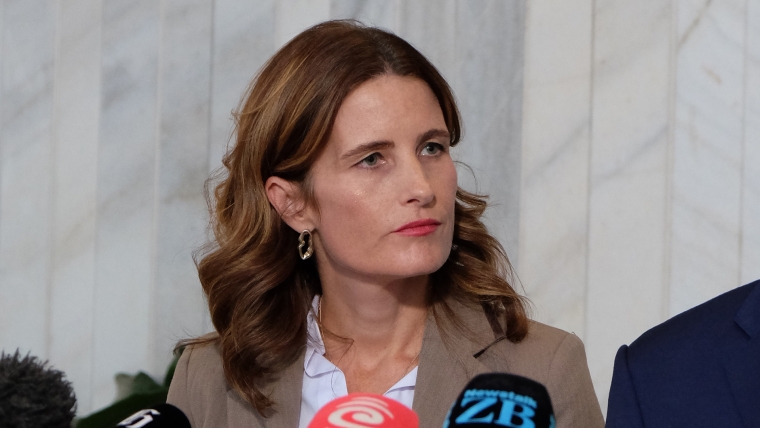
Finance Minister Nicola Willis has joined a coalition of 10 international counterparts to bluntly warn the ongoing conflict between the US, Israel, and Iran poses serious risks for the global economy.
In a joint statement released on Thursday, ministers from nations including the United Kingdom, Australia and Japan called for a full ceasefire, citing "unacceptable loss of life" and significant volatility in financial markets that could trigger an energy crisis.
"Renewed hostilities, a widening of the conflict or continued disruption in the Strait of Hormuz would pose serious additional risks to global energy security, supply chains, and economic and financial stability," the statement read.
"Even with a durable resolution of the conflict, impacts on growth, inflation and markets will persist.
"The past weeks have brought unacceptable loss of life and significant disruption to the global economy and financial markets, and the ceasefire will be crucial to protecting civilian populations and the security of the region."
The Associated Press reported that while the US blockade of Iranian ports continued, Pakistan's army chief of staff met with Iran's Foreign Minister in an attempt to arrange another round of negotiations, with the White House saying any talks would likely take place in Islamabad.
The statement committed and called on other countries to "avoid, protectionist actions, including unjustified export controls, stockpiling and other trade barriers in hydrocarbon and other supply chains affected by the crisis."
"We will also continue reforms that strengthen resilience and accelerate long-term energy diversification, including through the clean energy transition and improved energy efficiency. We welcome any steps countries may take to achieve these objectives."
The joint statement is from the Finance Ministers of the United Kingdom, Australia, Japan, Sweden, Netherlands, Finland, Spain, Norway, Republic of Ireland, Poland and New Zealand.
The statement follows a warning from the International Monetary Fund’s chief economist Pierre-Oliver Gourinchas, who said both the closing of the Strait of Hormuz and serious damage to critical energy facilities in the Middle East, "raise the prospect of a major energy crisis, should a durable solution not be found soon.”
And the Food and Agriculture Organization of the United Nations is warning a protracted Strait of Hormuz crisis could turn into global agri-food catastrophe.
We welcome your comments below. If you are not already registered, please register to comment
Remember we welcome robust, respectful and insightful debate. We don't welcome abusive or defamatory comments and will de-register those repeatedly making such comments. Our current comment policy is here.