
A fund manager that had a $55 million stake in CBL Corporation says the share market should’ve been informed of the solvency issues the company was grappling with before its collapse.
Harbour Asset Management, in the months leading up to February 2018 when CBL Corporation went into voluntary administration, upped its stake in the company to 7.32%.
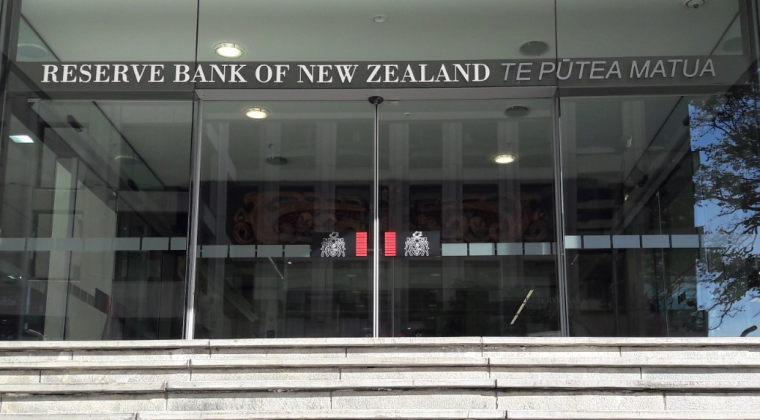
Unbeknownst to the market at the time, the Reserve Bank (RBNZ) had since mid-2017 been probing the affairs of CBL Corporation’s subsidiary, CBL Insurance. It directed the company to maintain a higher solvency ratio, forbid it from making certain transactions without the regulator’s permission, and appointed McGrathNichol to investigate its reserves.
Independent reviewers of the RBNZ’s handling of the CBL Insurance case on Wednesday reported the RBNZ acted appropriately keeping its investigation confidential.
The report writers, John Trowbridge and Mary Scholtens, said: “Matters were at a fact-finding stage.
“The Bank had serious concerns that warranted action, but it had not yet gathered the relevant information, tested it with CBL, and arrived at a sufficiently informed position.
“Obviously public disclosure of the fact of an investigation or initial concerns that have not yet been tested would be highly damaging to the reputation of CBL and to the value of its parent.”
Harbour’s managing director, Andrew Bascand, recognised there was a “fine balance between public confidence and transparency”.
Yet he said: “In hindsight, we would’ve preferred a higher level of disclosure and transparency.”
He pointed to the “very public discourse” currently underway around the RBNZ considering requiring banks to hold more regulatory capital.
“That clearly has a material impact on the valuation and the behaviour of the banks - very clearly,” Bascand said.
“Now imagine if all that was happening behind closed doors. That’s how I would correlate these disclosures.”
Fallout from the RBNZ’s failures around the time CBL listed
Trowbridge and Scholtens went further to say: “We do not consider there was any earlier occasion [before 2017] when it would have been appropriate for the Bank to make public disclosures.”
However their report revealed that from the time the RBNZ issued CBL Insurance with a licence in 2013, until it began a set of investigations in 2017 (prompted by concerns raised by a Gibraltar regulator), it was worried about the company’s reserving.
The issue, which is the real crux of the situation, was that CBL Insurance and the RBNZ clashed heads over the state of the company’s finances, but the RBNZ never had the resource and capability to get to the bottom of the matter and take stronger action.
So, while Trowbridge and Scholtens recognised the RBNZ couldn’t publicise its concerns without having certainty, they also noted how it failed to attain certainty - particularly in the lead up to CBL Corporation floating on the stock exchange in 2015.
They said the RBNZ should’ve deterred CBL Corporation from going ahead with its initial public offering (IPO) until its concerns were resolved.
They held this view despite CBL Corporation saying in a product disclosure statement issued at the time, that the RBNZ had queried CBL Insurance’s appointed actuary over capital levels and the company increasing its reserves.
Bascand believed the RBNZ could’ve recommended some form of risk disclosure be included in the company’s accounts at this time. He also noted how in 2016 AM Best upgraded its credit rating.
Legal action a possibility further down the track
“Were there risks around more disclosure? Yes there were, because it could’ve damaged the confidence of policyholders and investors in CBL,” Bascand said.
“But the problem is, when do you turn the gas off when you’re boiling a frog? As soon as the temperature gets too high, you’ve got to stop these things otherwise you risk there being misinformed participants in capital markets, which is where we ended up.”
Bascand said market participants were measured and CBL Corporation, the RBNZ, the Financial Markets Authority (FMA) and/or NZX could’ve made disclosures along the way without completely scaring investors off.
Indeed, the report noted that in August 2017 CBL Corporation’s share price fell 30% after it issued a statement disclosing the fact a Gibraltar regulator had concerns about the reserves of a company it provided reinsurance for.
A week later the share price rose 10%, off the back of CBL Corporation issuing another statement promoting the company’s prospects and giving an explanation for the claims reserving adjustment.
Nonetheless, Trowbridge and Scholtens noted how "onerous" the law was when it came to confidentiality, pointing out how RBNZ staff could be imprisoned for up to three months’ and/or a fined up to $200,000 if they breached their obligations.
Bascand said there was still a lot of water to go under the bridge before he would consider taking legal action over the CBL saga.
He was particularly interested to see where the FMA lands with its investigation, which pays closer attention to market disclosures and should consider whether the FMA could’ve used its powers (under section 34 of the FMA Act) to act on behalf of shareholders.
*This article was first published in our email for paying subscribers. See here for more details and how to subscribe.
We welcome your comments below. If you are not already registered, please register to comment
Remember we welcome robust, respectful and insightful debate. We don't welcome abusive or defamatory comments and will de-register those repeatedly making such comments. Our current comment policy is here.