
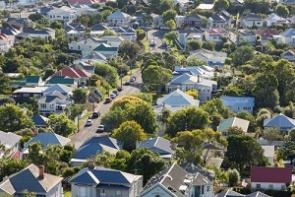
The blueprint for how Auckland can grow has been decided by the Auckland Council, with final decisions made on the Unitary Plan.
Key outcomes, the Council says, include capacity for more than 400,000 new residential homes to meet the demands of Auckland’s growth over the next 30 years; expansion of the Rural Urban Boundary to open up more land for development; and a more compact city with opportunities to build more two to three storey homes in the existing urban area, and dwellings up to six stories close to town centres and transport hubs.
Councillors have spent four days voting on all the Independent Hearings Panel’s recommendations, released to the public on July 27, for how the Auckland Unitary Plan should look. In doing so, they have considered the Council officers’ views on the Panel’s recommendations.
Their call comes five years after work on the Plan began.
The final Plan will be notified on Friday, when it will be published with interactive maps, on the Council’s website.
Some of the Council’s decisions include moves to:
- Retain standards around the minimum size dwellings have to be, to avoid “shoebox” apartments or units being built. Dwellings in the City Centre, Business, Mixed Housing Urban, Mixed Housing Suburban, and Terraced Housing and Apartment Building zones will have to meet minimum size standards.
Under the rule, a studio apartment in the centre city will have to be at least 35m², or 30m² plus a 5m² balcony. For one or more bedrooms the minimum size is 50m², or 42m² plus a 8m² balcony.
- Retain the objective that provides for the management of heritage values in the Regional Policy Statement.
- Delete the Rural Urban Boundary from rural and coastal towns, enabling growth in new and existing rural and coastal towns.
- Make resource consent a requirement for building three or more dwellings in the Mixed Housing Suburban and Mixed Housing Urban zones.
- Retain the pre-1940 building demolition control on the Queen Street Valley Precinct, which will enable these buildings to keep their character.
- Delete Retained Affordable Housing provisions, which would have required 10% of homes in developments of more than 15 new dwellings to be affordable.
- Retain policies to focus growth within the existing metropolitan area.
- Delete policies that encourage land use and transport integration, particularly in areas where there are higher intensity activities (IE stadiums) that require public transport.
- Delete standards related to building work and internal design matters, addressed in the Building Code. These include standards around the amount of daylight dwellings need to be exposed to and universal access to residential buildings.
- Delete the Sites and Places of Value to the Mana Whenua overlay and associated provisions.
- Retain objectives around rural subdivision that prevent “inappropriate” and “sporadic” subdivision and promote the “enhancement of indigenous biodiversity”.
- Retain the Rural Urban Boundary at the Crater Hill volcano at Papatoetoe, so houses aren’t built there.
- Ensure the Rural Urban Boundary isn't extended to the Okura catchment, to ensure this area maintains its natural significance.
Speaking to media straight after Councillors passed the Plan's final recommendation, Auckland Mayor, Len Brown, said: "The blueprint's now there. Now's the opportunity for the sector, the NGOs, all to get on and build a lot more houses in Auckland."
Hulse expects more affordable housing
Deputy Mayor, Penny Hulse, said she was confident the Plan would deliver more affordable housing.
"We've given all the tools to developers to deal quite differently with development. The removal of the density rule, in other words you can develop more densely than you were able to under the old plans, is going to make housing choices so much easier to develop.
"[The Plan] is certainly going to deliver a lot more houses than you could've built before the Plan was finalised. It allows for terraced housing, for apartments, and for different kinds of houses, and they're simply going to be more affordable than the stand-alone houses we've got now."
Brown recognised the Councillors have been under a lot of pressure from the Government, Aucklanders and New Zealanders.
"I think everyone [from the Council]... sat there and knew, we had to deliver the plan. The pressure was on us... We have done it."
Brown, in an official statement, added: “My colleagues are to be applauded for their positive manner, as is the public for allowing us the space to deliberate accordingly.”
Hulse thanked communities across the region who had taken part in the process and have been involved since the draft and proposed plans were notified in 2013.
“Without a doubt, this is the biggest exercise undertaken by Auckland Council since its inception and it simply couldn’t have happened without the drive and passion from everyone involved."
Smith: Unitary Plan (not central government) at heart of solving Auckland's housing woes
Housing and Environment Minister, Nick Smith, said: “The Government has always said that council rules which have blocked new housing development are at the core of the city’s housing problems and so this new plan is at the heart of the long-term solution to Auckland’s housing problems.
“It allows the city to go both up and out, and reduces the types of residential zones from more than 90 to six, allowing the council to move on from the cumbersome and outdated plans it inherited from the previous councils.
“The Government is working on ensuring a smooth transition from the Special Housing Area mechanism to the new Unitary Plan and will be working with the council to maintain the strong housing construction momentum.
“We wish to acknowledge the huge work done by Independent Hearings Panel chair Judge David Kirkpatrick and his team in hearing more than 10,000 submissions on the plan. Their careful consideration has helped conclude this process in a timely way and address the core issues of housing supply, economic growth and the environment for Auckland.
“The successful conclusion of this process confirms the decisions the Government took to provide for a streamlined process for developing Auckland’s new Unitary Plan. The fact that this process has produced a new plan for a third of New Zealand in less than half the time the normal Resource Management Act process takes also provides a steer on the type of changes which are required to that Act."
Auckland Council says it won’t do capacity modelling, unless it’s directed to do so, to put a figure on how many new dwellings the Plan will create capacity for. A spokesperson says it will be a figure very close to the 422,000 identified in the modelling done by the Panel.
Those wanting to appeal any of the Council’s decisions, will be able to do so under certain conditions through the Environment Court, and will have until September 16 to do so.
You can see more on the Council’s decisions on the Panel’s recommendations here, here, here and here.
We welcome your comments below. If you are not already registered, please register to comment
Remember we welcome robust, respectful and insightful debate. We don't welcome abusive or defamatory comments and will de-register those repeatedly making such comments. Our current comment policy is here.