
Here's my summary of the key events overnight that affect New Zealand, with news Chinese currency reserves have fallen below US$3 tln for the first time in five years.
But first, the overnight dairy auction has seen prices in USD rise by +1.3% from the last auction. This was somewhat better than expected if you were reading the NZX dairy derivatives signals. And it represents the second consecutive rise and the seventh rise in the past ten auctions. However, in New Zealand dollars, overall prices actually fell -0.5%.
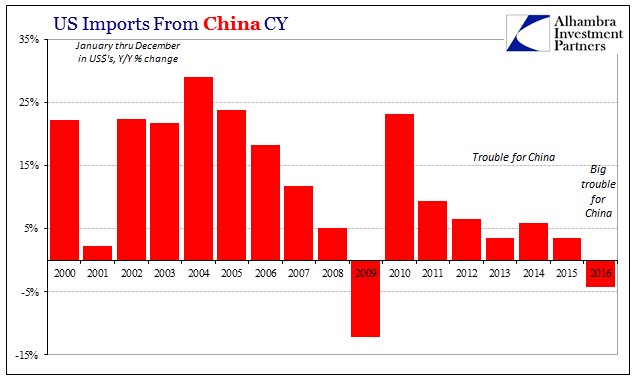
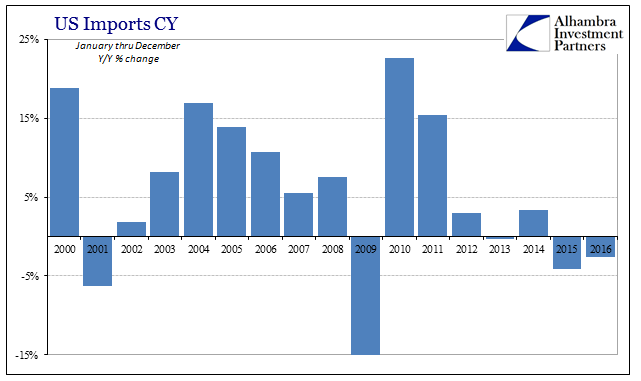
In the US, their trade deficit fell more than expected in December as exports rose to their highest level in more than 1½ years, outpacing a rise in imports. The US as the engine of global trade is holding its position. On an annual basis, the US trade deficit in goods and services is -2.7% of GDP, slightly lower in 2016 than for 2015. (For comparison, New Zealand's current account deficit runs at -3.1%.)
In Europe, Greece is failing to meet its growth targets, will fail to get its debt down to sustainable levels, and will need more bailout support, said the IMF in its latest review. All this is despite 'progress' in some areas and it is not clear the IMF will actually deliver more bailout money. Greece is still in vigorous dispute with its EU creditors as well.
In China, their foreign exchange reserves fell below the $3 tln level in January for the first time in five years after peaking at just a tad shy of US$4 tln in June 2014. But this latest decline was the lowest since June 2016. Tighter capital controls and a stronger yuan seems to have stemmed the outflows. Official reserves fell by just over -US$12 bln which is well below the average -US$52 bln monthly drop in the third quarter of last year.
In Australia, the RBA left its benchmark rate unchanged at 1.5% late yesterday. But the commentary was mostly about rising growth, inflation prospects, and housing pressures. Market observers no longer see rate cuts in Australia; the balance has now swung to guessing when the next hikes are due.
In New York, the UST 10yr yield is marginally lower today than at this time yesterday, now at 2.38%. At the same time, Australasian credit spreads for investment grade debt have now fallen to their lowest level since November 2007. And while we are talking about credit spreads, we should remind ourselves that NZ sovereign spreads are lower than for Australia, the USA, the UK, and France, level pegging with Germany, and way, way lower than for China.
Oil prices are lower again today, now just under US$52 for the US benchmark, while the Brent benchmark is just under US$55 a barrel.
The gold price however is up another US$4 and now at US$1,234/oz.
And after a sharp jump following yesterday's inflation expectations survey, the Kiwi dollar has settled back although still retaining some gain. It is now still at 73.2 US¢. On the cross rates we are at 95.8 AU¢, and against the euro at 68.4 euro cents. The NZ TWI-5 index is up slightly to 78.5 and its highest in 20 months.
If you want to catch up with all the changes yesterday, we have an update here.
The easiest place to stay up with event risk today is by following our Economic Calendar here ».
We welcome your comments below. If you are not already registered, please register to comment
Remember we welcome robust, respectful and insightful debate. We don't welcome abusive or defamatory comments and will de-register those repeatedly making such comments. Our current comment policy is here.