
By Alex Tarrant
For anybody wondering whether the Green Party could work with New Zealand First, rest easy. The answer is yes. And what’s more, they’ll even throw in a Chart-Reading 101 session for free.
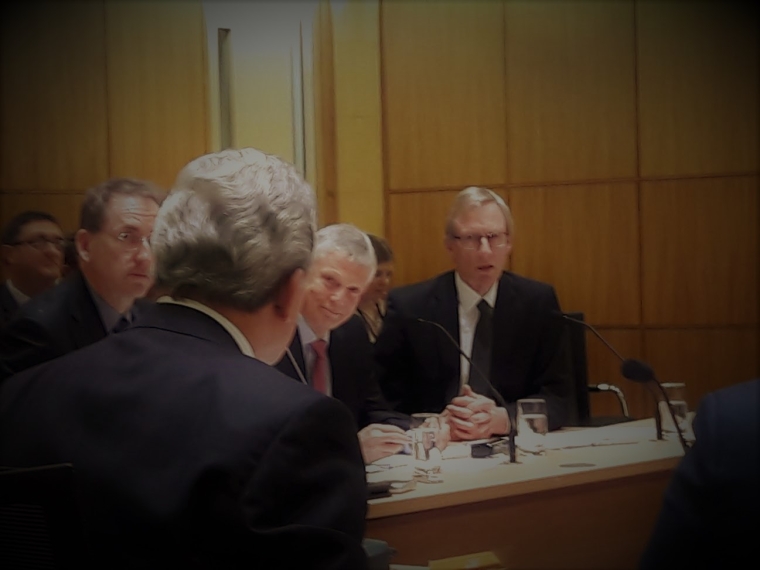
In a sign of future Cabinet collegiality, the Greens’ Julie-Anne Genter leapt to Winston Peters' aid during the Parliamentary Finance and Expenditure Committee’s grilling of Reserve Bank Governor Graeme Wheeler, Deputy Governor Grant Spencer and Assistant Governor John McDermott on Thursday.
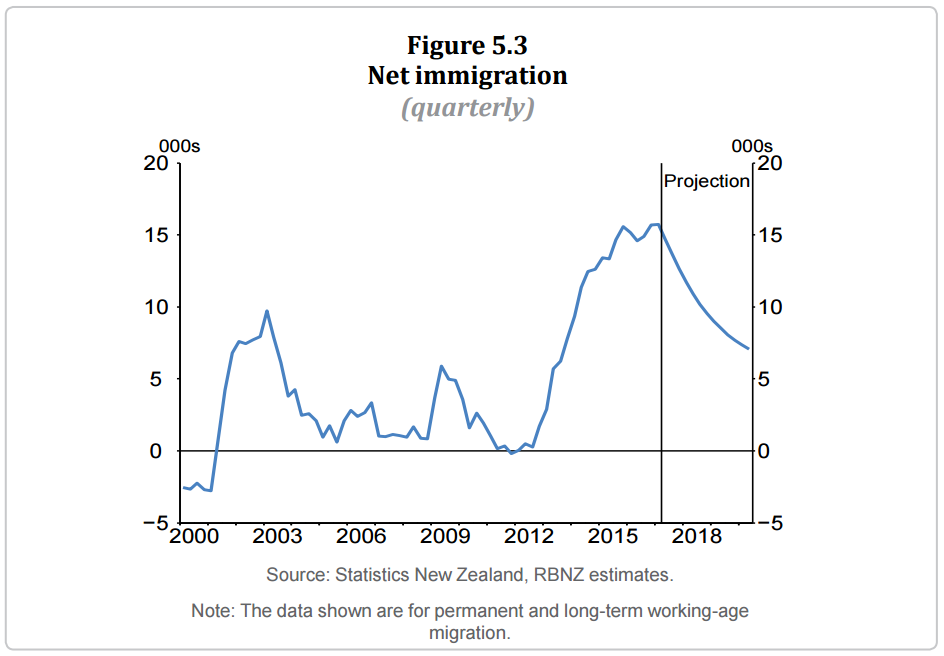
“Look at that chart, and try to explain to me what on earth that chart means,” Peters had demanded regarding figure 5.3 in the Reserve Bank’s May Monetary Policy Statement.
He wanted to know how it matched a line on the previous page that, “A driver of activity is immigration, which is anticipated to continue adding to the population over the next three years.”
The chart – pictured below (or on page 29 of the MPS) – indicates working age population net immigration is forecast by the Bank to grow every quarter over the next three years, although at a steadily declining rate over that period.
And perhaps that downward trend was what had confuddled Peters.
“It’s still positive – net migration’s still positive,” Genter helpfully pointed out to the New Zealand First leader and potential future front-bench colleague, who was sitting beside her.
But he wasn’t convinced: “Look at the chart – look where the arrow’s going.”
“Yeah, it’s declining but it’s still positive.” Another kind, helpful reply from the Green.
“Well one person coming in is positive, but I don’t think that’s what the Reserve Bank is saying, with respect, and I’m asking them, not you.”
It might be of interest to Andrew Little that Reserve Bank Assistant Governor John McDermott stepped into the firing line.
“I will answer.” The ever-eager RBNZ Head of Economics offered up his own chart interpretation services.
“The graph is showing that there will still be a net increase in immigration over the next three years. But it will be at a lesser rate than currently. That’s what the graph says, and hopefully it says the same thing as the words,” he said.
“That’s quarterly,” Deputy Governor Grant Spencer added for Peters’ benefit.
“Perhaps if I could help.” Graeme Wheeler, the Reserve Bank’s chief chart interpreter, chipped in.
“If you take the net immigration at working age population since the beginning of 2012, if you added up the area underneath that to the vertical line, that would come to about 204,000 people – so it’s about 6% of the labour force.
“Then take the area underneath the other line, passed the perpendicular, that’s about roughly 130,000 extra people. So, it’s extra – the quarterly rate of increase is slowing, but total migration is still expanding,” the Governor said.
In the spirit of helpfulness, Spencer added: “So the peak is at 15 [thousand], right? So that’s 15,000 per quarter, which is 60,000 per year, which is the working age population net inflow at present. That’s at the peak.”
Peters was no doubt touched by the collegiality and desire by everyone to lend a helping hand.
“And you’re making that forecast, less than five months out from an election, right? Are you not listening to anything that’s going on out in the community?”
Perhaps the Reserve Bank should have presented options for their immigration forecasts based on who might win the election, he indicated.
“This is a bold statement. That’s not much of a change at all. And yet you’re not putting any other [inaudible]. Just that one. Perhaps you should tell us what you know that the rest of us don’t know.”
Had this been Parliament’s Question Time, asking a Minister to reveal what they knew that others didn’t would have opened up a realm of potential answers.
But RBNZ official McDermott kept to the script.
“We have been making these forecasts because it’s necessary to do so. We also have been quite open that this is a very difficult measure to actually forecast,” he said.
As in February, the discussion drifted to how the migration composition was key, rather than the chart itself - more single 20-year-olds now who were joining the workforce versus returning families after 9/11.
Those families had spent cash, inflation rose and the Reserve Bank had to raise interest rates. This time around, migrants aren’t spending as much and are suppressing wage pressures.
And so ended the lesson, with everyone a little wiser and the beginnings of a blueprint for how those potentially around Andrew Little’s Cabinet table will go that extra distance to lend one another a helping hand.
We welcome your comments below. If you are not already registered, please register to comment
Remember we welcome robust, respectful and insightful debate. We don't welcome abusive or defamatory comments and will de-register those repeatedly making such comments. Our current comment policy is here.