
Here's our summary of key events overnight that affect New Zealand, with news all about China today.
But first, American housing starts fell more than expected in December, recording their biggest drop in just over a year. Markets were expecting starts on new housing to run at an annual rate of 1.275 mln units but the data showed a rate of only only 1.192 mln units. The construction of single-family housing units had an especially steep decline although the December numbers follow two months of hefty gains. The saving grace in this data is that building consents issued are holding steady.
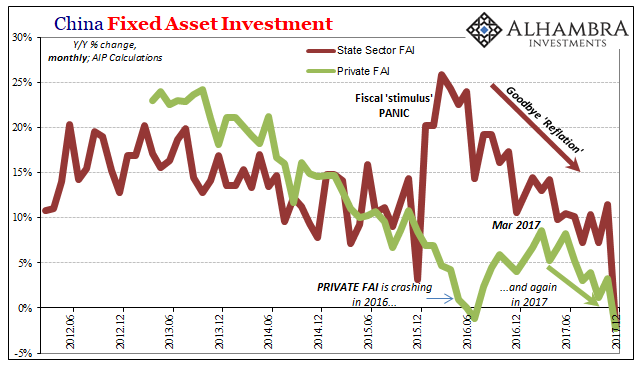
As expected in China, they announced a strong GDP growth of +6.8% for 2017, and well above Beijing's target for the year of +6.5%. There may be sceptcism about Chinese numbers, but not that 2017 was an improvement.
Housing sales in China hit a new record in 2017, both in terms of area and transaction value. 1.7 bln square meters of residential properties, worth NZ$2.9 tln were sold in the year. The figures are +7.7% and +13.7% higher, respectively, than in 2016, giving an indication of how strong the price rises were. But the data also shows a clear cooling by the end of the year.
Also cooling a little in December were Chinese retail sales. But for all of 2017 they totaled NZ$7.8 tln in the year and that compares to US retail sales of NZ$7.9 tln. Chinese retail grew +9.4% in 2017 while American retail grew +4.2% so it is clear that the size and importance of the Chinese consumer will be greater in 2018. The world clearly has two major drivers of growth and trade now. This is an important change and transition.
Another important shift in China is that per capita income is growing at different rates between 'average' and 'median', indicating a strong rise inequality. The Average growth was +9.0% in 2017 and a faster pace, but the Median growth was +7.3% and a slower pace. Unless reversed, this tension will catch up with them. What is striking is the speed of the change.
And finally, among the data was an indication of how tough their environmental challenges are. Electricity production was up a strong +6.0% in 2017 and much of that was because they burned more thermal coal. They may be making green power progress, but it isn't turning the tide. And if 2018 brings higher growth as seems likely, the consumption of coal isn't going to decrease.
In Australia they have been hit with an unwelcome surprise. Their already stratospheric household-debt-to-income ratio was thought to be 195%, but a recent change to include self-managed super funds properly has seen it balloon to 199.7%. SMSFs are a debt magnet so I hope we don't adopt that option here. By the way, the equivalent NZ ratio is 167%, which is high enough thank you. Fortunately, ours has been stable for all of 2017.
Back on Wall Street, the UST 10yr yield is up +4 bps at 2.61% today, and that is approaching a four year high. The UST 2yr is near a ten year high. Bond investors will be sweating on losses. The equivalent 10yr China sovereign bond is up another +1 bp at 4.04%. The equivalent NZ 10yr sovereign bond is up +5 bps at 2.94%. And there was a another fall in the premium investors need for NZ Govt credit default swaps, and that is now just +12.9 bps and a new record low.
Oil prices are little changed again today with the US benchmark now just over US$64 a barrel, while the Brent benchmark is now under US$69.50.
Gold is down -US$7 today to US$1,329/oz.
The Kiwi dollar is marking time this morning and is now at 73.1 USc. On the cross rates it is at 91.5 AUc, and against the euro at 59.7 euro cents. That puts the TWI-5 at 74.5 and little changed from this time yesterday.
There were more big movements in cryptocurrency markets. Bitcoin has risen strongly over the past 24 hours after its crash yesterday. Today it is at US$11,770 and up +US$1770 or +17.8% in the past 24 hours.

The easiest place to stay up with event risk today is by following our Economic Calendar here ».
We welcome your comments below. If you are not already registered, please register to comment
Remember we welcome robust, respectful and insightful debate. We don't welcome abusive or defamatory comments and will de-register those repeatedly making such comments. Our current comment policy is here.