
By Chris Trotter*
Conservative politics in New Zealand is at risk of running out of puff. Both National and Act are struggling to offer voters much in the way of original political insight.
The radical right-wing ideas that swept all before them in the 1980s and 90s have solidified into a pallid orthodoxy, incapable of refuting the arguments of recent historical experience. The capacity of fundamentalist evangelical Christianity to engage with and inspire those not already convinced of its “truths” has never been strong in New Zealand. Accordingly, the robustness of National’s “Taliban” faction offers more proof of the party’s philosophical weakness than its strength.
When a political party is fortunate enough to possess a charismatic leader, such ideological frailty counts for much less. Absent such a leader, however, philosophical cluelessness constitutes a formidable barrier to electoral success. Unfortunately for their respective parties, Judith Collins and David Seymour cannot be included in the same company as John Key and Jacinda Ardern. It remains to be seen whether Winston Peters still possesses the power to harness the political zeitgeist to NZ First’s battered chariot.
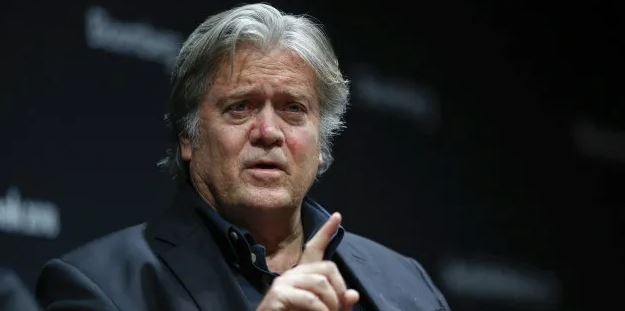
If Peters has spent the last few months scouring the conservative landscape for an ideology to match the temper of the times, then it is likely he will already have encountered the most radical right-wing movement since the rise of fascism, almost exactly a century ago. Although “Traditionalism” predates fascism by at least two decades, it shares the latter’s comprehensive rejection of Enlightenment values, liberal capitalism, scientific rationalism and democratic politics. When one considers that the leading promoters of Traditionalism in the world today are Steve Bannon – formerly Chief Strategist to President Donald Trump – and Aleksandr Dugin – long-time behind-the-scenes adviser at the Kremlin – any temptation to dismiss the ideology as something wacky from the fringe should be resisted.
Like so many of the reactionary creeds emanating from fin-de-siècle Europe, Traditionalism fetishized what it considered to be the core values of the pre-modern era: hierarchy, spirituality and the (now very rare) ability to live honourably in the moment, unburdened by the weight of material concerns. The two individuals most closely associated with the early Traditionalist doctrine were the Frenchman, René Guénon, and the Italian proto-fascist, Julius Evola. Their Traditionalist utopia combined theocratic government with what amounted to a socio-economic caste-system. In this form, it offered slight prospect of political success in the Twentieth Century. As modified by Bannon, however, Traditionalism has the capacity to act as an extremely powerful solvent of the electoral status-quo.
Bannon’s Traditionalism imputes to what New Zealanders would call the “ordinary Kiwi joker” (or, in colloquial American, “the average working stiff”) the core definitive values of the nation’s character. It is in such folk: most particularly in their faith, generosity and resilience; that the nation’s ability to endure and triumph over all manner of adversities is located. They are the bedrock: the best; the people without whose support nothing of any lasting worth can be accomplished.
In the unanticipated triumph of Brexit and Trump, the world witnessed the extraordinary political resonance of Bannon’s version of Traditionalism. It had the power to mobilise electorally groups which had, for decades, been in steady retreat from political engagement – voting in particular. It was Bannon’s strategic, and Trump’s performative, genius that caused these hitherto disillusioned and disengaged citizens to reassess the possibilities of “getting involved”. Hillary Clinton may have dismissed them as “deplorables”, but Trump transformed her insult into a badge of honour: convincing them that they were the only people who could make America great again.
Traditionalism cannot work, however, in the absence of an elite layer of effete professionals and managers who look down with disdain upon the “Ordinary Kiwi joker/sheila” and their beliefs, and who react with abject horror at the very thought of these usually biddable yobbos intervening decisively in the political process. In the eyes of the elites, this ignorant lumpen element presents itself as an army of terrifying zombies. Civilly dead, but now, by the power of political voodoo, electorally re-animated, they represent the worst fears of the people in charge. Shuffling menacingly towards them, their arms outstretched for ballot papers, these possessed political corpses must be cut down where they stand. Under no circumstances can general elections be turned into re-runs of The Night of the Living Dead.
A less tendentious presentation of Traditionalism may be found in the television series “Yellowstone”. In their sprawling Yellowstone ranch, in the state of Montana, live the Duttons – a powerful family in whom the best constitutive elements of the American character are embodied. On every side, however, a hostile world is pressing in upon them. From the adjoining Native American tribal reservation – in which an even older embodiment of America is stirring – to avaricious development companies, poised to turn all those thousands of acres of Dutton real-estate into ski resorts and casinos. Interestingly, those “best constitutive elements” include the willingness to defend one’s interests with deadly (and usually illegal) force – which is, at least, an honest presentation of American values!
In the lead character, John Dutton (played by Kevin Costner) the viewer is frequently presented with something approximating that living-in-the-spiritual-moment which the original Traditionalists prized so highly. The series’ general contempt for the democratic process, in favour of preserving the established hierarchy of ‘natural’ leaders, similarly echoes the ideas of Guénon and Evola.
New Zealand political leaders as different as Rob Muldoon and John Key have secured lengthy stints of political power on the strength of elevating ordinariness into something very special. Muldoon pitted his ordinary jokers against what he successfully portrayed as a rising class of over-educated academics who’d never done an honest day’s work in their lives. Key’s trick was to convince something close to a majority of New Zealanders that they were already the ones in charge – and had only to prove it by voting for an ordinary millionaire.
Few would argue that conservatively-minded New Zealanders feel like they’re in charge of anything at the moment. Quite the reverse, actually. In Traditionalist terms, all the worst elements of modernism are in the saddle and riding New Zealand hard. While no political party of the Right is currently willing (or, seemingly, able) to make a case for the current government representing nothing like the values of “Real New Zealanders”, or explaining to voters what those values might be, the conservative cause will continue to languish.
When politicians talk about “the people”, they never mean “all the people”, but only that fraction of the people whose interests they are pledged to serve. Jacinda Ardern’s “Team of Five Million” has never been anything of the sort. That the Right has failed so spectacularly to expose “Jacinda’s” ideological sleight-of-hand, is the true measure of the Prime Minister’s political genius.
*Chris Trotter has been writing and commenting professionally about New Zealand politics for more than 30 years. He writes a weekly column for interest.co.nz. His work may also be found at http://bowalleyroad.blogspot.com.
We welcome your comments below. If you are not already registered, please register to comment
Remember we welcome robust, respectful and insightful debate. We don't welcome abusive or defamatory comments and will de-register those repeatedly making such comments. Our current comment policy is here.