
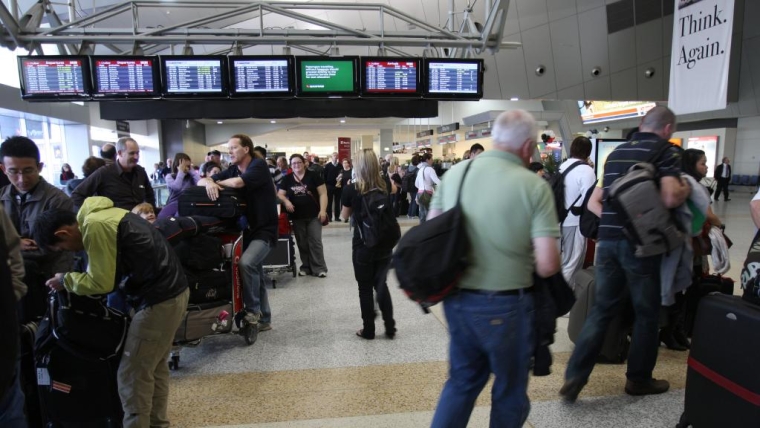
New Zealand’s approach to immigration could be substantially different once the borders start reopening as we learn to manage and live with the threats posed by COVID-19.
While no major policy changes on immigration have been announced, apart from temporary adjustments due to the pandemic, recent moves by the Government suggest a more targeted approach to immigration could be in the wind, with the total number of migrants coming into the country each year being more tightly controlled.
The first hint of change came at the beginning of May, when the Government announced that the Productivity Commission would conduct an inquiry into current immigration settings.
This will be a broad ranging inquiry, looking well beyond immigration’s impact on the labour market and wages.
It will also look at social impacts and the effect migration-driven population growth has on demand for housing and other essential infrastructure.
Hopefully, it will give this Government and others that follow, a good overview of the economic and social impacts that immigration has, and how those impacts can be altered by adjusting the various levers that control immigration flows.
But that will be a very broad overview.
More specific insights are likely to come from a ministerial inquiry into the seafood sector’s use of migrant labour, announced at the beginning of this month.
This issue came to public attention when the quarantine arrangements for overseas crews being brought into the country to work on New Zealand fishing boats hit the headlines, and it’s likely many people were surprised to learn how reliant the seafood industry was on migrant labour.
David Parker, the Minister for Oceans and Fisheries, described the inquiry like this.
“The inquiry will do a stocktake of the current state of the seafood sector’s workforce and determine what a more resilient workforce – with a greater proportion of New Zealanders – could look like, and how this might be achieved.”
That sentiment was repeated later in Parker’s statement, which said: “This work will provide the information we need to understand where improvements can be made so the industry can be more resilient and more New Zealanders can have the opportunity to participate in the industry.”
That is a very clear and unequivocal indication of the direction the Government wants to take with migrant workers in the seafood industry, with the emphasis on “a greater proportion of New Zealanders.”
At this stage, it is only the seafood industry that is under the migrant labour microscope, however the pandemic-related travel restrictions have highlighted the role migrant labour plays in a number of industries, ranging from horticulture and dairying to hospitality and healthcare.
It is possible that the model being used to conduct the ”stocktake” of the seafood sector could also be applied to other industries, and the subsequent reports could be used as the basis for introducing some sort of quota system for migrant labour.
That might mean an industry wishing to employ migrant workers on a substantial scale could apply to the Government, which would then appoint an independent panel to perform a stocktake of that industry.
If it was based on the seafood industry model, the panel would need to determine how many migrant workers the industry required, why not enough local workers were available to fill those roles, what could be done to attract more local workers into the industry and a plan put in place to achieve that.
An annual quota for overseas workers with the necessary skills could then be put in place, perhaps with a sinking lid to give it some teeth and ensure the plan to encourage more locals into the industry was actually achieved.
Such a change in the way migrant worker flows are managed could also have implications for that part of the education sector catering to foreign students.
The ability of foreign students to progress along the so-called pathway to residence by moving into the workforce at the end of their studies could be restricted to those industries that had quota available for foreign workers, perhaps with students who had studied or trained in this country being given preference to those coming directly into the workforce from overseas.
Such an arrangement could see employers and educational institutions working more closely together and perhaps a greater emphasis on vocational training.
This could also have benefits for intending migrants, providing a more streamlined pathway to residence with more certainty about being able to settle permanently in NZ, rather than having to keep renewing temporary work or student visas.
Of course it is possible that none of this could happen.
The Government may instead just politely receive the reports from the Productivity Commission and the seafood inquiry and decide to leave things as they are.
But that seems unlikely.
The Government's recent moves suggest that one way or another, it will be taking a more hands on approach to immigration when the borders start opening up again.
What that will mean for the numbers of people allowed into the country is anyone’s guess.
But Minister Parker’s statement about wanting a “greater proportion of New Zealanders” in the seafood industry’s workforce, is a pretty strong hint.
The comment stream on this story is now closed.
We welcome your comments below. If you are not already registered, please register to comment
Remember we welcome robust, respectful and insightful debate. We don't welcome abusive or defamatory comments and will de-register those repeatedly making such comments. Our current comment policy is here.