

New figures from Statistics New Zealand show the net worth of Kiwi households shot up by over $400 billion in the 12 months to March 2021 - a rise that pretty much matched the increase over the whole of the four previous years.
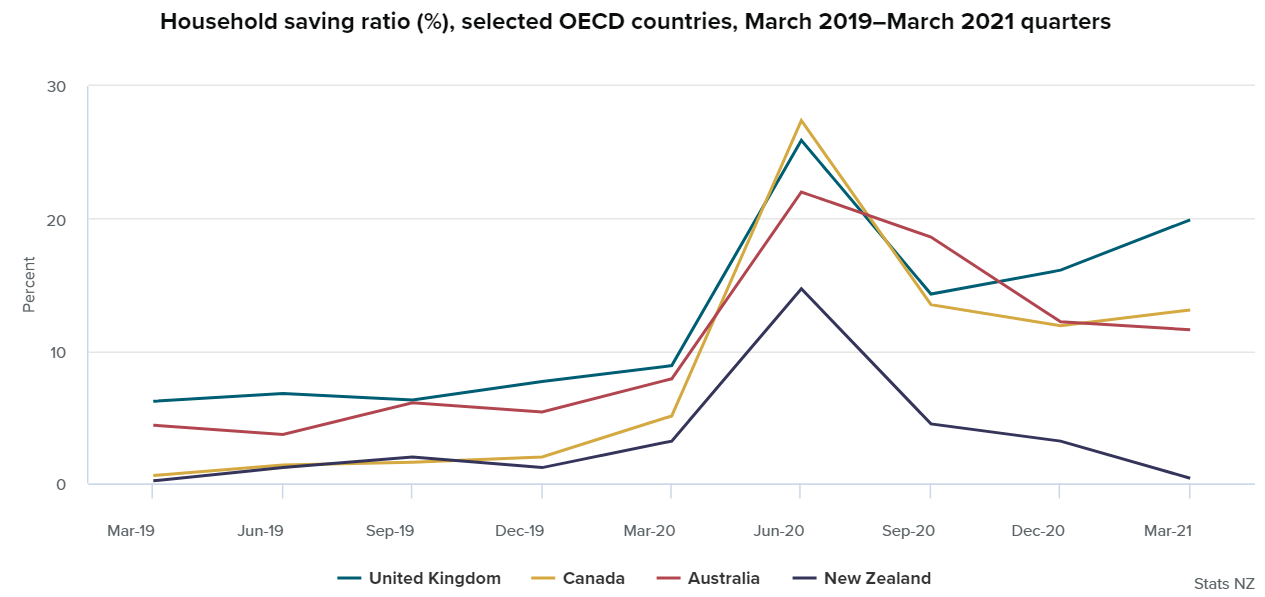
But separate figures from Stats NZ also released on Thursday show that the strong savings rates by Kiwis seen last year have now fallen markedly.
Stats NZ's national accounts senior manager Paul Pascoe said the net worth of Kiwi households as at the end of March was $2.3 trillion, some $118 billion, or 5.5% more than just three months earlier in December 2020.
Net worth is the value of all assets owned by households less the value of all their liabilities.
The rising value of household owner-occupied property contributed $172 billion of the rise in household assets since March last year.
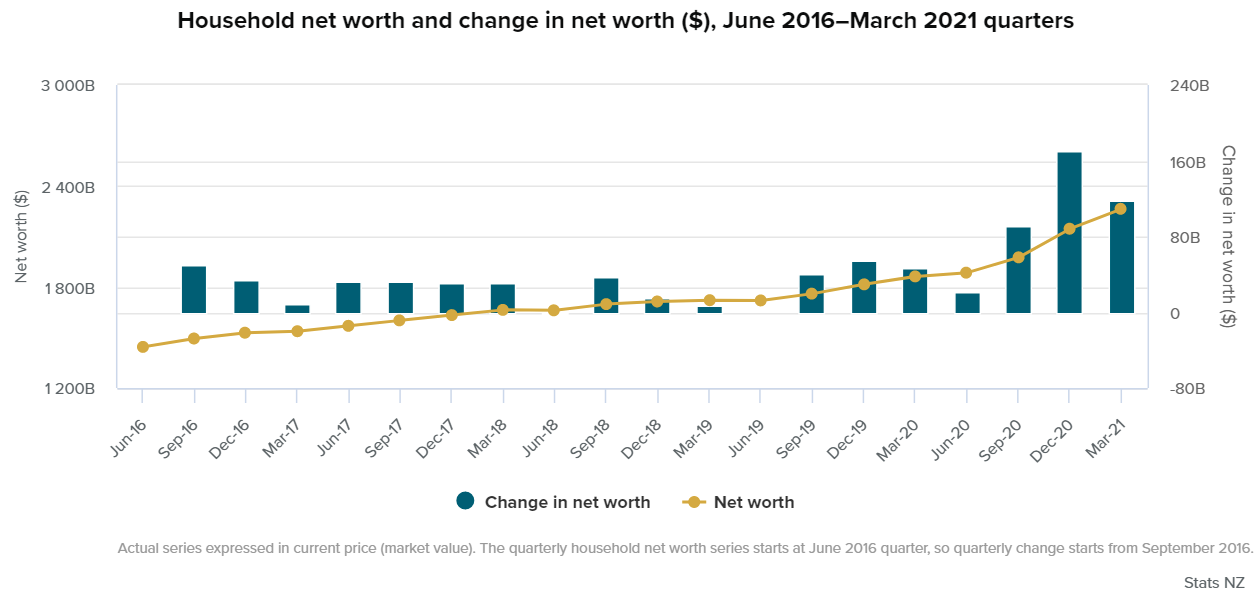
Financial assets, which include shares, businesses, equity in rental properties, bank deposits, and retirement savings owned by households, contributed $245 billion to the increase in household assets since March last year.
When combining rental properties (included in these figures as a financial asset) with owner-occupied property, the increases in the values of residential property accounted for about 54% the household asset increase for the March 2021 year, Pascoe said.
However, saving by Kiwis in the March quarter fell to the lowest level in two years after rising sharply in 2020 on the back of the Covid lockdown and massive economic stimulus.
"Household spending increased in the March 2021 quarter, after having been kept in check for much of 2020 by Covid-19 restrictions," Pascoe said.
The household saving ratio, which compares saving with net disposable income, was 0.4% in the March 2021 quarter, down from 3.2% in the December 2020 quarter.
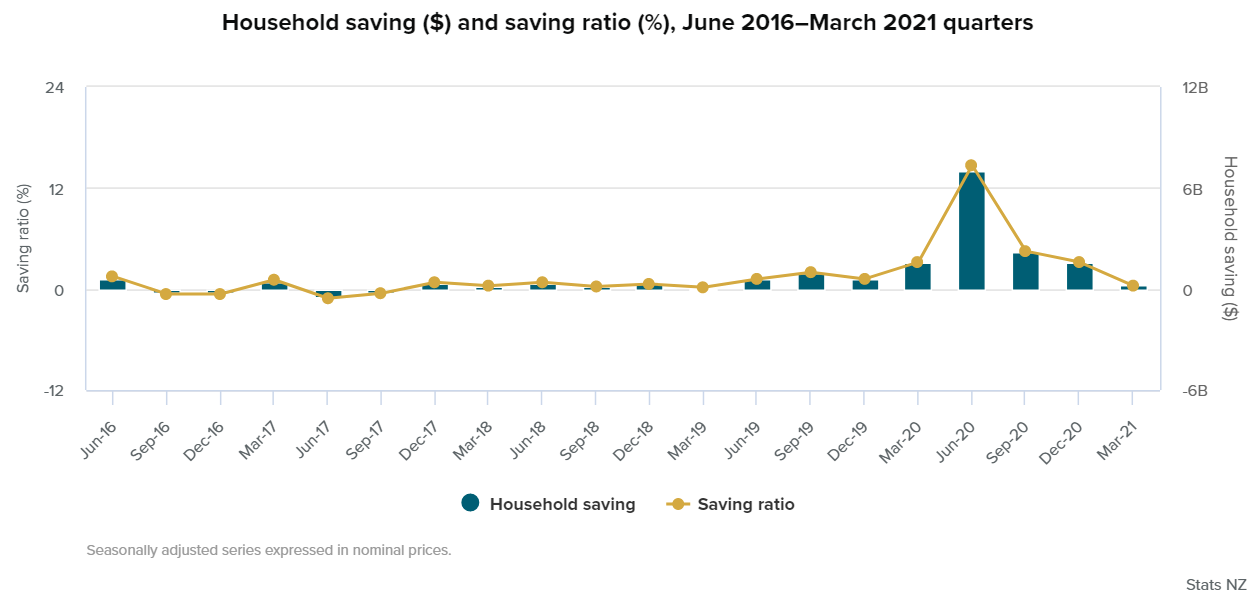
Net disposable income represents the money that households have available to spend on goods and services after accounting for things like taxes.
In the March 2021 quarter, net disposable income rose 3.1%, but a 6.1% increase in household expenditure reduced household saving to just $0.2 billion in the quarter.
The increase in net disposable income was driven by a rise in compensation of employees, and income of self-employed business owners.
The increase in household spending was driven by increased spending on accommodation, restaurant and cultural services, and durable goods, Pascoe said.
We welcome your comments below. If you are not already registered, please register to comment
Remember we welcome robust, respectful and insightful debate. We don't welcome abusive or defamatory comments and will de-register those repeatedly making such comments. Our current comment policy is here.