

The cost of living crisis is biting - and boy are we getting grumpy about it.
Consumer confidence in New Zealand has plummeted.
The latest Westpac McDermott Miller Consumer Confidence Survey has just recorded the lowest reading on NZ consumer confidence since the survey began in 1988, which given that the survey period has included the gloom and doom that enveloped NZ after the 1987 stock market crash, and the Global Financial Crisis of 2008, is pretty remarkable.
The post-stock market crash period and post GFC periods are the only two times in fact when confidence levels have been close to as bad as they are now.
The survey's consumer confidence index dropped sharply in the June quarter, falling 13 points to a level of 78.7, its lowest level ever.
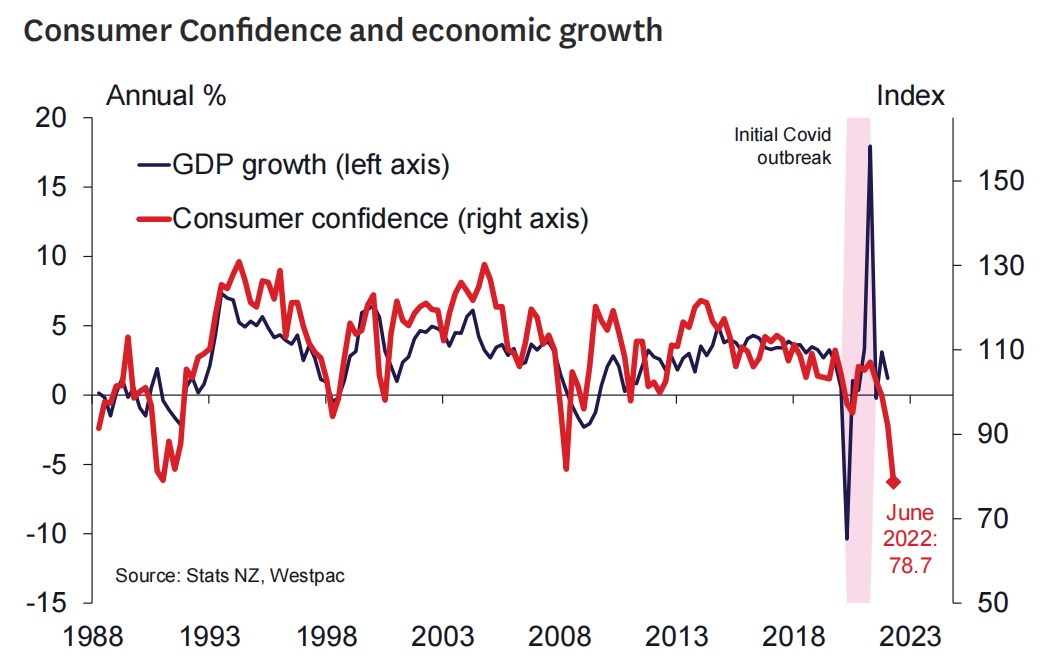
And essentially it indicates that there are far more New Zealanders who are pessimistic about the economic environment than those that are optimistic.
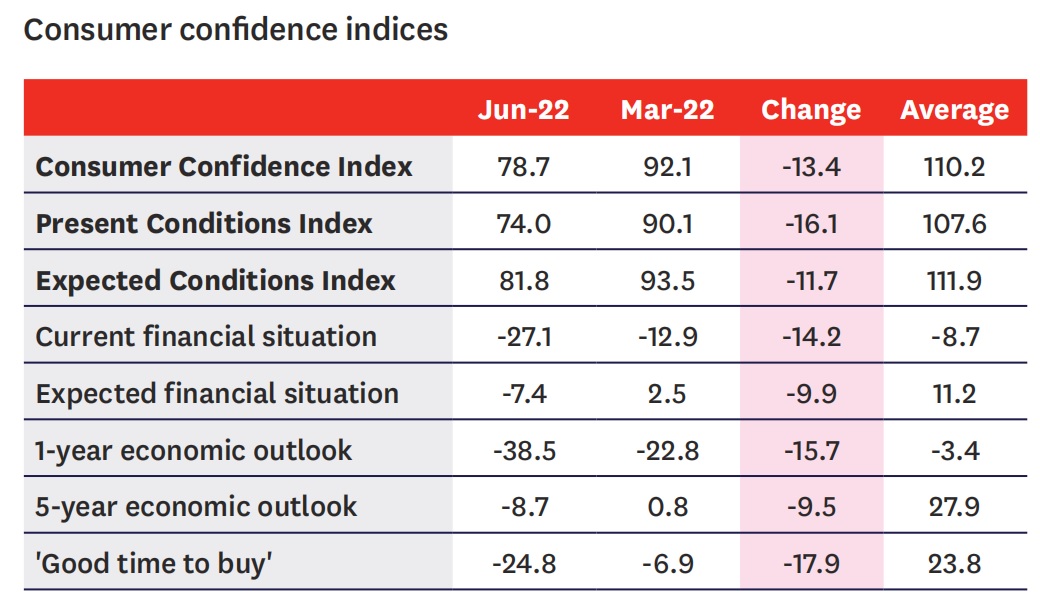
Westpac's acting chief economist Michael Gordon said household budgets were now being squeezed in a way that they haven’t been for decades.
"The combination of rising mortgage rates and increases in living costs has already taken a large bite out of disposable incomes," he said.
"And with interest rates set to rise even further, many households will find the pressure on their finances becoming more intense over the coming months."
Gordon said the pressure on household finances is weighing on spending appetites, and he's expecting a downturn in economic growth more generally over the coming months.
"The extent of that downturn will have an important bearing on how much further the Reserve Bank [RBNZ] will raise the Official Cash Rate [OCR].
"If demand slows sharply – consistent with the drop in consumer confidence – increases in the cash rate are likely to fall short of what financial markets are expecting."
The RBNZ has doubled the OCR in the past two months to 2% and is widely expected to raise it to 3% by the end of August. It has signalled the OCR could be about 4% by this time next year.
But many economists do doubt that the RBNZ will take it as high as that simply because of the 'bang it will get from its buck' in terms of the dampening impact on spending and the housing market.
The Westpac economists for their part believe that the OCR will peak at just 3.5%.
The survey was conducted over June 1-14, 2022, with a sample size of 1,559. An index number over 100 indicates that optimists outnumber pessimists. The margin of error of the survey is 2.5%.
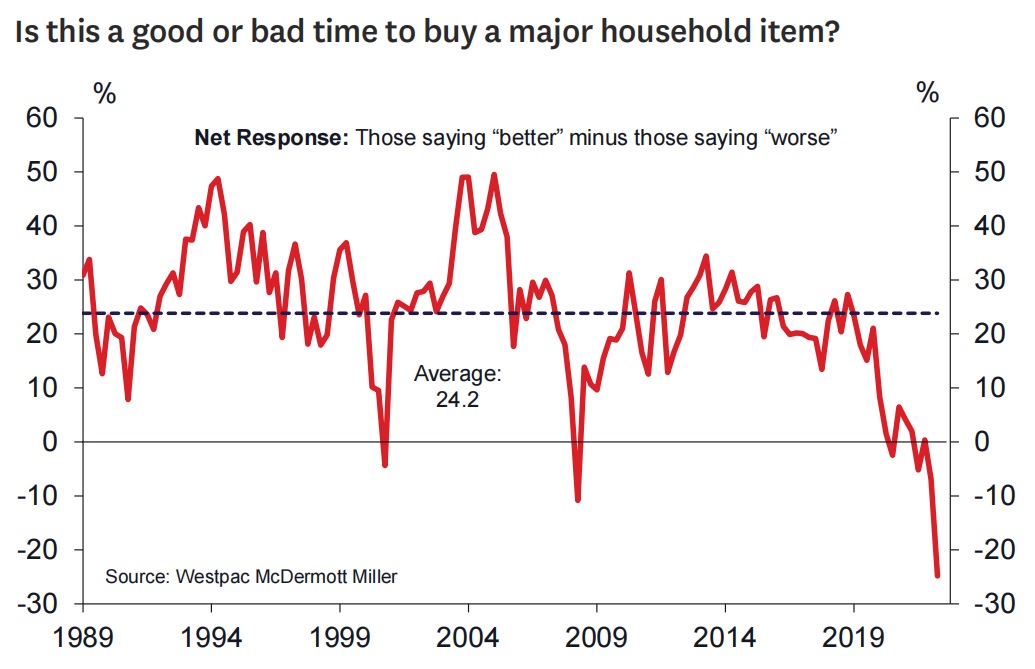
One thing that has helped to get the economy rolling again after lockdowns has been the willingness of Kiwis to spend on household items - particularly as the housing market roared ahead. Now the market's falling there's been a massive downward shift in thinking.
In fact the survey shows that the number of households who think it’s a good time to make a major purchase has collapsed, dropping to the lowest level on record. At the same time, households have reported that they have scaled back their spending on leisure activities like dining out.
Westpac senior economist Satish Ranchhod said a particularly notable feature of this quarter’s survey is how uniform the drop in confidence has been.
"Confidence has fallen sharply across all age groups and income brackets. Confidence also is at low levels in every corner of the country, he said.
There have been particularly sharp falls in regions like Southland, Auckland, Canterbury and Northland. There were two regions – Wellington and Gisborne/Hawke's Bay – where there were small increases in confidence this quarter. However, that follows earlier sharp falls. And even in these regions, confidence remains very weak.
"This broad-based weakness in consumer confidence highlights the extent and nature of the challenges households are grappling with," Ranchhod said.
"The pressure on household finances has not been limited to any group or region. And while economic conditions will vary across the country, all parts of the economy will be affected by the tightening in financial conditions now in train.
"Similarly, the related slowdown in economic activity that we’re forecasting is expected to be widespread."
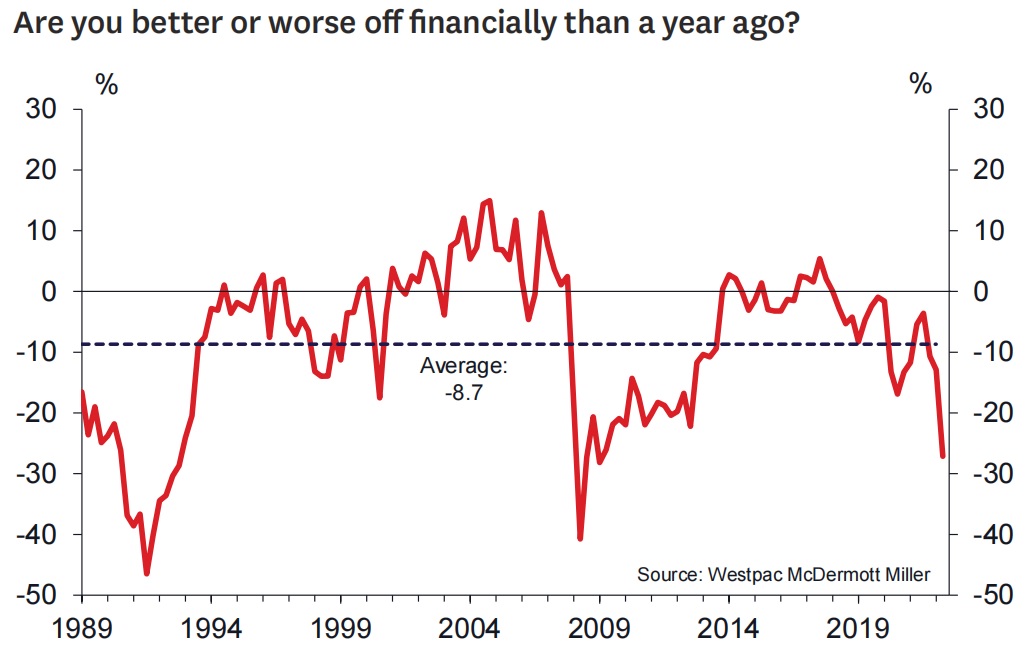
Ranchhod said large numbers of households have said that their financial position has deteriorated in recent months, and many expect that it will continue to weaken over the coming year.
That’s despite the introduction of policy measures to limit the pressure on living costs, such as the reduction in the fuel tax and halving of public transport charges.
"And it’s not just their personal financial situation that’s got households worried. Increasing numbers of New Zealanders also expect that economic conditions more generally will deteriorate over the next few years," Ranchhod said.
"Adding to the concerns about the economic landscape, many households have seen the value of their assets falling in recent months. Nationwide house prices have dropped by 6% since November. Similarly, the value of KiwiSaver balances and other financial assets have dropped sharply since the start of the year."
We welcome your comments below. If you are not already registered, please register to comment
Remember we welcome robust, respectful and insightful debate. We don't welcome abusive or defamatory comments and will de-register those repeatedly making such comments. Our current comment policy is here.