

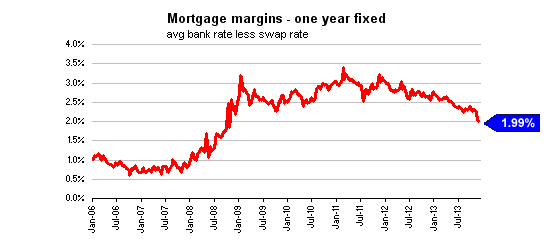
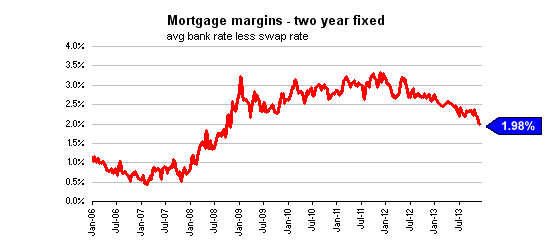
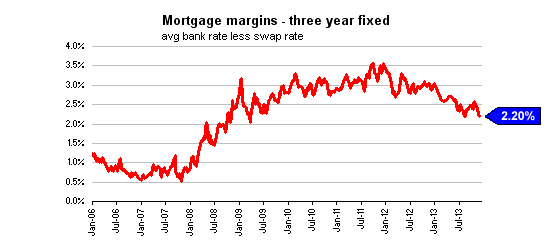
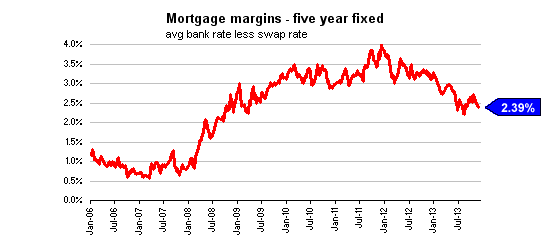
For the first time since November 2008, more than five years ago, the margin between average bank carded, or advertised, fixed-term mortgage rates and the equivalent swap rate has fallen below 2%.
Competition between banks for home buyers with a deposit of at least 20% is heating up, with the Reserve Bank restrictions on bank high loan-to-value ratio (LVR) residential mortgage lending in place, and driving bank margins lower across the curve.
This is especially true for the one and two year fixed mortgage rates.
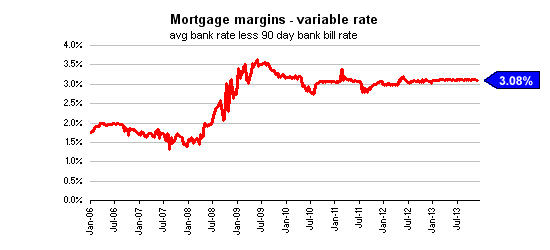
However, margins are not falling for floating rates - and these margins are significantly higher than for the fixed rate home loans. And despite recent falls in fixed rate margins, they are still substantially higher across the board than they were between 2004 and 2008. This was the period when the previous housing boom was underway.
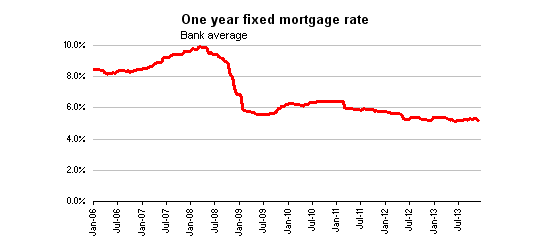
Interest rates themselves, however, are much lower today. The current one year fixed specials are below 5% whereas in 2008 they touched 10%.
The Reserve Bank has signalled the Official Cash Rate is likely to rise in 2014. Wholesale money markets have bid up swap rates recently, with one year swaps moving from 2.91% at the beginning of October to 3.23% today (Friday), a rise of 32 basis points over this 60 day period.
The level of housing credit is also substantially higher at the end of 2013, having reached a record $186.6 billion at the end of October. The lower bank margins are therefore on substantially larger credit bases.
Housing credit growth rates peaked in 2004 at 17% per annum, a far cry from today's 6%.
This article was first published in our email for paying subscribers. See here for more details and to subscribe.
We welcome your comments below. If you are not already registered, please register to comment
Remember we welcome robust, respectful and insightful debate. We don't welcome abusive or defamatory comments and will de-register those repeatedly making such comments. Our current comment policy is here.