
By Gareth Vaughan
The Reserve Bank's decision to exempt high loan-to-value ratio (LVR) mortgages on new house builds from its "speed limits" on high LVR lending wasn't a back down, Governor Graeme Wheeler says, and the Reserve Bank's not considering any further changes to its LVR restrictions.
Meanwhile, Deputy Governor Grant Spencer says the Reserve Bank believes banks are respecting the spirit of the restrictions, and is happy with the response of banks overall.
Speaking at a press conference after the December Monetary Policy Statement was released, with the Official Cash Rate again held at 2.5%, Wheeler said the Reserve Bank was pleased to be able to "adjust the policy" having had feedback from the building industry and banks that was different from the feedback it had received during consultation on the LVR restrictions in July.
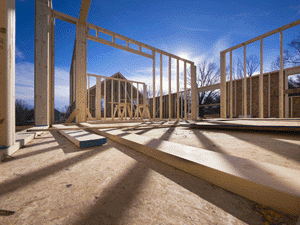
In an unexpected u-turn on Tuesday the Reserve Bank announced new residential construction loans would now be exempt from the LVR limits, with the exemption back-dated to the start of the restrictions on October 1. However, low deposit lending on "spec" houses is not exempt.
The Reserve Bank announced on August 20 it was introducing high-LVR "speed limits" from October 1. Banks will be measured on them from March 31 next year. They mean banks must restrict lending at LVRs above 80% (where borrowers don't have a deposit of at least 20%) to no more than 10% of total new mortgage lending. Aside from new residential construction loans, this 10% limit excludes high LVR loans made under Housing New Zealand’s Welcome Home Loans scheme, the refinancing of existing high-LVR loans, bridging finance or the transfer of existing high-LVR loans between properties.
'A sensible thing to look at the issue again'
Wheeler said when the restrictions were introduced, the Reserve Bank wanted to keep things as simple as possible to reduce the potential for distortions and unintended consequences. It was conscious that high LVR construction lending is only around 1% of total residential lending.
"So if you take total mortgage lending it's roughly around $4.5 billion a month so high LVR construction loans were probably about $45 million a month," said Wheeler.
"When we talked to the banks during the consultation period in July, we didn't get feedback that this was a significant issue. And when we consulted with the building industry we also didn't get feedback that this was a significant issue. And we felt the banks could potentially meet this demand from within the 10% speed limit," Wheeler added.
Reserve Bank officials have been watching building permits statistics, which have been picking up strongly and are now about 50% above the trough in 2011, he said.
"So we put all that together and said 'let's proceed with as simple a system as we can.' And then we got feedback from the building industry, which was very helpful, and also some of the banks themselves started talking about the issue. And we felt it was a sensible thing to look at the issue again particularly if this would increase the potential (housing) supply response."
"Now how significant will it be? It's hard to say. We think it's possibly 200 new builds a month. You've got new housing permits running at 20,000 a year, so if you've got 200 a month it still adds up to roughly about 12% of total new builds," said Wheeler.
"So we were pleased to be able to adjust the policy having had the feedback which was different from the feedback we got in July."
'No more changes'
Asked whether the Reserve Bank was considering any further changes to the LVR restrictions Wheeler said: "No we're not."
And asked whether the Reserve Bank is comfortable that banks are abiding by the spirit of the policy, Spencer said the short answer was yes.
"We think the banks are observing the spirit of the restrictions," said Spencer.
"There's going to be some flows around the edges, there's going to be some pick up in unsecured lending, and there's going to be some pick up in sub 80% LVR lending and that was expected," Spencer added. "And we wouldn't see that as avoidance of the restriction."
"We're happy with the response overall."
We welcome your comments below. If you are not already registered, please register to comment
Remember we welcome robust, respectful and insightful debate. We don't welcome abusive or defamatory comments and will de-register those repeatedly making such comments. Our current comment policy is here.