
Westpac estimates the introduction of a 10% capital gains tax would see house prices fall by 10.9%.
Its chief economist, Dominick Stephens, has made the call in light of the Government’s Tax Working Group considering a suite of changes to the tax system.
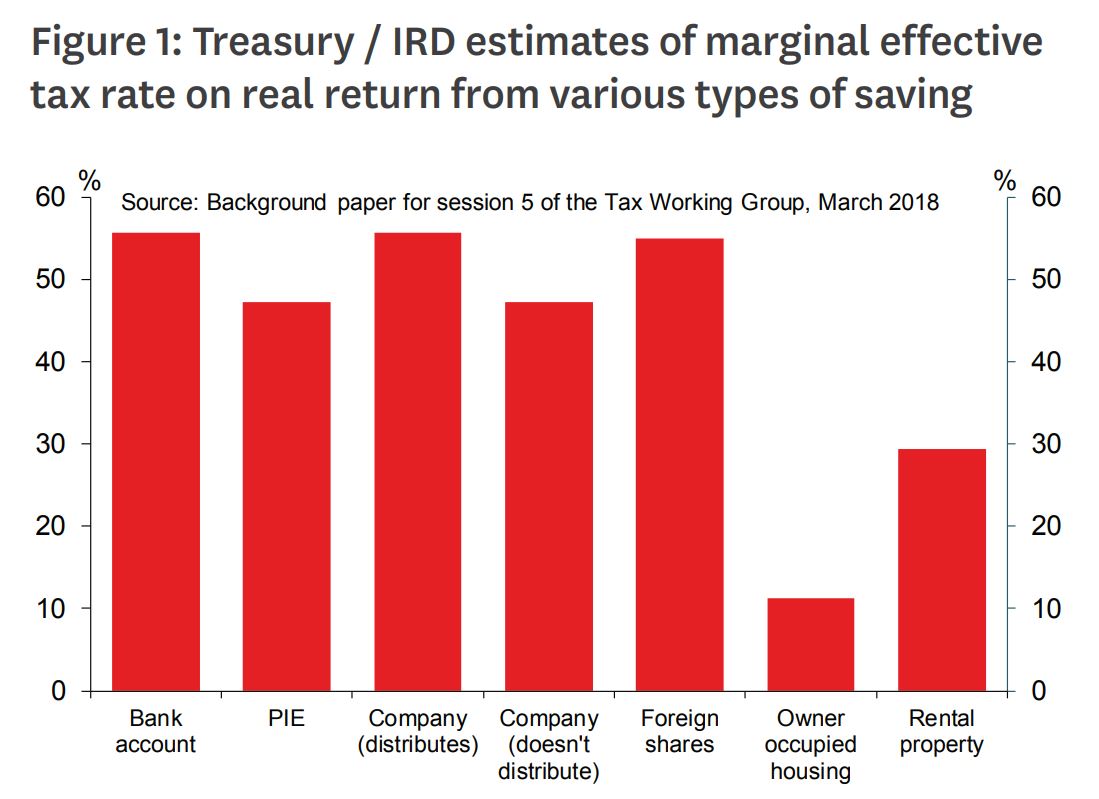
Treasury and the IRD estimate that currently property investors pay 29.4% of their after-inflation returns in tax, whereas bank depositors and owners of dividend-paying shares pay 55.7%.
Stephens’ modelling indicates the introduction of a capital gains tax, which would exclude the family home, would send prices down - not necessarily immediately, but possibly after a period of stagnation.
While this would see the rate of home ownership increase, renters would end up 5.5% higher.
“This extra expense would decrease the amount an investor could pay for a property while still realising a profit,” Stephens says.
"With fewer landlords, rents would rise.
“And with investors willing to pay less for a property, more auctions/tenders would be won by aspiring first homebuyers and the rate of home ownership would rise.”
| Impact on house prices | -10.9% |
| Impact on rents | +5.5% |
| Effect on rate of home ownership | Higher |
Ringfencing
Stephens says it’s difficult to put a figure on the extent to which soon-to-be-implemented rules around ringfencing will affect house prices.
From April 1 next year, the Government is planning to phase out landlords’ abilities to use losses on rental properties to offset tax liabilities from other sources.
Instead, landlords will receive tax credits that can only be used to offset future tax on their property portfolio – rental property tax credits will be “ringfenced”.
| Impact on house prices | 0% to -6% |
| Impact on rents | Up |
| Effect on rate of home ownership | Higher |
Stephens explains: “Ringfencing will not affect investors who have positive cashflow. The higher the leverage over an individual property, the greater the impact of ringfencing will be.
“For an investor running a property portfolio with 65% debt and 35% equity in perpetuity, we estimate that ringfencing will reduce the value of the investment by 6%.
“This seems like a sensible upper bound for the possible impact of ring fencing on house prices, but the actual impact could be smaller.
“After ringfencing comes in, we would expect to see fewer highly-leveraged property investors seeking to buy. This would allow less-leveraged property investors to win auctions/tenders more frequently.
“However, we do not know how far prices would have to fall before the less leveraged buyers enter the market.”
As for the other types of taxes the Tax Working Group will consider; this is how Westpac expects them to affect house prices:
Property tax, 0.5% (owner/occupier exempt)
- Tax calculated as a percentage of the value of the property, including the land and house - equivalent to the capital value used to determine rates in much of New Zealand.
| Impact on house prices | -10.5% |
| Impact on rents | +5.2% |
| Effect on rate of home ownership | Higher |
Land tax, 1% (owner/occupier exempt)
- Tax levied on only the value of unimproved land on which a dwelling is located.
| Impact on house prices | -9.5% |
| Impact on rents | +4.8% |
| Effect on rate of home ownership | Higher |
Stephens points out: “In our modelling, a 1% land tax has roughly the same impact on house prices as a 0.5% property tax. This is because our calculations are based on the average house, for which about half the value is in the land.
“In reality, properties for which land makes up a greater proportion of the value, such as houses with large sections, would experience a greater percentage decline in price, while apartments would experience a smaller percentage decline.
“Also, Auckland prices would probably fall further than prices elsewhere in New Zealand. This is because land makes up a greater proportion of the value of Auckland properties than in other regions.”
Deemed rate of return, 5%
- Tax aimed at removing the tax advantages property investors have over owner occupiers and over other forms of investment.
For property investors, rental income would not be taxed, and expenses (including interest) would not be tax deductible. Instead, the IRD would assume that investors are earning a 5% return on the equity in their rental properties. Income tax would be levied on that deemed return.
| Impact on house prices | -19.5% |
| Impact on rents | +9.6% |
| Effect on rate of home ownership | Higher |
Top rate of income tax reduced from 33% to 30%
| Impact on house prices | -2.8% |
| Impact on rents | +1.6% |
| Effect on rate of home ownership | Higher |
Stephens explains: “The size of the tax advantage of investing in property depends on the gap between the rates of capital gains tax and income tax. That gap can be closed in two ways – by reducing the rate of income tax, or by increasing the rate of capital gains tax.
“In the past, we have pointed out that increasing the top rate of income tax to 39% in 2000 enhanced the tax incentive for investing in property, and probably contributed to the increase in house prices between then and 2005.
“Reducing the top rate of income tax back to 33% in 2010 probably contributed to the fall in house prices that occurred that year.”
For details on the modelling Westpac used to draw its conclusions, see this note.

We welcome your comments below. If you are not already registered, please register to comment
Remember we welcome robust, respectful and insightful debate. We don't welcome abusive or defamatory comments and will de-register those repeatedly making such comments. Our current comment policy is here.