
By Craig Renney*
This week sees the publication of New Zealand Consumer Price Index (CPI) data for the first quarter of 2022 by Statistics New Zealand. Bank economists such as those at ANZ and ASB are forecasting that inflation will rise above 7%. Both the Reserve Bank and the Treasury see inflation being higher than experienced recently. Inflation has become a core political issue in New Zealand and overseas. Inflation is affecting the French election, the US mid-term elections, and has been responsible for the political crisis currently engulfing Sri Lanka.
Some economists, and even some who failed their economics exams, continue to suggest that the government is responsible for this. Their justification is that New Zealand had one of the strongest fiscal responses to COVID-19. Government spent more here to protect jobs and businesses and we are now paying the price for that – with higher interest rates and higher inflation. As David Seymour put it we are now facing a “direct response of the Government's costly COVID response.”
A cursory glance at the international data might appear to support that view. IMF data shows that New Zealand has had the second biggest discretionary fiscal response to COVID among advanced economies. Other countries with strong fiscal responses to COVID (USA and the UK) are also facing strong inflationary pressures. US inflation reached 8.5% in March, and UK inflation in March was 7%. Both are decade-long highs.
But if government spending is the driver of higher inflation, then countries with lower levels of COVID-19 spending should have lower levels of inflation, right? Sadly, this is where this idea falls apart. Take Spain for example. It has had a level of COVID fiscal support around 40% of that found in New Zealand. Its inflation rate is 9.8%. What about France – it spent a little more than Spain, but less than NZ. Its inflation rate is 5.1%. That is the highest rate since 1997. Sweden had the second lowest level of fiscal support during COVID according to the IMF. Its saw inflation leap to 6.1% when last measured.
The truth is, there does not seem to be much of a relationship between inflation and government spending on COVID at all. Some people point to Australia as an example and say that lower inflation there proves this link. The reality is that inflation in Australia is measured quarterly, and we simply haven’t had the latest measurement. But the evidence so far from inflation expectations data is that it will rise to levels currently seen in New Zealand.
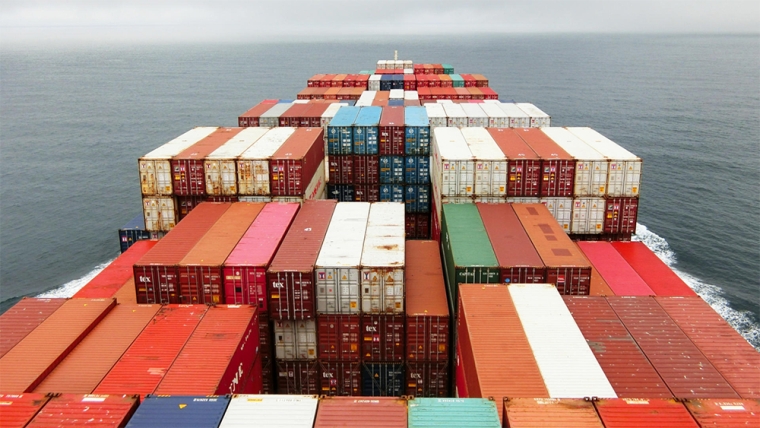
What is driving inflation right now is the same around the world. The IMF notes household energy costs and the costs of commodities are rising on the back of the Ukrainian conflict. Supply chain disruptions on the back of COVID shutdowns in China are causing shortages of certain goods. Credit rating agency Fitch notes that Russia and Ukraine account for a third of the global wheat and barley production, and two-thirds of the world’s sunflower oil exports. Lockdowns in China to try and prevent COVID spread may also disrupt the planting of rice and corn. This together with higher fuel costs are driving global food prices – and is in part why they are rising in New Zealand at their fastest rate in 10 years.
Given the above evidence, it is imperative upon those demanding cuts to spending to show how it would work. They need to hold up the things that they would cut now for public examination, and demonstrate how that cut would lead to lower prices for New Zealanders today. They must be honest with the public about what it is they classify as “wasteful” spending. It’s not okay, as Christopher Luxon has done recently, to demand that things like public transport are cut and then state, “I haven't thought too deeply about it too honest.”
Those demanding cuts should be honest about who they are trying to protect from the current round of inflation. The last attempt at a cost-of-living package from National was squarely aimed at those with higher incomes. Removing the 39% tax bracket would benefit the top 3% of income earners in New Zealand. The proposed changes to mortgage interest deductibility and to the bright-line test would benefit landlords and property developers. This isn’t a package based upon defending Kiwis from inflation. It’s a handout to those who already have enough.
Rather than cutting back the $6 billion in new operational expenditure at Budget 22 next month, we could do something that will genuinely protect New Zealanders from inflation. A Green New Deal that invested in energy conservation, home insulation, and in a transfer away from carbon intensive industrial processes would create jobs, save money, and help address our part of the climate emergency. Ramping up the building of state housing would address rental prices, reduce our costly reliance on emergency housing and motels, and give some of the most vulnerable New Zealanders the best start in life.
Reducing spending on essential public services at a time of increased demand would be making the poorest bear the costs of inflation that is not their fault. Doing so on the basis that public sector spending in NZ is delivering higher inflation globally would be economic idiocy of the highest sort. Our ability to influence globally driven inflation may be beyond our control, but our response to that challenge is not. Budget 22 next month provides an opportunity to make sure that those with the least ability to pay are protected in the short-run, and that all New Zealanders benefit from the creation of a more inclusive economy in the long-run.
*Craig Renney is the Council of Trade Unions Policy Director and Economist. He was an economic advisor to Finance Minister Grant Robertson between 2017 and 2020.

We welcome your comments below. If you are not already registered, please register to comment
Remember we welcome robust, respectful and insightful debate. We don't welcome abusive or defamatory comments and will de-register those repeatedly making such comments. Our current comment policy is here.