
The Reserve Bank is both forecasting an economic downturn on a similar scale to that of the Global Financial Crisis (GFC) and expecting wage and price inflation to remain stubbornly high for some time, Westpac New Zealand Acting Chief Economist Michael Gordon says.
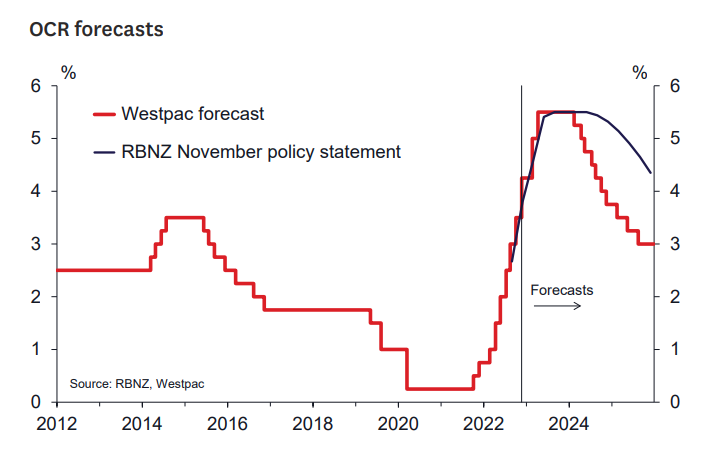
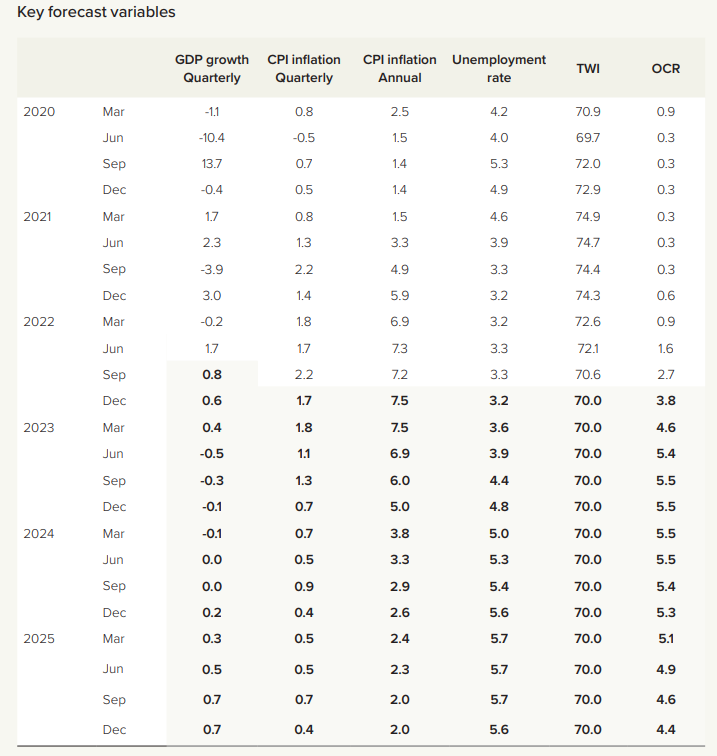
Gordon makes these comments in his review of Wednesday's move by the Reserve Bank to increase the Official Cash Rate (OCR) by a record 75 basis points to 4.25%. On top of that the Reserve Bank's now forecasting a peak OCR of 5.5% next year, and four consecutive quarters of negative Gross Domestic Product (GDP) from June 2023 onwards.
As the Reserve Bank battles to get Consumers Price Index (CPI) inflation down from above 7% to its target 1% to 3% range, Gordon says Westpac NZ economists are now thinking about the risk the central bank "could end up overcooking it on the inflation front."
"We now expect OCR cuts to begin in early 2024, six months earlier than we did previously. Those rate cuts are both earlier and faster than what the Reserve Bank is projecting," Gordon says.
"Make no mistake, the Reserve Bank is not just signalling a recession, it’s forecasting a downturn on a similar scale to the Global Financial Crisis – different causes, but similar consequences. On the Reserve Bank’s forecasts, economic activity continues to fall below its potential long after the recession has ‘officially’ ended. And the unemployment rate rises by several percentage points – albeit from a low starting point – just as it did in 2008- 09," adds Gordon.
"Even so, the RBNZ expects wage and price inflation to remain stubbornly high in the coming years. Headline inflation is expected to rise further to a peak of 7.5% in the next two quarters, only receding to 5% by the end of next year and dropping back into the 1% to 3% target range in the second half of 2024."
Gordon does say, however, that a lesson from the GFC period is the back of inflation was broken fairly quickly.
"Non-tradables inflation, the portion that tends to be driven more by local conditions rather than offshore forces, slowed quite sharply, compared to where it had been running over much of the previous decade. Wage growth didn’t even peak until 2009, but that is typically the last shoe to drop in the economic cycle. And once it turned, it remained stubbornly low for years to come," Gordon says.
"Admittedly the scale of the inflation problem is greater now than it was in 2008, or indeed at any point in the last 30-odd years of inflation targeting. But we shouldn’t lose sight of the fact that monetary policy works, eventually."
"A growing number of borrowers will be rolling onto substantially higher mortgage rates in the coming months, which will eat into households’ spending power. The next 12 months will be much more telling than the past 12 months have been," says Gordon.
*Note, the chart below comes from Westpac NZ. The table below that is the Reserve Bank's forecasts from Wednesday's Monetary Policy Statement.
We welcome your comments below. If you are not already registered, please register to comment
Remember we welcome robust, respectful and insightful debate. We don't welcome abusive or defamatory comments and will de-register those repeatedly making such comments. Our current comment policy is here.